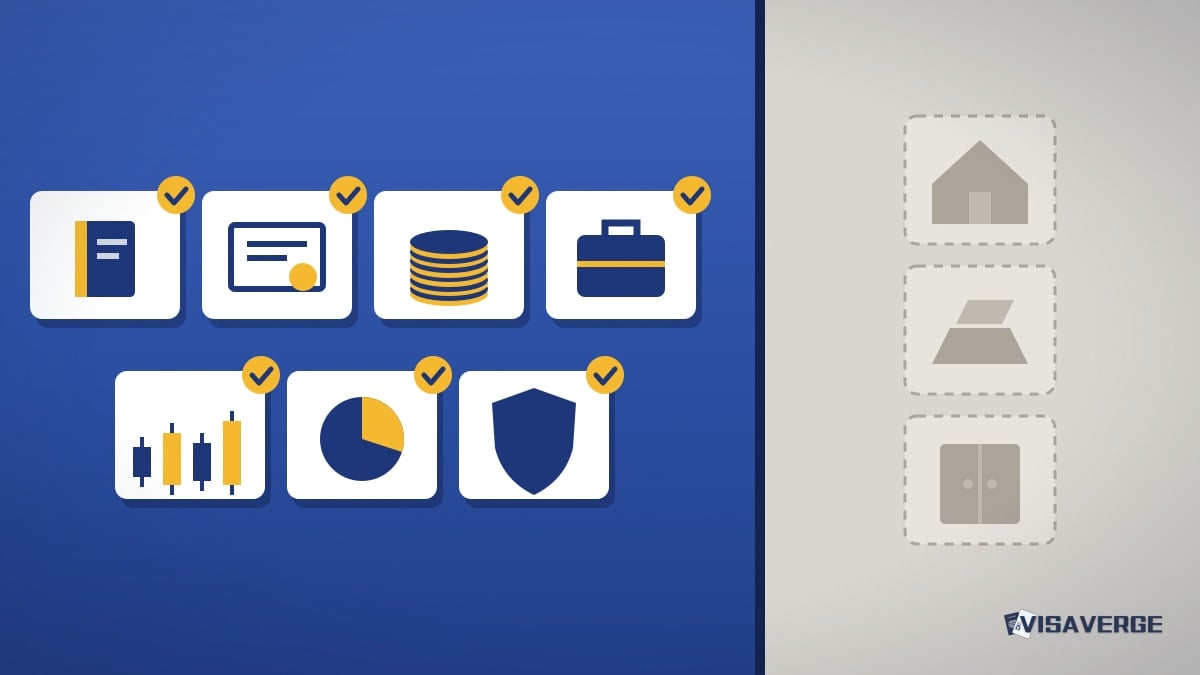
- Family gifts are generally exempt from immediate tax for the donor and relative recipients under current Indian laws.
- Recipients must carry forward the original cost and holding period when calculating capital gains upon a future sale.
- Non-relative gifts exceeding ₹50,000 are taxed as other income in the recipient’s hands at fair market value.
(INDIA) – Indian families are increasingly gifting shares to children, spouses and other relatives, but the tax treatment changes at two points: when the securities are received and when the recipient later sells them.
Gifted Shares can move without immediate tax for the person making the transfer if the gift is genuine and made without consideration, but the recipient can face tax on receipt in some cases and capital gains tax on sale later.
Free toolSubstantial Presence Test Calculator
That framework carries extra weight for NRIs, who may also have to deal with demat transfer rules, FEMA restrictions, TDS and foreign tax reporting alongside Indian income-tax law.
Indian law allows shares to be gifted because shares are movable property. Listed equity shares, ETFs, mutual fund units, unlisted shares, bonds and other securities can be transferred as gifts, subject to applicable tax, demat, company law, SEBI, RBI and FEMA rules.
In demat form, the transfer usually happens through an off-market movement from one demat account to another. Depository participants may ask for a delivery instruction slip, the reason for transfer, a gift declaration and supporting documents, while some brokers also offer online gift transfer facilities.
Calling a transfer a gift does not settle the issue. The transfer must be genuine, voluntary and without consideration; if money or indirect consideration is involved, the tax treatment can change.
Section 47 of the Income-tax Act excludes certain transactions from being treated as transfers for capital gains purposes, and a gift falls within that category if the legal conditions are met. That means the giver is generally not liable to capital gains tax at the time of gifting.
A common example shows the point. If a father bought listed shares for ₹5 lakh and gifts them to his daughter when they are worth ₹20 lakh, the father is generally not taxed merely because he transferred the shares.
A sale would be different. If he sold those shares for ₹20 lakh, capital gains would arise in his hands; a gift pushes that capital gains event to the stage when the recipient sells.
The recipient’s position turns on the relationship with the giver and the fair market value of the shares. Section 56(2)(x) taxes certain gifts received without consideration if the fair market value exceeds ₹50,000, unless an exemption applies.
Specified relatives generally fall within that exemption. The category includes a spouse, siblings, siblings of the spouse, siblings of either parent, lineal ascendants or descendants, lineal ascendants or descendants of the spouse, and the spouses of those persons.
That covers many family transfers that occur in practice, including father to son, mother to daughter, husband to wife, wife to husband, grandparent to grandchild and sibling to sibling. If a mother gifts listed shares worth ₹10 lakh to her son, the son is generally not taxed on receipt because the gift comes from a specified relative.
Transfers from non-relatives work differently. If a friend, a distant relative outside the statutory definition, a business associate or another unrelated person gifts shares and the fair market value exceeds ₹50,000, the entire value may become taxable as income from other sources in the recipient’s hands.
A gift of listed shares worth ₹2 lakh from a friend illustrates the point. The recipient may have to pay tax on ₹2 lakh as income from other sources unless another exemption applies.
Marriage, inheritance and wills sit in a different category. Shares received on the occasion of marriage may be exempt, and shares received under a will or by way of inheritance are also generally exempt at the time of receipt.
Timing and records still matter. A gift received years before or after a marriage does not automatically qualify for the marriage exemption, and inherited shares remain exposed to capital gains tax when the heir later sells them.
The sale of gifted shares is where the main tax bill often appears. Even if the transfer was exempt when the shares changed hands, the recipient becomes liable for capital gains tax on a later sale.
Indian tax law generally carries forward the previous owner’s cost of acquisition and holding period. The recipient cannot treat the market value on the date of gift as a fresh cost base simply because the shares changed owners within a family.
An example from family transfers shows how sharply that can affect the numbers. If a father bought shares for ₹2 lakh in 2018, gifted them in 2026 when they were worth ₹8 lakh, and the daughter later sold them for ₹10 lakh, her cost of acquisition would generally remain ₹2 lakh.
The same carry-forward rule applies to the holding period. If a mother bought listed shares in 2020 and gifted them to her son in 2026, a sale one month later may still qualify as long-term because the mother’s holding period is included.
Listed equity shares sold with Securities Transaction Tax conditions satisfied attract special rates. Short-term capital gains under Section 111A are taxed at 20% for transfers after 23 July 2024, while long-term capital gains under Section 112A are taxed at 12.5% on gains above ₹1.25 lakh, subject to applicable conditions such as STT.
That means a person who sells gifted listed shares with long-term capital gains of ₹2 lakh under Section 112A would not face tax on the entire amount. The threshold and special rate have to be applied to the gain under the law in force.
Unlisted shares require closer attention. Their holding period, valuation method, tax rate, FEMA implications and reporting obligations can differ from listed shares, and fair valuation may become a central issue because there is no quoted market price.
That becomes especially sensitive for family-owned companies, start-ups, ESOP shares and private company holdings. A transfer between a resident and a non-resident can also trigger FEMA questions that do not arise in a straightforward gift of listed stock between residents.
NRIs face the same basic income-tax principles on Gifted Shares, but the compliance burden expands. An NRI may receive shares from a resident relative, gift shares to a resident family member, or receive Indian securities by inheritance, and each route can require review under both income-tax law and FEMA.
The relative exemption under Section 56(2)(x) does not settle the FEMA side. A family gift between a resident and a non-resident is not automatically permitted solely because the recipient would be exempt from tax on receipt.
NRIs also have to examine the type of security, whether the company is listed or unlisted, whether the transfer is resident to non-resident or non-resident to resident, sectoral caps, pricing guidelines, reporting requirements and demat compliance. The process may be simpler for listed shares in demat form, but it still needs documentation.
US-based NRIs carry another reporting layer. Indian tax treatment does not remove the possibility of US reporting for foreign financial assets, foreign accounts, foreign income, dividends and capital gains, and any Indian tax paid may have to be considered alongside possible foreign tax credit issues under US rules.
Documentation often decides whether a transfer holds up years later. A written gift deed or gift declaration helps establish that the transfer was voluntary and without consideration, even if demat records already show the shares moved from one account to another.
Families usually need records that identify the donor and recipient, their relationship, the description and quantity of securities, ISIN, company name, demat details, the date of gift, the recipient’s acceptance and supporting demat transfer records. Depending on the case, valuation reports, relationship proof, board resolutions and company documents may also matter.
Those papers become especially important when the recipient sells after a long gap. Capital gains calculations may depend on the original purchase date, old contract notes, broker ledgers and the history of bonus issues, splits, mergers or demergers that changed the shareholding over time.
Family transfers can create other tax questions as well. Shares gifted to a minor can attract clubbing provisions, and gifts between spouses may be exempt on receipt yet still pull dividend income or capital gains back into the transferor spouse’s tax computation in some situations.
The same principle applies to parents and siblings in a narrower way. Receipt may be exempt because they fall within the relative category, but the future sale still triggers capital gains tax based on the previous owner’s cost and holding period.
Friends sit outside that protected circle. If a person gifts shares worth ₹3 lakh to a friend, the friend may have to report the fair market value as income from other sources, and a later sale can create a second tax event under capital gains rules that requires careful computation to avoid double counting.
Mutual fund units broadly follow similar principles because they are also movable property and capital assets. Their later tax treatment depends on whether the fund is equity-oriented, debt-oriented, a specified mutual fund or another category, and some fund houses place restrictions on NRI holdings, including for US and Canada-based investors.
Return filing can follow from any of these events. A recipient who sells gifted shares and books capital gains may need to file an income-tax return, often through ITR-2 for individuals and HUFs with capital gains but no business or professional income, while an NRI with taxable Indian capital gains may also need to file in India even without salary income in the country.
The practical lesson from these transactions is narrow but unforgiving. Tax does not usually arise for the donor at the point of a genuine gift, but it can arise for the recipient on receipt if the giver is a non-relative and the value crosses ₹50,000, and it can arise later on sale under the capital gains rules.
Families that preserve the gift deed, demat transfer statement, valuation support, proof of relationship and the previous owner’s acquisition records place themselves in a stronger position when the shares are sold years later. Without those papers, even a simple family transfer can become a dispute over cost, holding period and tax.