- American Airlines will prohibit large humanoid robots on all flights starting Monday, August seventeenth, twenty twenty-six.
- The ban includes animal-like machines and applies to overhead bins, checked baggage, and purchased seats.
- Small robot toys remain permitted for travel if they meet standard size and lithium-ion battery requirements.
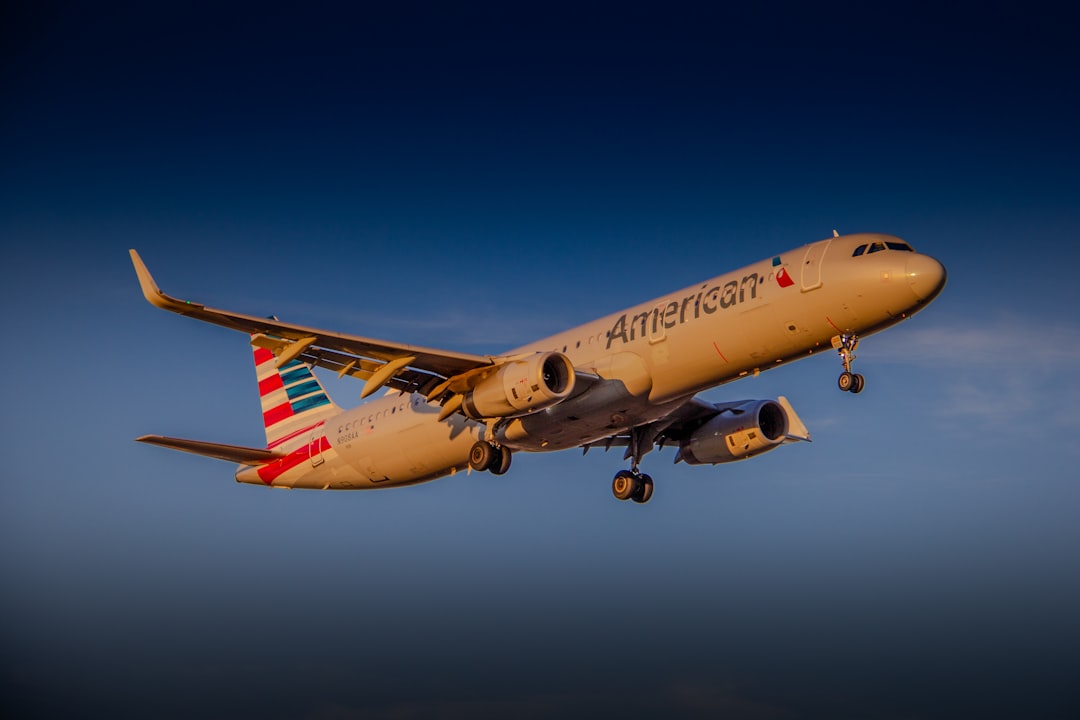
American Airlines will bar large humanoid robots from its domestic and international mainline and regional flights beginning Monday, August 17, 2026. Passengers will not be able to place one in an overhead bin, buy it a seat, or check it as baggage.
The carrier issued the policy Friday, August 14. It applies to large human-like and animal-like machines across its network, including regional service.
Free toolB1/B2 Tourist Visa Stay Calculator online
Agents have been told not to let a passenger carrying a prohibited machine board. The restriction applies even when the traveler has purchased a seat for the device.
The policy also creates a gray area for smaller equipment. Small robots, toys and electronic devices may still fly if they meet ordinary size, stowage and battery requirements.
American has not said how small is small. It also has not specified when a machine becomes too human-like to qualify.
The written guidance points to risks associated with “their size, design, capabilities, and large lithium-ion batteries.” The carrier said it had “no known incident” involving one of the robots.
If staff discover a prohibited device after check-in, they must handle it under procedures for undeclared dangerous goods. That can turn a routine airport arrival into a boarding problem.
Every listed route and baggage option is closed to large machines
The restriction reaches beyond the passenger cabin. It covers the following parts of the carrier’s operation:
| Travel category | Treatment beginning August 17, 2026 |
|---|---|
| Domestic mainline flights | Large human- and animal-like robots prohibited |
| International mainline flights | Large human- and animal-like robots prohibited |
| Regional flights | Large human- and animal-like robots prohibited |
| Overhead bins | Large human- and animal-like robots prohibited |
| Purchased passenger seats | Large human- and animal-like robots prohibited |
| Checked baggage | Large human- and animal-like robots prohibited |
| Small robots and toys | May travel under ordinary size, stowage and battery rules |
The policy does not offer a measurement threshold for large devices. Nor does it explain how an agent should classify a machine whose appearance falls between a toy and a full-size platform.
That wording gives airport staff a central role. A traveler may satisfy the ordinary requirements for an electronic device and still face questions about the machine’s shape or apparent capabilities.
Two spring flights exposed the gap the new rule closes
The change follows reported incidents involving robotic devices on other airlines. Those cases showed passengers using options that the new policy removes from American’s network.
In May 2026, Aaron Mehdizadeh, owner of The Robot Studio, flew a 3.5-foot humanoid named “Stewie” in a purchased window seat on a Southwest flight from Las Vegas to Dallas. Mehdizadeh later called the broader restrictions a “conspiracy against robotic travelers.”
He argued that Stewie’s battery was comparable to a standard laptop. The policy now rules out the purchased-seat arrangement regardless of that comparison.
A separate April 2026 case involved “Bebop,” a 4-foot, 75-pound humanoid owned by Elite Event Robotics. Crew members questioned its battery safety and seating position, causing a one-hour runway delay in Oakland.
Eily Ben-Abraham, an Elite Event Robotics handler, said Bebop’s battery was confiscated during a flight. He described being left with a “dead robot to lug around” and said he had to overnight replacement batteries for a scheduled event.
Those accounts came from other carriers. American’s rule separately bars large machines from its own cabins, seats and baggage system.
Battery concerns are part of a wider expansion in robot shipments
Ravinder Dahiya, a professor of robotics at Northeastern University, supports restrictions on safety grounds. He said, “most humanoid robots today rely on heavy lithium-ion batteries that can pose a fire hazard if they explode or are mishandled.”
The machines are also reaching more markets. Global humanoid robot shipments reached approximately 15,000 units in 2025, according to the additional research provided for this report.
That growth includes equipment used for demonstrations, events and competitions. The aviation policy addresses more than one type of device, covering both human-like and animal-like designs.
The wording leaves smaller models in a separate category, but only conditionally. A toy robot can still travel if it satisfies standard carry-on dimensions and the applicable stowage and battery rules.
Size alone may not settle the question. The policy also refers to design and capabilities, without giving travelers a published test they can apply before arriving at the airport.
The timing reaches an international robotics competition
The restriction arrives shortly before the World Humanoid Robot Games in Beijing, scheduled for August 22–26, 2026. More than 2,056 robots from 16 countries are scheduled to compete.
The event involves machines that may be too large or too human-like for passenger transport under the new rule. Operators moving equipment for the competition cannot assume that a purchased seat or checked-baggage plan will work on the carrier.
American’s public restricted-items webpage had not added the specific “humanoid” terminology as of August 16, 2026. The internal policy nevertheless takes effect the next day.
That gap could leave travelers relying on general baggage language until they reach check-in or the gate. The written rule gives agents instructions for handling a device discovered after check-in, but does not publish a size line for borderline machines.
A federal import action adds a separate layer
The airline’s decision also comes after a July 28, 2026, FCC ban on imports of new foreign-made, primarily Chinese, humanoid robots. That action cited national security and surveillance risks.
The two measures operate at different points. The FCC action concerns imports into the United States, while the airline policy controls how certain machines travel on American flights.
The import action does not replace the carrier’s airport rule. A machine that can enter the country under one set of requirements may still be barred from the aircraft under another.
Travelers carrying a small robot or toy must therefore meet the ordinary rules and account for the machine’s appearance and size. Large human- or animal-like devices have no listed cabin, seat or checked-baggage option on the carrier’s network.