- DHS ended Haiti TPS on July twenty-seventh, twenty twenty-six, affecting Haitians in Phoenix and nationwide.
- ICE reported a deportation flight to Haiti on August twenty-four, after the first flight on August twenty.
- Former TPS holders may still qualify for other relief, but lawyers urge immediate review before ICE check-ins.
Haitians in Phoenix are bracing for removal after the Department of Homeland Security ended Haiti’s Temporary Protected Status on July 27, 2026. The agency announced Monday, August 24, that Immigration and Customs Enforcement had carried out a deportation flight to Haiti.
The change can affect people who relied only on TPS. They generally no longer hold that protection from removal or the work authorization tied to it. Some may have another immigration basis, but the cases are individual.

The first flight came after months of litigation. DHS moved to end Haiti TPS on June 27, 2025. The Supreme Court cleared the way on June 25, 2026, and U.S. Citizenship and Immigration Services later confirmed the designation’s end.
Arizona callers have reported arrests of former TPS holders, including Haitians, during routine driving and other enforcement encounters. The reports add community-level pressure to a legal change that had already threatened jobs and lawful presence.
Enforcement warnings have sharpened since the court barriers fell
Homeland Security Secretary Markwayne Mullin described the administration’s approach in comments reported on August 9, 2026. He directed the warning at people who had lost the protection.
“We’re going after them right now. … These individuals can either self-deport, or we will arrest you and send you back. It’s that simple,”
Mullin’s comments followed Judge Ana Reyes’s August 5 order. The judge said an earlier stay blocking DHS Secretary Kristi Noem’s termination decision was “no longer in effect.”
That order followed the Supreme Court’s action in June. With the judicial barrier removed, federal officials began treating many former TPS holders as subject to removal.
The order removed the last pause on the termination
Haiti received TPS after the country’s 2010 earthquake. Successive administrations extended the designation repeatedly before the Trump administration moved to end it.
The termination affects an estimated roughly 300,000 to 350,000 Haitians nationwide, with counts varying by timing and source. The population includes people who had lived and worked legally in the United States for years.
Losing TPS does not automatically decide whether someone qualifies for another form of immigration relief. A person may have a pending asylum case, a family-based adjustment application, another nonimmigrant status, or a separate humanitarian claim.
Those options do not replace TPS automatically. An assessment of independent protection from removal typically requires reviewing the person’s immigration history, filings, notices, and current status.
Advocates describe fear, monitoring, and abrupt loss of work
Geoff Pipoly, an attorney for Haitian TPS holders, said the court’s action immediately affected employment and removal exposure.
“As a result of today’s order implementing the Supreme Court’s decision, Haitian TPS holders – all of them non-criminals – can no longer legally work, and many are subject to removal to Haiti, which continues to be one of the most dangerous countries in the world”
Vilès Dorsainvil, co-founder and executive director of the Haitian Community Help and Support Center in Springfield, described the uncertainty facing community members.
“Now we have no protection. Anything can happen any time.”
Guerline Jozef, executive director of the Haitian Bridge Alliance, said DHS letters were being sent as early as July 22. Katie Kersh, managing attorney for Advocates for Basic Legal Equality, said a dozen Haitians with TPS were summoned to check-ins on August 2 and left wearing ankle monitors.
The monitoring reports came after a larger Springfield operation. On August 1, approximately 50 Haitians with TPS and active asylum cases were summoned to ICE check-ins, fitted with ankle monitors, and conditionally released under a 75-mile travel restriction.
Those events occurred in Ohio, not Arizona. Reports from Arizona nevertheless describe arrests of former TPS holders, including Haitians, in broader enforcement sweeps.
Flights are moving toward Haiti despite instability
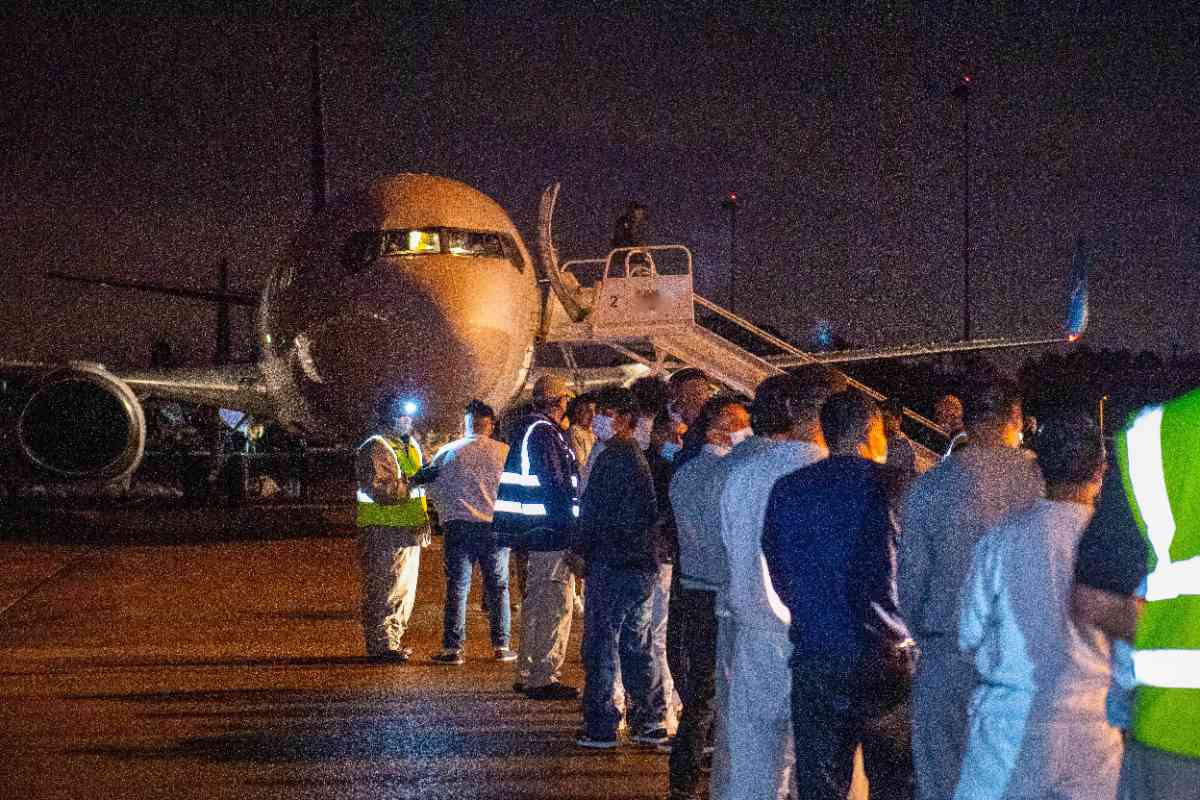
ICE carried out its first reported flight to Haiti since the protection ended on August 20, 2026, with more than 160 people aboard according to later reporting. DHS publicly announced the removal flight on August 24.
The government has shifted removals toward Cap-Haïtien. Commercial flights to Port-au-Prince have closed, while Haiti continues to face severe instability and gang violence.
The flight activity changes the immediate stakes for people receiving check-in notices or encountering immigration officers. Detention, monitoring, and removal can develop separately from a person’s possible eligibility for asylum, cancellation of removal, adjustment of status, or other relief.
A pending application may not by itself stop enforcement. Anyone affected should promptly review the case with a qualified immigration attorney, particularly before missing an ICE appointment, signing a departure document, or accepting an agreement with immigration authorities.
This article provides general information and is not legal advice. Consult a qualified immigration attorney about your specific case.