- The Home Ministry designated Haldia Seaport as an authorized immigration checkpoint starting June twenty-second, twenty twenty-six.
- Haldia becomes India’s forty-first seaport with this status, allowing legal entry and exit for foreign nationals.
- The designation will primarily streamline crew handling and administrative processes for international shipping vessels in West Bengal.
(HALDIA, WEST BENGAL, INDIA) — India’s Ministry of Home Affairs designated Haldia Seaport in West Bengal as an authorized immigration checkpoint on June 22, 2026, expanding the country’s list of seaports cleared to handle lawful entry and exit.
The MHA made the change through a Gazette notification issued under sub-section (1) of Section 4 of the Immigration and Foreigners Act, 2025. It amended the principal notification dated September 1, 2025 and inserted “41 Haldia (West Bengal)” into the list of Category II seaport immigration checkpoints.
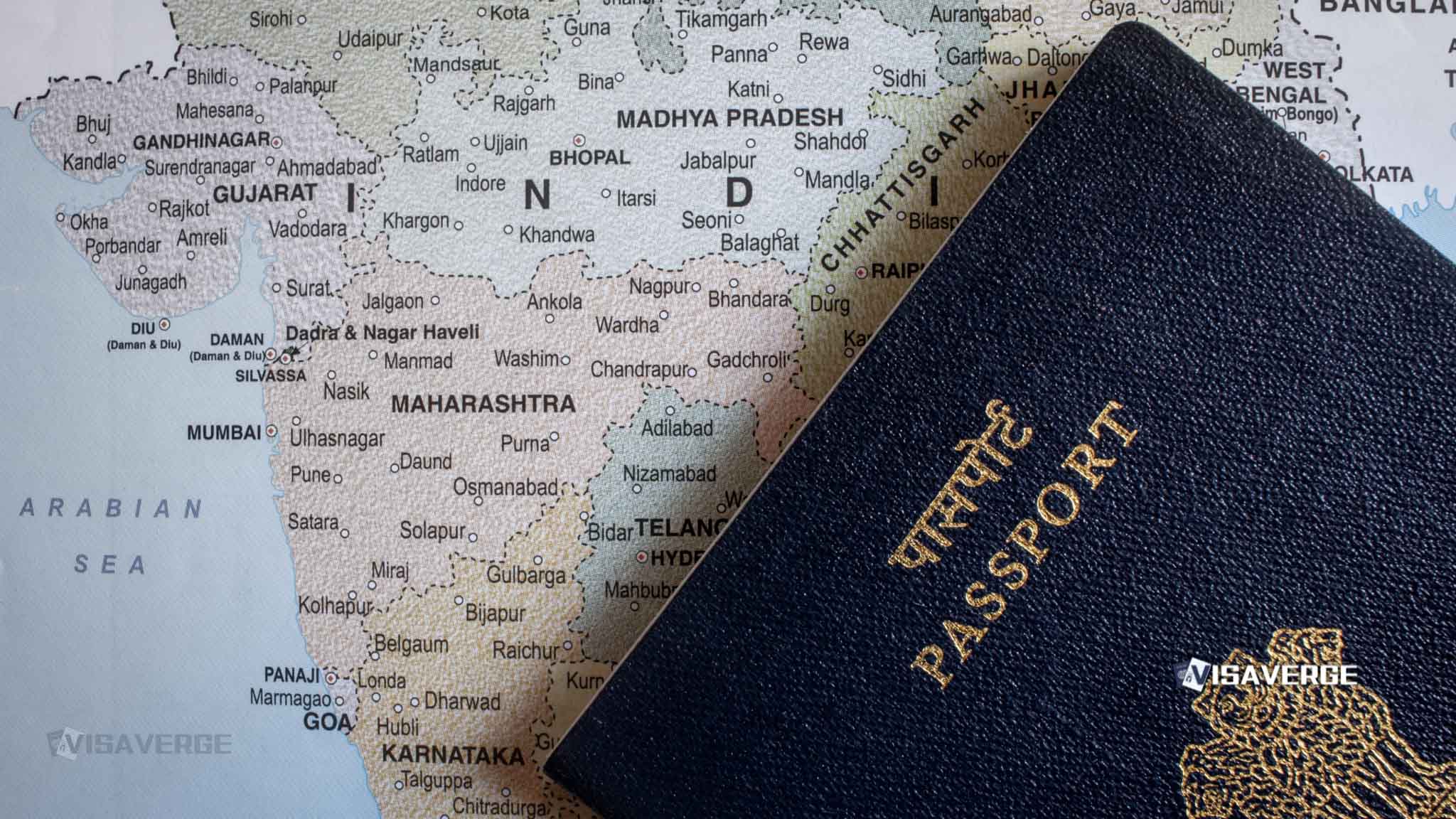
The Bureau of Immigration, which functions under the Ministry of Home Affairs, will administer the checkpoint. That gives Haldia formal immigration status for maritime movement that crosses India’s borders.
Free toolUSCIS Receipt Number DecoderHaldia Seaport sits on the Hooghly River, about 120 km southwest of Kolkata. Syama Prasad Mookerjee Port, Kolkata operates the facility, which handles bulk, liquid and containerized cargo moving through eastern India.
The port serves traffic linked to West Bengal, Jharkhand, Bihar and the Northeast. Its deep-water role has made it an important cargo gateway in a region that depends heavily on river-linked and coastal trade routes.
Monday’s notification also places Haldia within a broader expansion of India’s maritime immigration network. On May 29, 2026, authorities designated three Gujarat ports, Dahej, Sikka, and Tuna Tekra, as immigration checkpoints.
That sequence has pushed Haldia to the position of India’s 41st seaport with immigration checkpoint status. The move extends a pattern of adding immigration-cleared ports beyond the largest passenger gateways.
Under the new designation, Haldia can legally process the entry and exit of foreign nationals and Indian citizens arriving or departing by sea. Before a port receives that status, immigration formalities for international movement cannot be handled there as a recognized checkpoint.
The immediate effect is likely to be strongest in crew handling. Foreign crew members on international ships can now undergo immigration clearance directly at Haldia rather than shifting documentation needs to another port.
Shipping lines that rotate crews across international routes often rely on ports where immigration procedures can be completed without extra transfers. A direct checkpoint can cut paperwork friction and reduce delays tied to moving crew through another authorized location.
That administrative change also affects port agents and operators. Shipping agents handling international vessels at Haldia now have a clearer regulatory route for maritime operations that involve foreign personnel, embarkation, disembarkation or other immigration-controlled movement.
Haldia’s new status gives the port another function beyond cargo. It creates the formal administrative framework needed if international passenger services or cruise calls develop there in the future.
That does not mean cruise traffic will begin at once. The notification establishes the immigration basis that such services would require, allowing Haldia to stand as a lawful entry and exit point in eastern India if passenger routes are introduced.
International travelers using maritime routes would then have another authorized arrival and departure point in the region. Eastern India’s overseas sea access has long centered on established port infrastructure around Kolkata, and the Haldia designation adds another officially cleared node.
For trade administration, the designation may also ease pressure on Kolkata Port by allowing another deep-water facility in the same wider system to handle immigration-controlled maritime traffic. That could help distribute operational tasks across linked port assets rather than channeling them through a single immigration-cleared location.
Because Haldia already functions as a major cargo facility, the immigration checkpoint status attaches border-processing authority to an existing logistics hub rather than creating a new port from scratch. That combination matters in maritime trade, where customs, crew processing and vessel turnaround often intersect on tight schedules.
The legal basis for the move is narrow but important. Section 4(1) of the Immigration and Foreigners Act, 2025 empowers the government to specify authorized immigration checkpoints, and the latest notification uses that power to add Haldia to the list already set out in the September 1, 2025 principal notification.
By identifying Haldia specifically as a Category II seaport immigration checkpoint, the notification folds the West Bengal port into a defined national framework rather than treating it as a one-off arrangement. That matters for shipping companies and agents that depend on formal recognition in government records.
The administration of the checkpoint by the Bureau of Immigration also places the port within the same institutional structure used for immigration control at other authorized points. In practice, that means immigration processing at Haldia will fall under the same central authority responsible for managing such clearances elsewhere.
Haldia’s location gives the decision wider regional reach than the city itself. Cargo and maritime services moving through the port connect to industrial and commercial demand across eastern India, including inland states that rely on coastal infrastructure to support exports, imports and industrial supply chains.
The port’s cargo profile adds to that importance. Bulk, liquid and containerized shipments all move through Haldia, and international shipping linked to those cargo streams often requires handling for foreign crews, documents and border clearances alongside the commercial movement of goods.
That has practical consequences for everyday port operations. A vessel arriving with foreign crew no longer faces the same need to anchor its immigration arrangements outside Haldia if the checkpoint can process those formalities directly.
Foreign seafarers stand to see the most immediate administrative change. Crew changes, shore-related permissions and exit or entry documentation can now be tied to Haldia itself, a shift that gives the port a more complete role in international vessel handling.
Indian citizens traveling on international maritime routes may also benefit if passenger services expand. Once a port is recognized as an immigration checkpoint, lawful embarkation and arrival for cross-border sea travel can take place there within the official system.
Monday’s notification therefore changes Haldia’s legal status more than its geography. The port remains the same deep-water facility on the Hooghly River; what changes is its authority to serve as a recognized border point for maritime immigration control.
That new authority comes through a brief amendment, but its effects extend across shipping, crew movement, passenger potential and port administration. By adding Haldia Seaport to the immigration checkpoint list, the MHA has given eastern India another seaport where international maritime movement can be processed lawfully under the Bureau of Immigration.