- EFCC agents arrested two travel executives in Enugu for orchestrating a sixty-eight million naira visa fraud scheme.
- The suspects allegedly provided forged visas and fake offer letters to at least twenty-four victims seeking employment overseas.
- U.S. authorities warn that using fake documents results in permanent visa bans under strict immigration law.
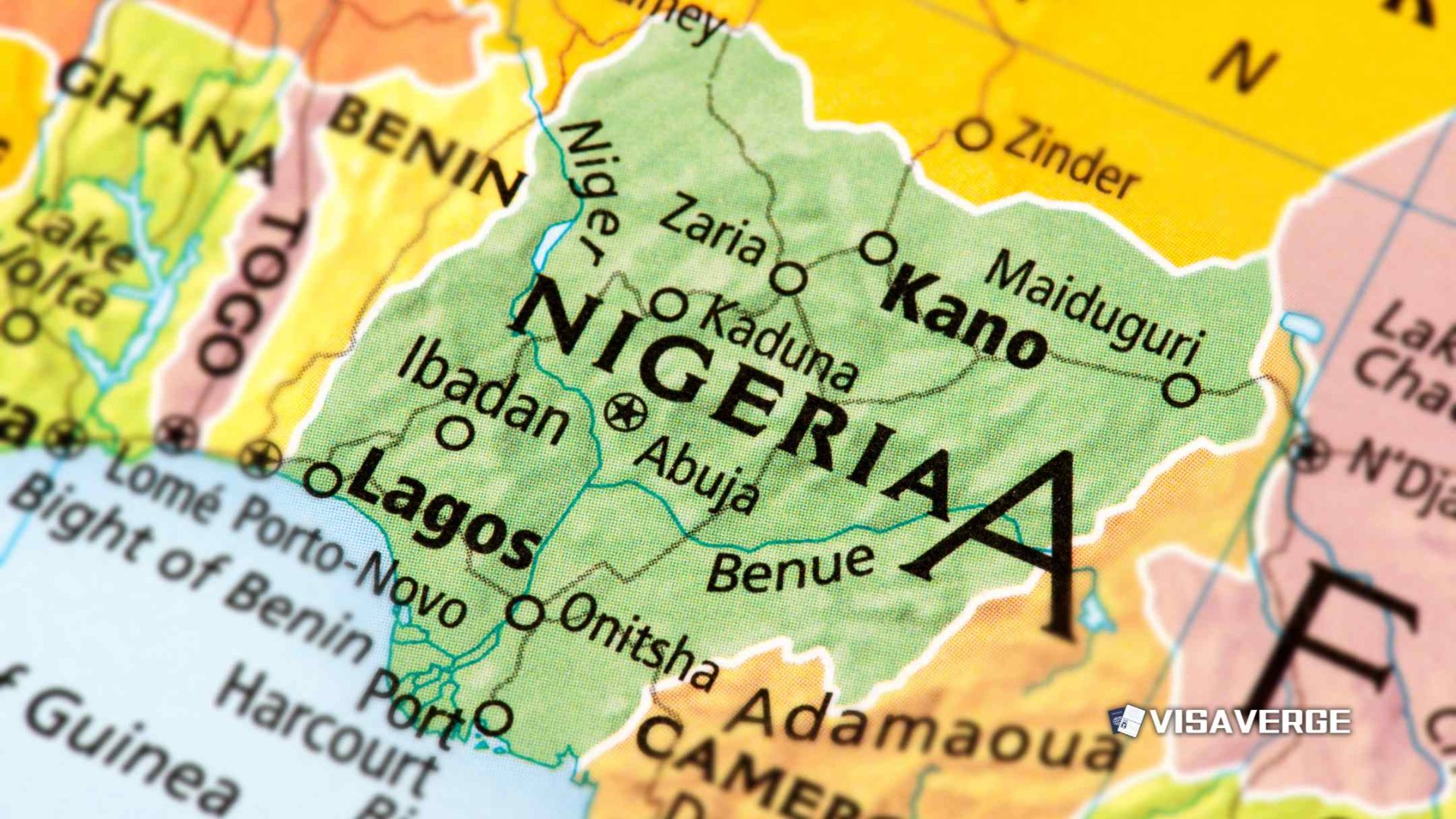
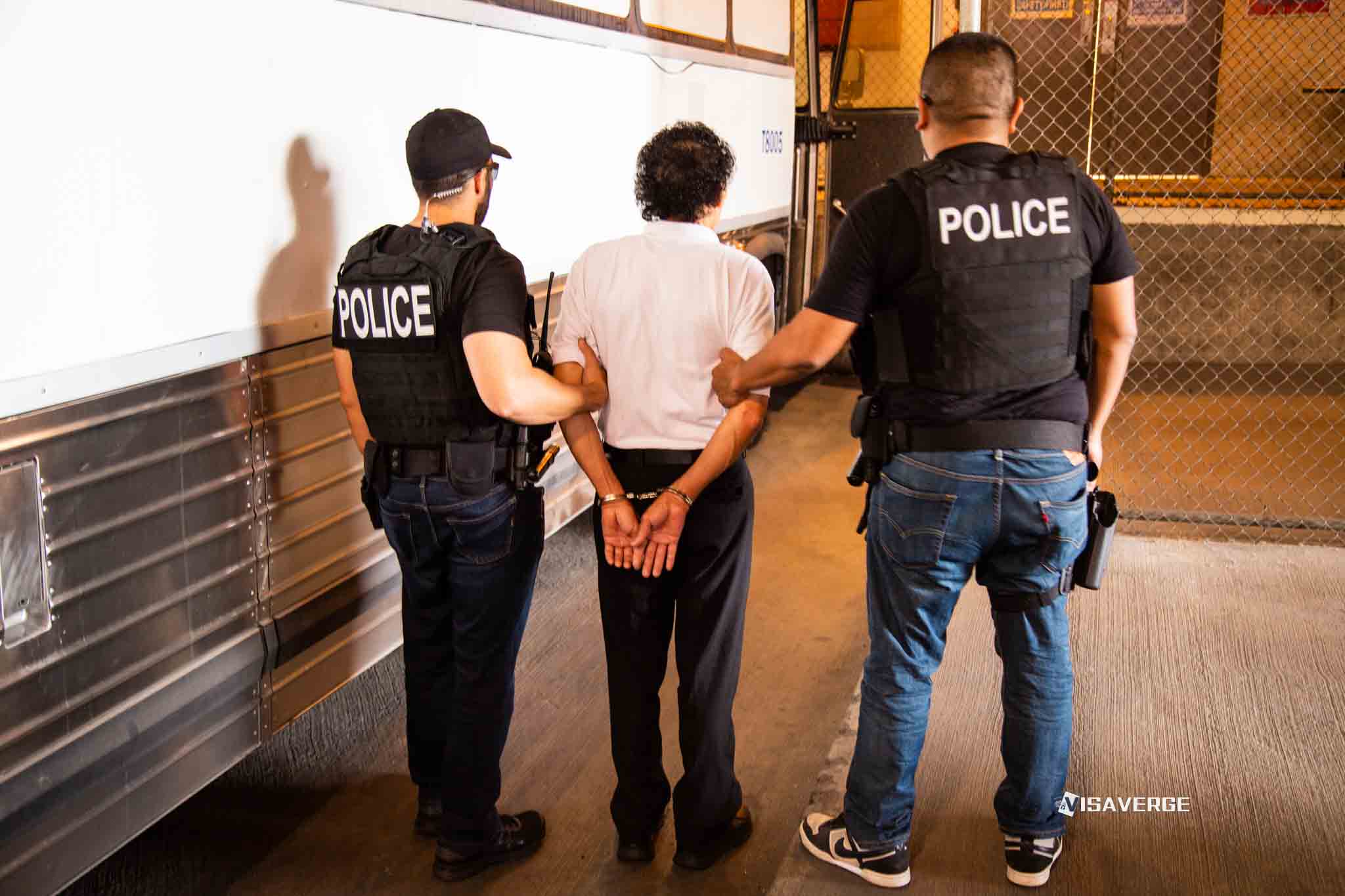
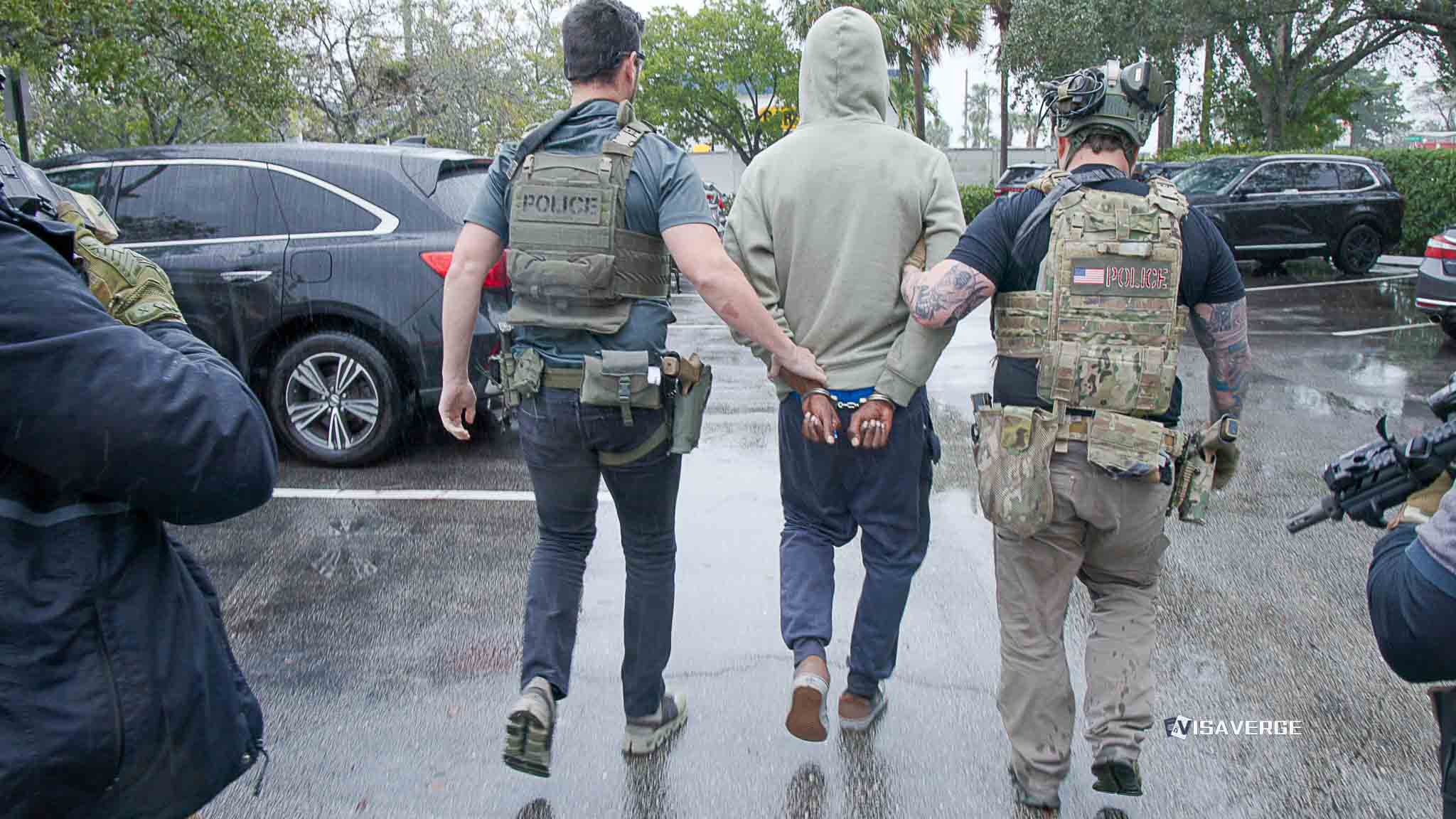
(ENUGU, NIGERIA) — Operatives of the Economic and Financial Crimes Commission, or EFCC, arrested Chukwujindu Goodness Nchekwube, chief executive of Goodben Global Travels and Tour Limited, and Rogers Oluwaseyi Eruku on June 22, 2026 over an alleged N68,020,000 visa fraud scheme in Enugu.
The agency said the pair defrauded at least 24 victims after promising work visas for foreign destinations, then supplying forged visas and fake offer letters.
The case adds to a widening crackdown on visa fraud in Nigeria as U.S. authorities tighten scrutiny of applicants and documents.
Free toolCSPA Age-Out Calculator OnlineJames Ikechukwu told investigators he paid N57.62 million between September 2024 and December 2025 to process work visas for 20 clients.
He said, “After much persistence for her to deliver the work visas, she delivered some. it was discovered that the visas and offer letters were forged.”
Another petitioner, Oranezi David Chinedu, accused Eruku of collecting N10.4 million in May 2024 for work visas to Ireland and other countries that also turned out to be fake.
EFCC identified Eruku as also known as Bakary Rogers Yanni.
Nchekwube told investigators she transferred the money to Eruku because she believed he could secure legitimate visas.
She also alleged that he provided the forged documents that were handed to clients.
The arrests came as U.S. agencies and the U.S. Mission in Nigeria issued fresh warnings about visa fraud and unauthorized consultants.
USCIS said in a fraud alert issued on June 12, 2026, “The USCIS fraud alert issued in June 2026 is a serious reminder that immigrants are frequent targets.
Never pay money or share personal information in response to an unsolicited call or from unauthorized consultants.”
That warning matched language from the U.S. Mission in Nigeria earlier in the year. In a statement dated April 27, 2026, the mission said, “Those who seek to commit fraud bring increased scrutiny on all visa applicants.
We protect the U.S. visa system with rigorous screening, and our officers take fraud very seriously.”
The U.S. Embassy in Abuja issued an even more direct warning about the legal risk of fake paperwork.
“Visa fraud has serious consequences. Lying or providing fake documents can lead to permanent visa bans under US immigration law. This means you will never go.”
Those warnings matter in this case because forged paperwork can damage an applicant long after the money is gone.
Under Section 212(a)(6)(C)(i) of the Immigration and Nationality Act, any person who tries to obtain a visa through fraud or willful misrepresentation of a material fact is permanently ineligible to enter the United States.
That penalty reaches beyond brokers, travel agents and middlemen.
Applicants remain responsible for every document submitted in their names, including paperwork prepared by third parties, and a forged offer letter or visa page can trigger a lifetime bar even if the applicant says a consultant handled the file.
The financial loss in the Enugu case, more than N68 million, comes at a time when U.S. travel and immigration rules for Nigerians have tightened in other ways as well.
Since January 21, 2026, certain Nigerian applicants for B1/B2 visitor visas may have to post a bond of up to $15,000 to guarantee compliance with visa terms.
The U.S. Department of State also paused certain immigrant visa issuances for nationals of countries with high rates of public assistance reliance, including Nigeria, effective January 2026.
In practice, that has raised the cost of mistakes in visa applications, especially for families and workers already paying large sums to agents who claim they can speed up approvals or secure jobs abroad.
Visa fraud cases in Nigeria often sit at the intersection of migration pressure, unemployment and the market for overseas jobs.
Work visas, investor visas and visitor visas all attract brokers who promise quick approvals, embassy access or employer sponsorships, even though the final decision rests with the issuing government and not with a private consultancy.
In the Enugu case, investigators said the suspects used that market to collect money from people seeking legal routes overseas, then supplied documents that were allegedly forged.
EFCC has framed the arrests as part of a wider push against visa racketeering, a term Nigerian authorities use for schemes built around fake travel documents, fabricated employment offers and false assurances of guaranteed entry.
Diplomatic pressure has added force to that push.
U.S. officials have spent recent months warning that fraud by a smaller pool of applicants can affect everyone else by inviting tougher screening across the system, and the mission’s statement in April made that link explicit when it said fraud “bring increased scrutiny on all visa applicants.”
That environment leaves genuine applicants with less room for error.
A forged bank statement, job letter, invitation or approval notice can lead not only to refusal of the immediate visa request, but also to a finding of permanent ineligibility under U.S. law.
The case also highlights the role of unauthorized consultants, which USCIS singled out in its June alert.
The agency urged immigrants and applicants not to send money or personal information after unsolicited contact, a warning that tracks recurring scams in which agents pose as legal advisers, embassy intermediaries or recruiters with access to jobs and visa appointments.
Travel firms occupy a gray area in public perception because some arrange lawful bookings, hotel reservations and application support while others stray into document preparation and immigration advice.
Once an agency or consultant promises guaranteed approval, offers to create employment records, or produces visas and offer letters outside official channels, the risk shifts from poor service to criminal fraud.
Investor visa seekers can be exposed in similar ways, especially when intermediaries offer business plans, proof of funds or invitation letters tailored to consular review.
A false document in that setting can carry the same fraud consequences as a forged work visa record, because U.S. law focuses on misrepresentation used to obtain entry, not on the label attached to the visa category.
Authorities in Nigeria have not treated the Enugu case as an isolated dispute between clients and a travel agency.
By naming both Nchekwube and Eruku and detailing the payments tied to individual petitioners, EFCC placed the matter within a broader fraud enforcement campaign that responds both to local complaints and to foreign government concerns about document abuse.
For the alleged victims, the losses run in two directions at once.
One is immediate and measurable, the N68,020,000 paid out for visas and letters that investigators said were forged.
The other is harder to reverse: anyone who presented those documents to a U.S. consulate now risks a finding that can shut the door on future entry permanently.
That is the harsh arithmetic behind U.S. fraud policy.
A forged document bought in hope of work, study, investment or travel can outlast the criminal case that produced it, remaining in consular records long after the money has vanished and the broker has been arrested.