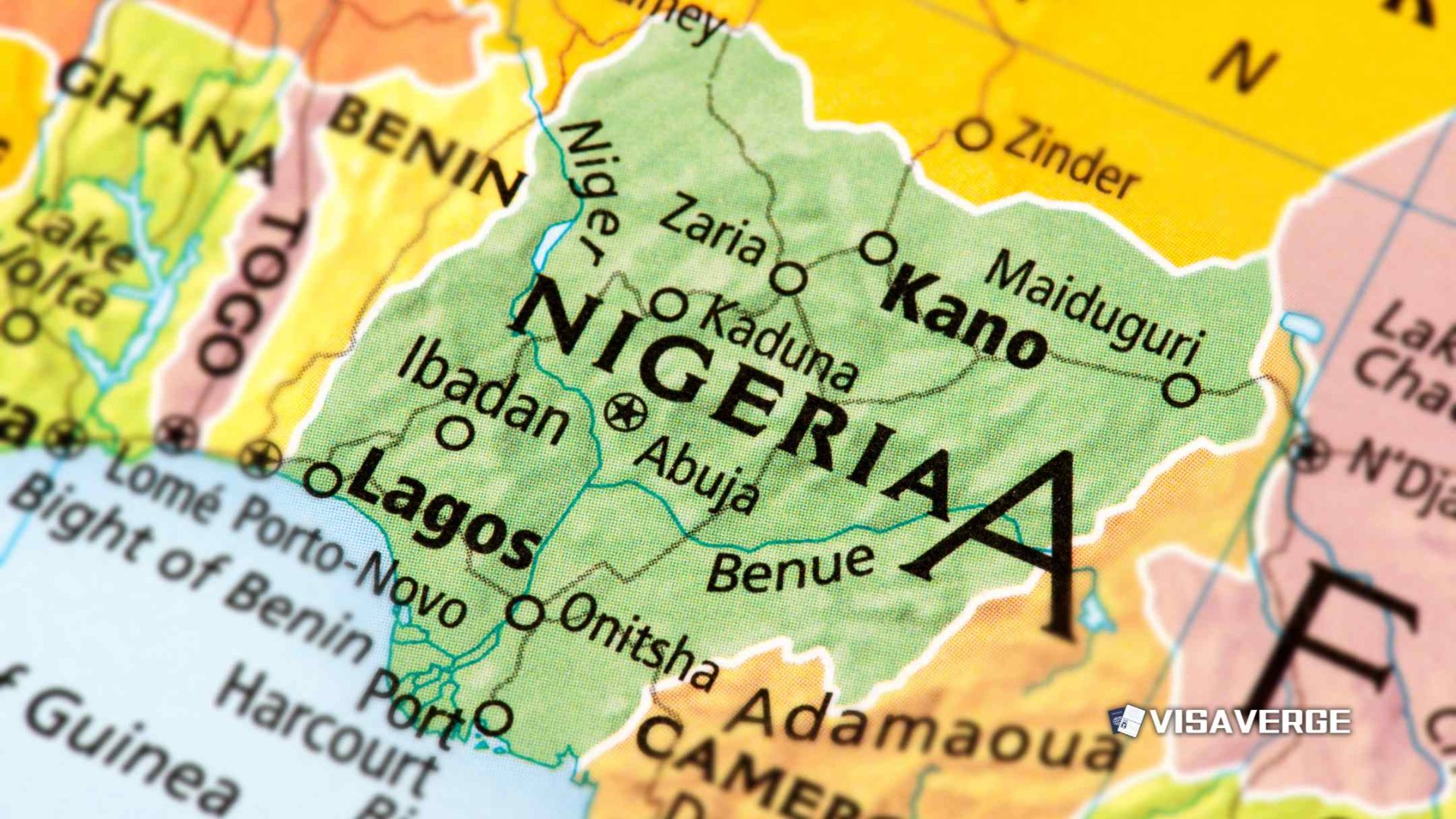
- The U.S. Mission in Nigeria issued a stern warning against visa overstays on June twenty-third, twenty twenty-six.
- Recent data reveals Nigerian visitor overstay rates reached 5.56 percent, with student overstays hitting 11.9 percent.
- Travelers now face refundable visa bonds ranging from five thousand to fifteen thousand dollars for B-visa categories.
(NIGERIA) – The United States Mission in Nigeria warned Nigerian travelers on June 23, 2026 to obey their visa terms and avoid overstays, saying the campaign aims to protect future travel opportunities and the integrity of the U.S. immigration system.
The warning formed part of the mission’s #VisaWiseTravelSmart campaign, which it used to press a simple message at a time of tighter screening for Nigerian applicants. The mission said compliance now carries wider consequences than a single trip.
“Staying compliant with U.S. immigration laws isn’t just the right thing to do; it protects your future and keeps opportunities open.” the mission said in its public message. It added: “When you respect the process, everyone wins.”
Free toolDS-160 Form Filling Online Helper ToolA second statement set out the advice more directly: “Whether you’re studying, working, or visiting the United States, always honour the terms of your visa. Follow the rules. Stay only for as long as you are authorized. Keep your documents updated. Make choices that safeguard your dreams.”
The warning came as official U.S. data continued to show high overstay rates for Nigerians. Department of Homeland Security figures from late 2025 put Nigeria’s overstay rate at 5.56% for B-1/B-2 visitor visas and 11.90% for F, M, and J visas used by students and exchange visitors.
Those figures sit behind a broader set of restrictions that have tightened steadily over the past year. Effective January 1, 2026, Presidential Proclamation 10998 partially suspended the issuance of B-1/B-2, F, M, and J visas, along with most immigrant visas, for nationals of Nigeria and 38 other countries labeled high risk.
Earlier changes had already narrowed travel options. Since July 2025, most new non-immigrant visas issued to Nigerians have been limited to single-entry use and three-month validity.
Another barrier followed in April 2026, when the U.S. State Department began requiring many Nigerian B-1/B-2 applicants to post refundable visa bonds ranging from $5,000 to $15,000. The policy aimed to deter overstays, but it also raised the upfront cost of lawful travel for families, business travelers, and visitors already facing tighter visa terms.
The legal picture shifted again this month. On June 5, 2026, a U.S. Federal District Court in Dorcas v. USCIS vacated a USCIS policy that had frozen green card and work permit processing for nationals from 39 countries, including Nigeria.
That ruling affected people inside the United States who were applying for immigration benefits, but it did not lift the consular travel ban on new visa issuance abroad. The government filed an appeal on June 12, 2026, seeking to reinstate the processing holds struck down in the case.
The split between domestic benefit processing and overseas visa issuance has left Nigerians facing one set of rules inside the country and another at embassies and consulates. A court win on one front did not reopen the wider visa pipeline.
Against that backdrop, the mission framed compliance as a collective issue as much as an individual one. It said “visa overstays by Nigerian travelers can affect opportunities for their fellow citizens,” linking the conduct of one traveler to wider scrutiny of future applicants.
That warning carries practical consequences for anyone seeking to return to the United States later. Nigerians who overstay, even for a short period, risk being found ineligible for future U.S. visas, a penalty that can shut off study, work, tourism, and family travel plans.
The message also reflected a reputational problem that U.S. officials have now stated openly. High overstay rates do not remain a private matter between a traveler and an immigration officer; they feed into country-level judgments that shape visa issuance, validity periods, and extra financial conditions.
For many applicants, the visa bond rule has become the most immediate burden. A refundable payment of $5,000 to $15,000 sits far beyond the reach of many households and small businesses, particularly when the visa itself may allow only a single entry and a stay tied tightly to the original authorization.
Students and exchange visitors face an even harsher statistical backdrop. Nigeria’s 11.90% overstay rate for F, M, and J visas stands well above the already elevated B-1/B-2 figure, placing academic and exchange travel under heavier pressure at a moment when the mission is warning applicants to keep documents current and leave on time.
The U.S. government has tied those restrictions to immigration control and compliance. The mission’s public language did not introduce a new penalty on June 23, 2026; it reinforced existing rules and signaled that visa terms and overstays remain central to how Nigerian travel is being judged.
Nigerians following the policy changes can track updates through the U.S. Mission Nigeria newsroom, while broader overstay data remain available through Department of Homeland Security entry-exit reports. Visa rules and travel notices also appear through the U.S. State Department travel portal and USCIS newsroom.
The mission’s public appeal ended where the policy pressure has now settled: on individual conduct. “Follow the rules. Stay only for as long as you are authorized,” it said, pairing a compliance warning with a reminder that every future application may be read against Nigeria’s record on overstays.