- USCIS currently maintains standard filing rules for 2026 H-1B petitions without routine biometrics or home address requirements.
- A centralized Vetting Center can trigger Requests for Evidence for extra identity checks in high-risk flagged cases.
- Remote work remains valid if employers maintain control and the location is within the approved labor condition area.
(UNITED STATES) USCIS is not requiring routine biometrics or home addresses for H-1B petitions in 2026. The bigger shift is narrower and more serious: in flagged cases, a Request for Evidence can now pull in extra identity checks, including address details or biometrics, under expanded vetting.
That leaves most H-1B filings on the same track they have long followed. Employers still file Form I-129 for specialty occupation workers, and USCIS still focuses on the job, wage, and employer relationship. But applicants and employers now face a more watchful screening environment, especially when travel history, nationality, or online activity raises concern.
USCIS keeps the standard H-1B filing path intact
For a normal H-1B case, USCIS does not ask for biometrics at the filing stage. It also does not require a home address inside Form I-129 unless the agency needs it for a separate verification issue. The usual evidence remains the labor condition application, the job description, the wage level, and proof that the role is a specialty occupation.
Free toolH-1B Cost Calculator OnlineThat traditional framework still matters because many workers and employers have heard rumors that home offices automatically trigger scrutiny. They do not. A telework arrangement is still treated as a real worksite when the employer keeps control of the job and the location sits inside the labor condition application’s geographic area. For many remote employees, no separate amendment is needed for occasional work from home.
USCIS’s own public filing guidance remains the best place to confirm form requirements, including Form I-129, Petition for a Nonimmigrant Worker. The agency has not issued a public rule that makes biometrics or home-address disclosure standard for all H-1B cases.
The vetting shift that changed the risk profile
The real change in 2026 is the move toward more aggressive vetting. On December 5, 2025, USCIS launched a USCIS Vetting Center to centralize screening for terrorism, criminal-history, and fraud risks. That structure gives the agency a stronger tool to flag cases for extra review, including H-1B filings that produce “potentially adverse information.”
In practice, that means a Request for Evidence can go beyond the usual paperwork gap. Traditional RFEs ask for missing documents such as an LCA, a clearer job description, or wage proof. The newer vetting approach can also ask for home addresses, travel details, or biometrics when a case lands in a higher-risk bucket.
The timing matters. On January 8, 2026, USCIS guidance paused some adjudications for applicants covered by travel restrictions, and that added another layer of scrutiny for selected cases. A Presidential Proclamation issued on December 16, 2025, expanded travel restrictions effective January 1, 2026, with attention to birth country, dual nationality, and travel history. Those rules do not create a routine biometrics requirement, but they do raise the odds of extra screening.
According to analysis by VisaVerge.com, the biggest practical change for H-1B households is not a formal new filing rule. It is the growing gap between routine cases and cases that attract security review.
Home addresses, remote work, and site checks
Home addresses are still not part of the standard H-1B filing package. They may enter the file through an RFE, through a status update, or through separate registration rules. Nonimmigrants should keep address records current through USCIS systems, including Form AR-11, because address lapses can invite avoidable follow-up.
Use the official Form AR-11, Alien’s Change of Address Card when an address update is required.
Remote work does not itself create a violation. USCIS guidance still treats a home office as acceptable when the labor condition application covers the metropolitan statistical area and the employer can show real control over the job. Department of Labor or USCIS site visits remain tied to fraud concerns, such as mismatched payroll records or a worksite that looks implausible on paper.
Small companies hiring remote H-1B workers should still document their setup carefully. Clear telework policies, payroll records, and location notes reduce the chance that a routine case gets treated like a suspicious one.
Biometrics stay limited to flagged cases
Biometrics in this context means fingerprints, a photograph, or an iris scan used to confirm identity. For H-1B filings, those appointments are still not routine. USCIS uses biometrics more often in adjustment of status cases, including Form I-485, than in H-1B petitions.
If USCIS asks for biometrics in an H-1B case, the request usually appears after the agency sees something it wants to test more closely. That may include social media vetting, travel issues, or another data point the Vetting Center flags. The request is then case-specific, not universal.
For workers adjusting status through an employment-based green card, biometrics still enter later, after filing Form I-485. The official form is Form I-485, Application to Register Permanent Residence or Adjust Status. That distinction matters because many H-1B holders are mixing up green-card steps with H-1B filing rules.
What an RFE for biometrics or address details means
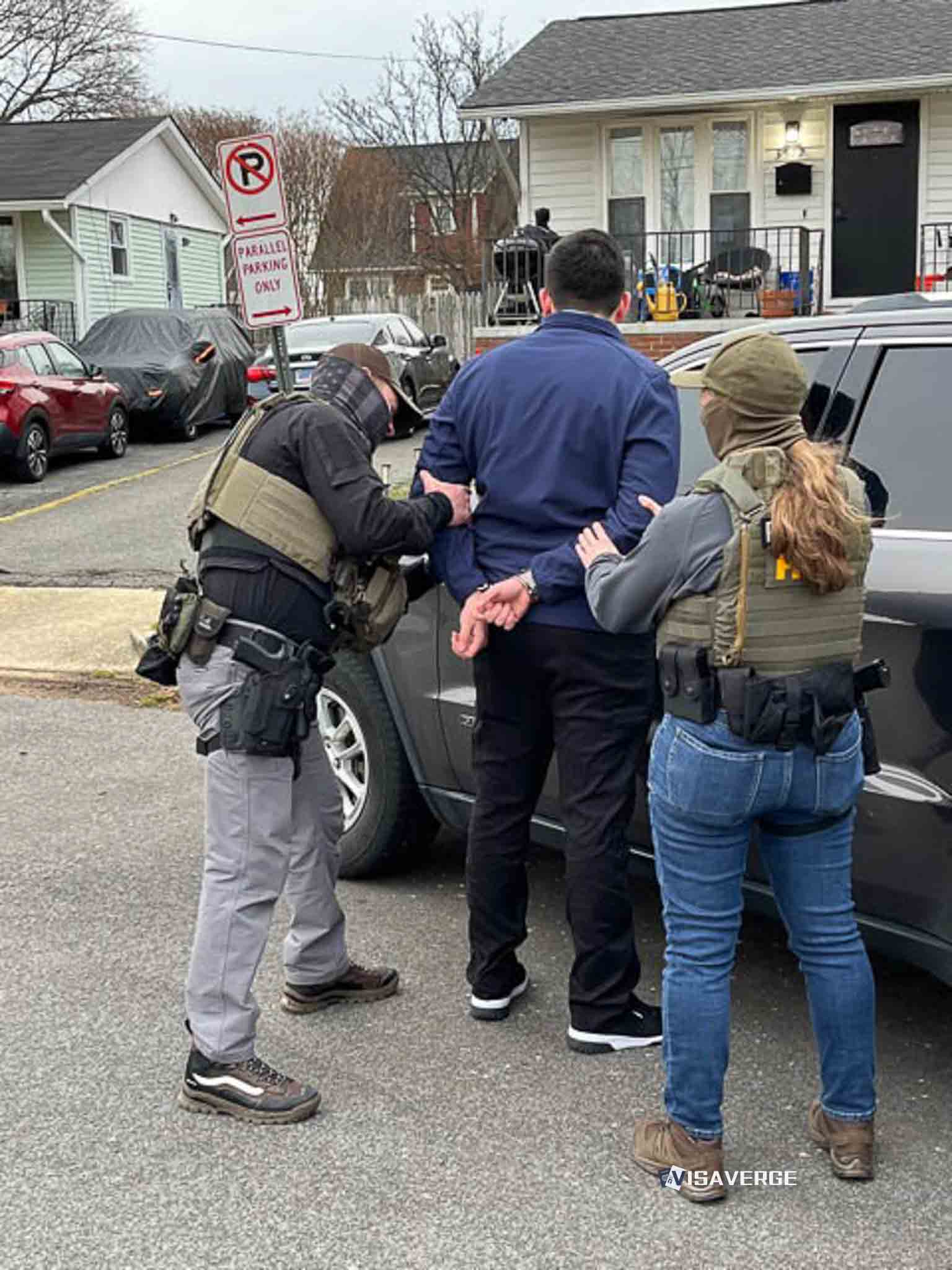
A Request for Evidence is not a denial. It is a formal demand for more proof. In a flagged H-1B case, the request may seek a home address, lease records, utility bills, updated I-94 information, or a biometrics appointment. The agency may not explain every detail of its concern.
When that happens, the response window becomes important. Employers and workers should gather documents quickly, because delay can compound the problem. A clean packet often includes the current address, payroll records, proof of the job location, and a short explanation of any remote-work arrangement.
If biometrics are requested, attendance matters. Missing the appointment risks denial. USCIS uses the appointment to compare identity records with the case file and to move the file past a vetting hold.
The agency also continues to process many ordinary H-1B cases without extra checks. That is why an RFE tied to biometrics or a home address stands out so sharply.
Green-card backlogs, fees, and broader pressure on H-1B workers
The H-1B environment is also being shaped by larger immigration changes. The H-1B Modernization Rule, effective January 17, 2025, expanded some flexibility for cap-gap and specialty occupation cases, but it did not create a biometrics rule. A new $100,000 fee for new overseas petitions and a wage-based lottery system have also changed employer planning.
For workers pursuing employment-based residence, the April 2026 Visa Bulletin brought movement that matters, especially for H-1B holders in the green-card line. EB-2 for the rest of the world is current, while India’s date moved to July 15, 2014. That progress does not change the H-1B biometrics rules, but it does shape filing strategy for workers already in the system.
The wider enforcement climate is harder too. Expanded workplace raids that began in mid-2025 pushed attention toward larger enforcement targets, not routine home-office setups. Employers, especially in technology and consulting, now face longer planning cycles and more caution from foreign workers weighing U.S. offers against Canada or Europe.
What employers and workers are doing now
The most careful employers are treating vetting as a paperwork problem before it becomes a delay problem. They are auditing petitions for weak spots, tightening remote-work records, and keeping address data current. Workers are doing the same with personal records, especially when they move, travel, or switch housing.
For cases that do draw a Request for Evidence, legal help matters quickly. Immigration lawyers can challenge vague requests, organize evidence, and push back when USCIS asks for more than the case seems to justify. That is especially true when the request touches private information like a home address or biometrics without much explanation.
The current H-1B system still does not require routine biometrics. It still does not require home addresses in every filing. But the combination of targeted vetting, travel restrictions, and broader enforcement has made those requests more likely in flagged cases, and that is now part of the daily reality for many employers and workers.