- United Airlines favors targeted asset purchases like slots and gates over large-scale airline mergers.
- Skyrocketing fuel costs are pressuring weaker airline rivals into potentially selling off valuable airport infrastructure.
- Management views full industry consolidation as highly unlikely under current market and regulatory conditions.
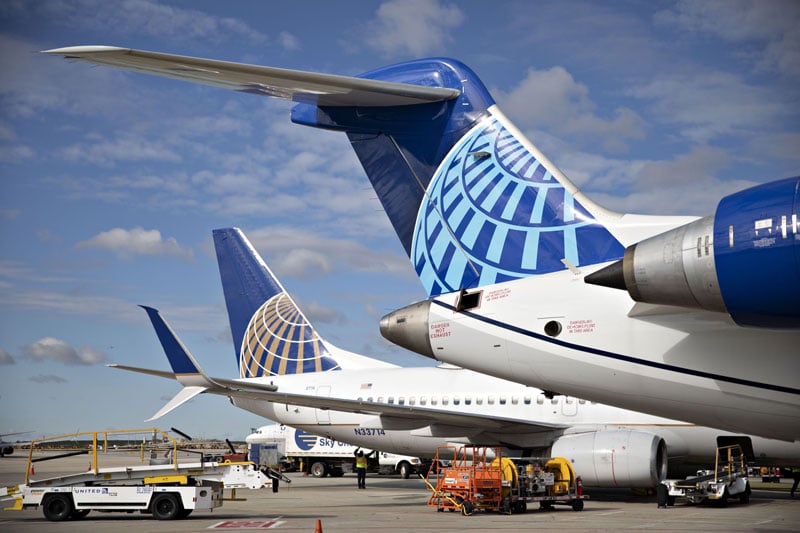
(UNITED STATES) — United Airlines is betting on selective asset purchases, not a full merger wave, and that matters if you care about route choices, award space, and future fares. Scott Kirby says higher fuel costs are squeezing weaker rivals faster, which can open the door to slot, gate, and other asset buys instead of outright airline consolidation.
| Feature | Targeted asset purchases | full consolidation |
|---|---|---|
| What it means | United buys slots, gates, or other assets. | One airline absorbs another in a broad deal. |
| Kirby’s view | Selective and opportunistic. | Low probability. |
| Consumer effect | Could add routes or improve access at key airports. | Could trigger bigger network changes and integration pain. |
| Timeline | Depends on distress in the market. | Requires a far larger deal process. |
| Competitive impact | Shifts airport strength one asset at a time. | Redraws the market at a much larger scale. |
Kirby tied the strategy directly to fuel. Higher oil prices, he said, put more stress on weaker rivals, and that stress hits faster. If that pressure persists, United wants to be ready when assets become available.
That does not mean United is shopping for an airline to buy whole. Kirby described full consolidation as a “low probability” outcome. The company wants to move selectively, picking up pieces that matter more than headlines.
Airport slots and gates sit at the center of that plan. Those assets control access at constrained airports, where a few precious departures can shape an airline’s presence for years. A slot at a packed airport can be more valuable than a plane.
That matters because a slot purchase can change a traveler’s options without the disruption of a merger. More gates can support more frequencies. More slots can support better departure times. Both can improve schedule choices on routes that already matter to business travelers and premium flyers.
United has already had “some discussions” about assets that might come to market, Kirby said. The framing is opportunistic, and that usually means waiting for distress rather than forcing a deal.
Fuel costs are the pressure point behind the strategy. Kirby told employees that jet fuel costs have more than doubled in the last three weeks. If prices stay there, he said, United would face an extra $11 billion in costs.
United’s planning case is already built on a sharp fuel scenario. The carrier assumes oil reaches $175 per barrel and does not fall back to $100 per barrel until the end of 2027. That is a harsh outlook, and it helps explain why management is talking about financial stress instead of expansion through a merger.
The strategy also reflects a market where not every rival is equally exposed. Higher fuel costs hit airlines with thinner margins, weaker cash buffers, or less flexible networks first. That can push them into asset sales before they ever reach a merger table.
| What to watch | Why it matters | Possible traveler impact |
|---|---|---|
| Slot sales | They can reshape service at crowded airports. | More flights, or better times, on select routes. |
| Gate purchases | They can strengthen hub and focus-city positions. | Better connection options and fewer bottlenecks. |
| Distressed asset deals | They often happen when rivals need cash fast. | Route maps can change with little warning. |
| Fuel spikes | They widen the gap between strong and weak carriers. | Fare pressure can rise on weaker airlines first. |
Mileage and points collectors should watch this closely. If United picks up valuable assets, it can strengthen schedules on routes that already feed MileagePlus earnings. More frequencies often mean more saver space on business-heavy routes, even if award pricing still moves with demand.
A slot or gate acquisition can also affect partner awards indirectly. Better airport access can improve connection banks, and that can create more usable itineraries with fewer awkward layovers. If United adds capacity in the right place, elite members may see more upgrade inventory on the routes that matter most.
Competitive pressure is the other side of the story. If higher fuel costs keep hitting weaker carriers harder, those airlines may trim flights or sell assets to stay afloat. That can leave United with a stronger position at airports where access is limited and demand stays high.
That dynamic is especially important at congested hubs and slot-controlled airports. A small asset purchase can have an outsized effect there. One gate can shift a bank of departures. One slot pair can change a route’s economics.
Choose United’s asset-buying playbook if you want gradual network growth and fewer merger headaches. That path can add service without forcing a full integration, which often means fewer loyalty-program headaches and less disruption to schedules.
Choose a broad consolidation scenario if you are betting on a sweeping network reset. That would be a much messier outcome for travelers, with more program changes, more route overlap, and a longer period of uncertainty. Kirby is not signaling that path.
The timing depends on fuel and on how quickly pressure builds across the industry. If oil stays elevated, weaker rivals can lose room to maneuver. That is when airport assets, not airlines, become the prize.
Watch the next few quarters for two signals: distressed asset sales and references to slot or gate opportunities. If either starts showing up more often, United’s selective strategy is moving from talk to execution.