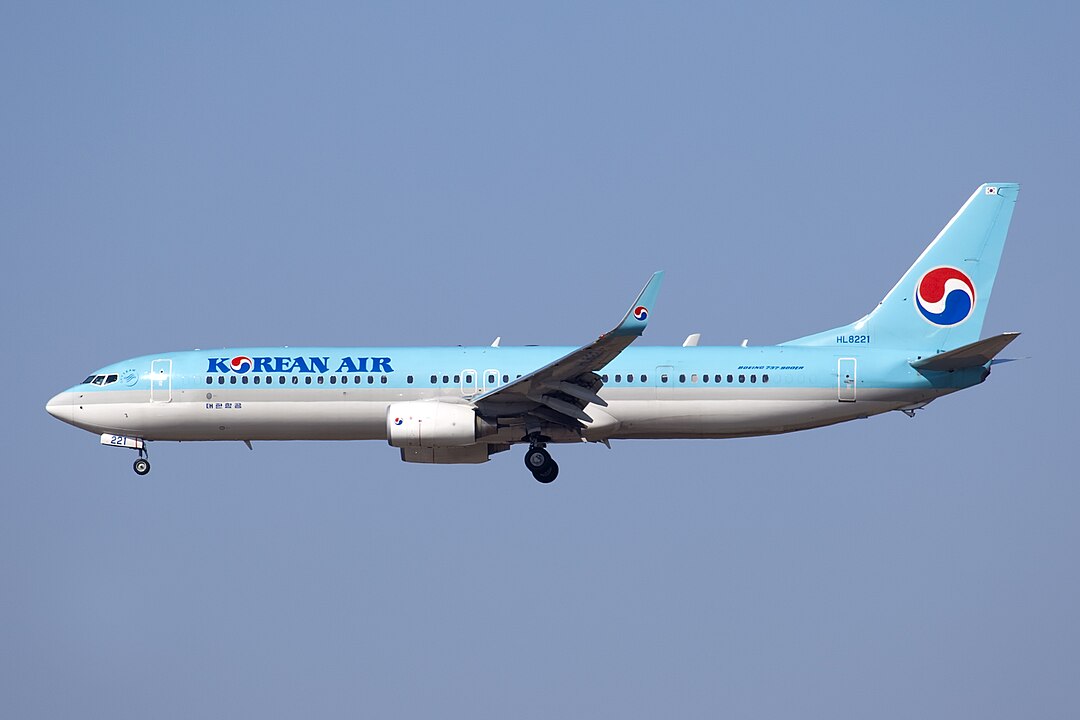
- Korean Air and Asiana secured final corporate approvals for their multi-billion dollar merger launch.
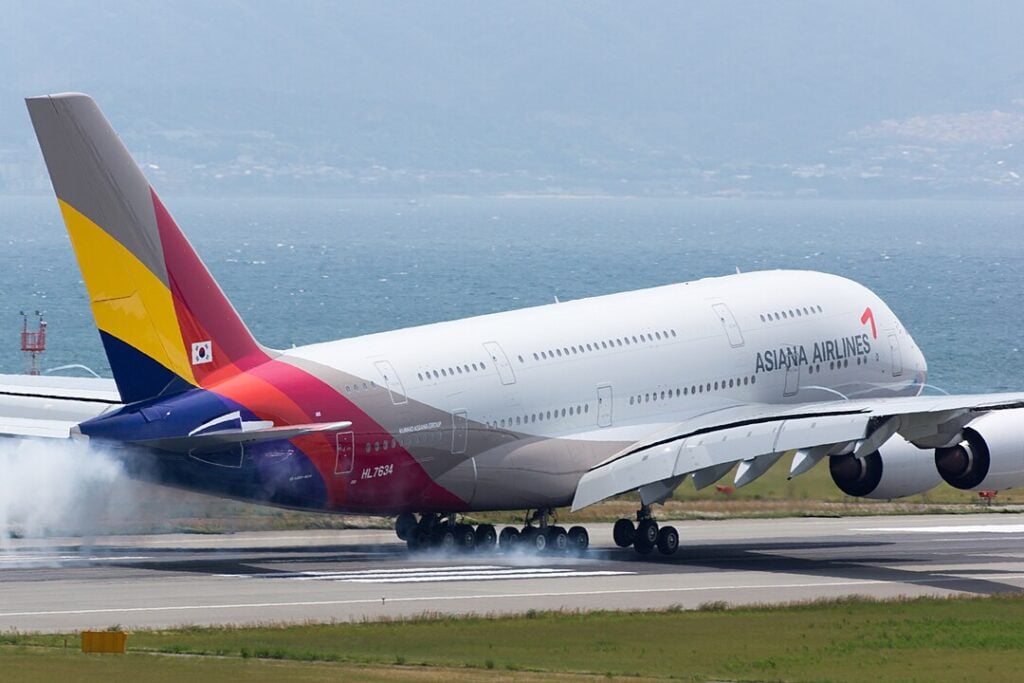
- Asiana Airlines will shutter its separate brand on December seventeenth, twenty twenty-six.
- The newly integrated carrier will join the SkyTeam alliance immediately following the official corporate combination.
Korean Air and Asiana Airlines secured the corporate approvals needed to combine on August 12, putting the integrated carrier on course to launch December 17, 2026. Korean Air’s board ratified the transaction, while Asiana shareholders backed it at an extraordinary general meeting.
Asiana’s meeting drew 81.86% attendance, and 99.3% of participating shares supported the merger. The approval represented 167,436,677 shares voting in favor.
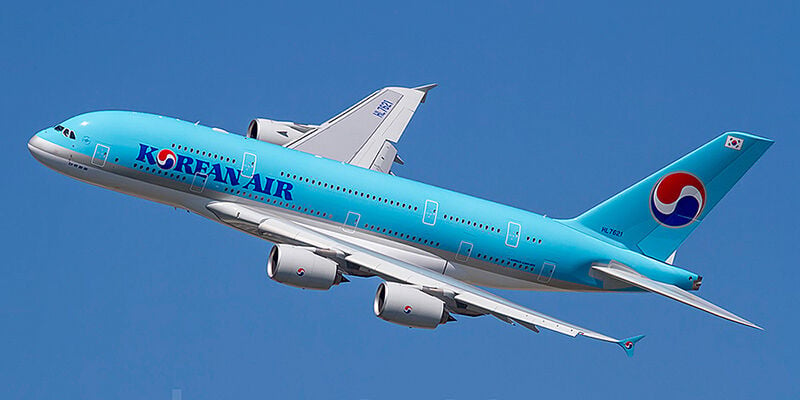
The Korean Air board approved the transaction under Article 527-3 of South Korea’s Commercial Act, which governs small-scale mergers. The corporate merger registration is scheduled for the launch date.
Asiana will disappear as a separate company that day. The combined full-service airline will operate under the Korean Air brand.
Asiana CEO Song Bo-young described the vote as a beginning rather than an endpoint.
“This marks the first step toward writing a new chapter in Korea’s aviation industry as a megacarrier.”
Song also said the company was working with the Korea Fair Trade Commission to protect customers during the transition. “We are faithfully consulting with the Korea Fair Trade Commission (FTC) to protect consumer interests and minimize inconvenience,” he said.
Korean Air will issue shares before the combined carrier begins operations
Korean Air plans to issue 20.34 million new shares as consideration for the merger. The shares are scheduled to list on January 4, 2027.
The exchange ratio gives Asiana shareholders 0.2736432 newly issued Korean Air shares for each Asiana share. Korean Air originally agreed to acquire a 63.88% stake in Asiana for ₩1.8 trillion, approximately $1.6 billion.
The transaction follows a process that began in November 2020. South Korea launched the rescue effort as Asiana struggled with high debt and the effects of the pandemic.
The Ministry of Land, Infrastructure and Transport issued conditional merger approval on June 25, 2026. The merger registration statement received clearance on July 24, 2026.
European regulators had already approved the deal on November 28, 2024, after Korean Air offered remedies to preserve competition. Those commitments included assigning certain European routes to rival carriers and selling Asiana’s cargo business.
The new airline will be larger, but not all of Asiana will join it
The combined full-service carrier is projected to generate annual sales of ₩21 trillion to ₩23 trillion, or about $15 billion to $16.5 billion. Its fleet is expected to total approximately 230 to 240 aircraft.
The integrated low-cost operation is expected to add 60 aircraft. Together, the businesses are projected to employ roughly 27,000 to 28,000 people.
The enlarged airline is expected to rank as the world’s 10th or 11th largest carrier by fleet size and international passenger traffic, measured by RPK.
Asiana’s cargo division will not be part of that fleet. Air Incheon bought the operation for ₩470 billion, or $341 million, on August 1, 2025, and rebranded it as AIRZETA.
The sale answered an antitrust condition imposed by the European Union. Air Incheon later integrated the divested operation under its new name.
Korean Air also had to surrender routes and airport slots to competitors. T’way Air was selected for service to Paris, Rome, Frankfurt and Barcelona, while Air Premia took Honolulu and Alaska Airlines was designated for Seattle.
T’way Air and Air Premia began operating the divested remedy routes to Jakarta and Honolulu during the first half of 2026. The route transfers were designed to preserve competition after the two Korean carriers combine.
Mileage conversion remains the most visible passenger issue
The airlines still need to settle how Asiana Club miles will move into Korean Air’s SKYPASS program. The Korea Fair Trade Commission is reviewing the conversion ratio under consumer-protection conditions tied to the merger.
Officials have said legacy Asiana miles will receive a 10-year window. The two programs could remain separate if the commission does not grant final approval by December.
That uncertainty affects award balances, redemptions and the timing of travel plans. Members should monitor conversion terms before the December launch rather than assume that existing balances will transfer at a one-for-one rate.
Asiana is scheduled to leave Star Alliance on December 16, 2026. It will join Korean Air in SkyTeam the following day.
The alliance change will take effect immediately before the corporate combination. Travelers holding Asiana itineraries or loyalty benefits will need to check the program and operating-carrier details around those dates.
Systems, certificates and employee integration are underway
The airlines began intensive testing of shared systems in July 2026. Their integration work includes joint employee training and preparation for amendments to Air Operator Certificates.
The carriers must also secure overseas operating permits. Those approvals sit alongside the corporate registration and other operational work needed for the December launch.
Asiana moved its operations to Incheon Terminal 2 in January 2026. The relocation consolidated its services with Korean Air and SkyTeam partners ahead of the combination.
Employees face their own transition. Asiana staff are expected to move to Korean Air’s compensation structure, which is reportedly 32% higher on average.
Pilot seniority remains a source of friction. In May 2026, the Korean Air Pilots’ Union filed a defamation lawsuit against the Asiana Pilots’ Union after disputes over promotion standards and training hours.
The labor question sits alongside the technical integration. Joint training must support the combined operation while the two groups continue working through seniority and workplace rules.
The December launch date now anchors the remaining work
Song said the companies had traveled a long road toward the combination. He said the corporate process would be completed on December 17, when Asiana is set to be reborn within the integrated Korean Air.
Before then, the carriers must finish systems testing, amend operating certificates, secure overseas permits and resolve the mileage conditions under review by the competition authority.
The next fixed dates are December 16 for Asiana’s departure from Star Alliance, December 17 for the corporate registration and launch, and January 4, 2027, for the listing of Korean Air’s newly issued shares. Mileage members should review official conversion terms before the December 17 changeover.