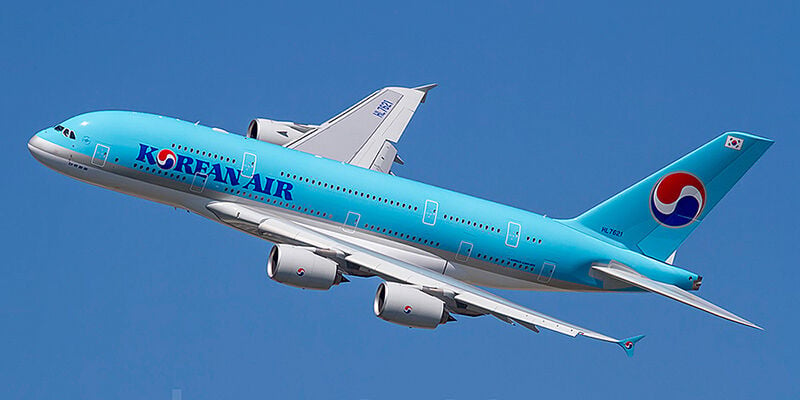
- Jin Air, Air Busan, and Air Seoul signed a merger deal on August twenty-first, twenty twenty-six to form South Korea’s largest low-cost carrier.
- The combined airline plans to launch on March seventeenth, twenty twenty-seven with fifty-nine aircraft and more than seventy routes.
- The merger still needs shareholder votes and government approval before Integrated Jin Air can begin operations.
South Korea’s three Hanjin Group budget airlines, Jin Air, Air Busan, and Air Seoul, signed a merger agreement on 21 August 2026 that will create the country’s largest low-cost carrier. The combined airline, branded “Integrated Jin Air,” is scheduled to begin operations on 17 March 2027 with 59 aircraft and more than 70 planned routes.
The boards of all three companies approved the agreement in separate meetings that day. The new carrier will consolidate the groups’ low-cost operations under one surviving company, while the transaction remains subject to shareholder votes and government authorization.
Free toolB1/B2 Tourist Visa Stay Calculator online
A Jin Air official described the transaction as a turning point for South Korea’s budget-airline sector.
“The merger of the three carriers is an important turning point that brings together the expertise each airline has accumulated to build a new foundation for growth in South Korea's LCC industry.”
The official also said the integration would focus first on safety and then on route operations and passenger choice.
“With safety as our top priority, we will complete a successful integration and grow into an LCC representing Asia through optimized route operations and expanded choices.”
Shareholders and regulators still control the launch timetable
Each company plans to convene an extraordinary shareholder meeting in December 2026. Those votes must come before the companies pursue the required government permissions.
The transaction requires approvals under South Korea’s Aviation Business Act. It also needs merger authorization and changes to aviation operating certifications before the new airline can start under its planned structure.
The March launch date therefore represents the companies’ target, not an unconditional start of service. The integration must clear both the corporate approval process and the aviation certification process first.
One company will absorb the other two carriers
The agreement uses a corporate merger structure. The surviving company will absorb the other two and assume their business responsibilities.
| Merger element | Agreed structure |
|---|---|
| Surviving company | Jin Air |
| Absorbed companies | Air Busan and Air Seoul |
| Merger ratio | Jin Air 1 : Air Busan 0.2862684 : Air Seoul 0.7501939 |
| Transferred business | Assets, liabilities, rights, obligations, employees and legal status |
The surviving carrier will take over the absorbed airlines’ assets and employees along with their liabilities, rights, obligations and legal status. The published ratio is also reported in rounded form as Jin Air 1, Air Busan 0.28 and Air Seoul 0.75.
That structure places the combined operation, workforce and legal responsibilities inside one company rather than preserving three separate low-cost brands.
The combined network will stretch across around 70 routes
The merged airline is expected to operate 59 aircraft, making it South Korea’s largest budget carrier by fleet size. Its planned network covers around 70 domestic and international routes.
The enlarged fleet and consolidated route map are expected to reshape competition in South Korea’s low-cost market. The new carrier is expected to overtake rivals such as Jeju Air by fleet size.
The agreement also brings route networks and staff under one brand. The companies have presented that consolidation as a way to optimize operations and expand consumer choices, although the agreement itself does not set out future fares.
The deal follows a wider Korean aviation consolidation
The transaction is tied to the broader consolidation of Korean Air and Asiana Airlines. The three low-cost carriers sit within that corporate structure: Jin Air operates under Hanjin Group and Korean Air, while Air Busan and Air Seoul operate under Asiana Airlines.
The main Korean Air and Asiana integration is expected to reach completion on 17 December 2026. That timing comes three months before the planned launch of the integrated low-cost carrier.
The wider combination is driving restructuring across South Korea’s aviation sector. The budget-airline merger extends that process into the low-cost market by bringing the three affiliated carriers into a single operation.
The surviving carrier promises a safety-first integration
A Jin Air representative speaking in Chinese described the transaction as a foundation for renewed growth in Korea’s low-cost aviation industry.
“此次三家公司合并,是汇聚各航空公司长期积累的专业能力、为韩国低成本航空产业构建新增长基础的重要转折点。”
The representative also linked the integration to route optimization and broader passenger choice while placing safety first.
“我们将把安全置于首位,完成成功整合,并通过优化航线运营和扩大消费者选择权,成长为代表亚洲的低成本航空公司。”
The next formal checkpoint arrives in December 2026, when shareholders are scheduled to vote. The carrier’s targeted operating date remains 17 March 2027, after the required merger permissions and aviation certification changes are completed.