- Major budget airlines cut international flight schedules through June 2026 due to rising operating costs.
- Jet fuel prices surged to $220 per barrel, forcing carriers to implement emergency management protocols.
- South Korean passengers face higher fuel surcharges on popular routes to Southeast Asia and Japan.
(SOUTH KOREA) — South Korean low-cost carriers cut international flights, raised fuel surcharges and tightened spending as jet fuel prices climbed during a Middle East conflict, the Korean won weakened and travel demand softened.
Jeju Air made the largest reduction, canceling 110 flights on Incheon to Hanoi, Incheon to Bangkok and Incheon to Singapore from May 2026 through June 2026. Other carriers trimmed Southeast Asia, Japan and Pacific routes over the same period.
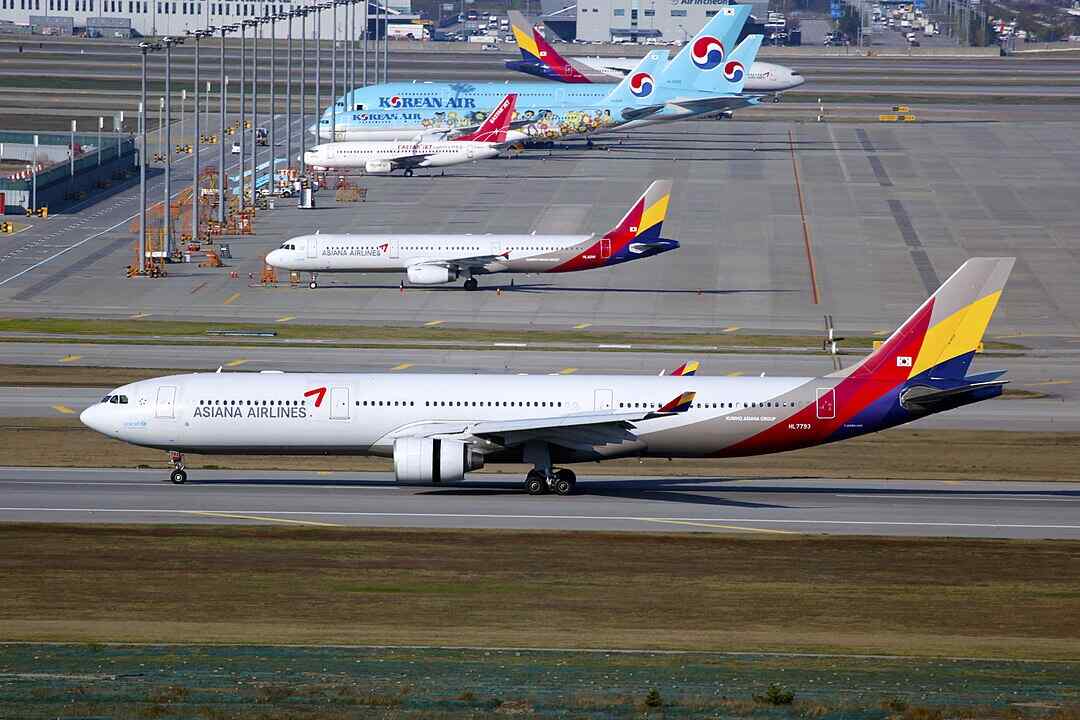
T’way Air reduced its Suvarnabhumi to Incheon daily service to twice weekly from May 10, 2026 through July 14, 2026. It also halted Bangkok to Daegu flights until July 15, 2026 and cut other routes while operating under emergency management.
Air Busan canceled six Bangkok to Busan flights on May 13, 16, 20, 23, 27, and 30, 2026. Aero K cut four routes, Cheongju to Ibaraki, Tokyo-Narita, Clark and Ulaanbaatar, between April 2026 and June 2026.
Air Seoul also scaled back its Incheon to Guam schedule. Several carriers, including T’way Air, Jin Air, Air Busan and Air Seoul, adopted emergency management frameworks that included unpaid leave, voluntary retirements and fuel tankering, a practice of loading extra fuel at cheaper airports.
The cuts mark one of the clearest signs yet that South Korean low-cost carriers are struggling to absorb a rapid jump in operating costs. Airlines in the segment rely heavily on dense regional flying, and even small changes in fuel and currency costs can quickly hit margins.
Carriers also passed part of the burden to passengers in early April 2026. T’way Air raised its surcharge on Thai routes from 1,900 baht to 2,850 baht, while Air Busan lifted its surcharge from 2,000 baht to 2,700 baht starting April 1, 2026.
Analysts expect more increases in May 2026 as the recent rise in jet fuel prices flows through airline costs. Jet fuel prices rose from $80 to $220 per barrel.
Those increases come as airlines face two pressures at once. Fuel is a large direct expense, and many aviation costs are dollar-denominated, which makes them more expensive when the Korean won weakens.
Off-peak demand added another problem. Airlines also faced the possibility of fuel supply restrictions at airports in Japan and Southeast Asia, two markets that anchor many regional schedules run by South Korean low-cost carriers.
Air Seoul moved beyond schedule cuts and fare surcharges into internal cost controls. It expanded remote video meetings and virtual reporting, reduced regional staff travel and pushed “Paperless” operations.
Korean Air entered emergency management mode from April 2026 to counter the fuel surge. That step carried weight across the market because Korean Air is the parent of some low-cost carriers, including Jin Air.
The strain reflects the business model that helped budget airlines grow quickly in South Korea. Low fares and short-haul international routes can fill seats fast in stronger travel periods, but the model leaves limited room when fuel spikes, currencies move against operators and demand cools.
Bangkok appears especially exposed in the current round of changes. Jeju Air, T’way Air and Air Busan all cut or suspended service connected to the Thai capital, either on routes to Incheon, Daegu or Busan.
Japan and nearby Asian destinations also featured in the retrenchment. Aero K’s cuts to Ibaraki, Tokyo-Narita, Clark and Ulaanbaatar showed that airlines were not limiting reductions to one country or one airport group.
Emergency management across the sector has taken several forms. Unpaid leave and voluntary retirements lower payroll costs, while fuel tankering aims to reduce refueling expenses on routes where overseas fuel costs more.
That strategy can offer short-term relief, but it does not remove the pressure from higher market fuel prices. Airlines still burn more expensive fuel overall, and repeated schedule changes risk weakening demand further if passengers shift to competitors or postpone trips.
President Lee Jae Myung ordered fuel price caps, 6 million barrels of UAE crude imports and activation of a 100 trillion won ($68.3 billion) market stabilization fund amid the crisis. The measures showed that the fuel shock had widened beyond aviation into the broader economy.
The government response also underscored how closely airline finances tie into exchange rates and energy costs. A weaker Korean won raises the local-currency cost of oil, aircraft-related payments and some airport charges, leaving carriers with little room to shield fares fully.
Budget airlines had already been dealing with softer demand outside peak travel seasons. With fewer passengers to spread fixed costs across, each jump in fuel expense carries more weight on a per-seat basis.
Analysts warned that conditions could worsen if demand does not recover by June 2026. Some low-cost carriers could face financial strain and severe management challenges.
The combination of fewer flights, higher surcharges and tighter internal spending leaves carriers trying to preserve cash while keeping enough of their networks intact to compete once demand returns. By early summer, the resilience of South Korean low-cost carriers may depend less on ticket sales alone than on where jet fuel prices settle and whether the Korean won steadies.