- JetBlue paid about $3.91 per gallon for fuel in July–September, up 57% year over year.
- The airline reported $273 million in operating cash burn during the first nine months of 2026.
- JetBlue is targeting positive free cash flow and at least $1.00 in earnings per share in 2028.
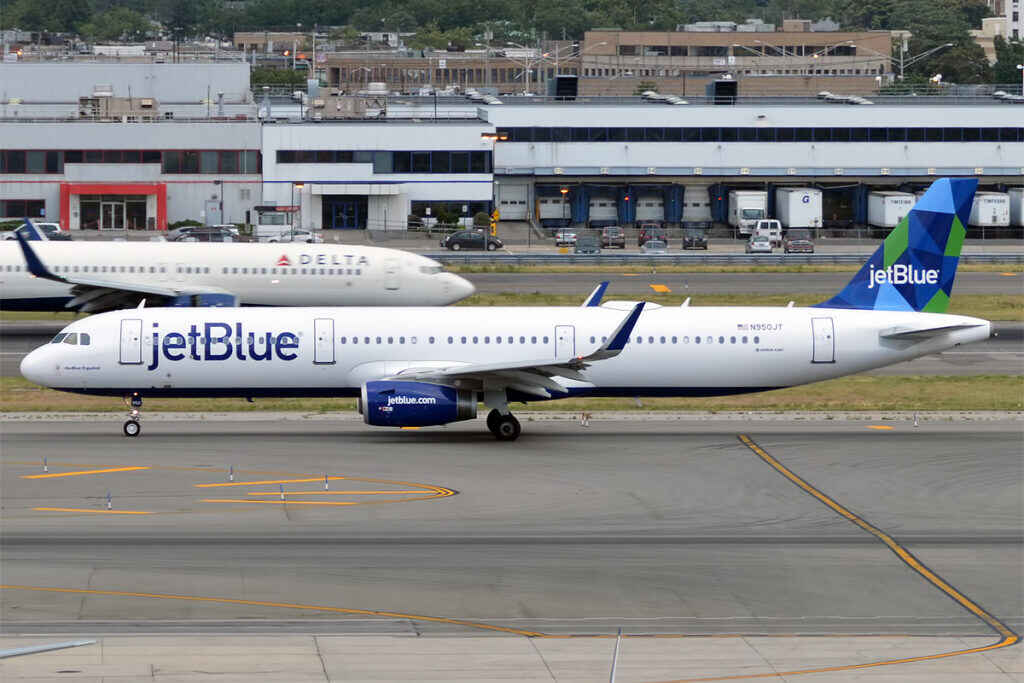
JetBlue Airways shares fell 5% on November 12, 2026, as crude oil turned higher and airline stocks slid. The decline put the carrier among the hardest hit in the sector.
United Airlines and Delta each dropped 4%. The shift in shares came as West Texas Intermediate crude reversed an overnight decline, a market pattern that has put fuel costs back in focus for investors.
Fuel is one of an airline’s largest expenses, and rising crude prices can weigh on carrier shares. The movements coincided, though the day’s broader market weakness also had other triggers.
Crude turned higher as airlines lost ground
Oil fell overnight amid hopes for peace talks involving Iran and Ukraine, then moved higher during the U.S. session. Earlier in November, airline shares had gained as oil prices fell on similar hopes.
The market also took a risk-off turn after October’s hotter-than-expected Consumer Price Index reading and the resignation of a major chipmaker’s CEO. Energy led sectors, while industrials and small-cap stocks lagged. JetBlue is the smallest of the four carriers by market value, a position that can leave its shares more exposed to market swings.
JetBlue has no fuel contracts to cushion a price spike
JetBlue stopped using forward contracts for jet fuel, leaving the airline exposed to changing prices. It paid about $3.91 per gallon in July–September, 57% more than a year earlier. The company’s fourth-quarter fuel-cost forecast is $4.64 per gallon, up 85% year over year.
The carrier has raised fares as fuel costs climbed. It said passenger volume did not meaningfully decline as industry fares rose, and reported recovering 87% of its fuel costs in the third quarter. On its October 27 earnings call, the company said it recouped 80% of higher fuel costs in Q3 and expected its adjusted operating margin to expand one to two points in Q4 despite the higher fuel bill.
Chief Executive Joanna Geraghty said on the call:
“The fuel challenges the industry faces are real, but so is our progress.”
JetBlue’s smaller point-to-point network, concentrated in the Northeast and Fort Lauderdale, also gives it a narrower revenue base than larger rivals. Its premium products include Mint and the BlueFirst domestic first-class cabin, which is scheduled to launch December 8 under its JetForward plan.
United and Delta have different cushions
United’s global hub network spans international routes and includes cargo and its MileagePlus loyalty program. Chief Financial Officer Michael Leskinen said the airline expects to recover higher fuel expenses, but with a delay.
“We are highly confident in our ability to recapture 100% of increases in our fuel cost, but with a lag.”
United’s fourth-quarter earnings guidance assumes fuel at approximately $4.80 per gallon. Delta has another buffer: its company-owned refinery offsets part of its jet-fuel bill. The airline forecast a Q4 fuel cost of $4.25 per gallon including that benefit, and its full-year outlook includes a refinery benefit of more than $700 million.
American, by contrast, faces fuel pressure in its fourth-quarter outlook, which calls for an adjusted loss of $1.10 to $0.50 per share. JetBlue’s smaller network and lack of fuel contracts leave it with fewer ways to blunt an extended cost increase.
Cash reserves coexist with a heavy burn
JetBlue ended Q3 with $2.2 billion in liquidity, including a $600 million undrawn credit facility. The company also had about $7 billion in unencumbered assets, including $2.8 billion in aircraft and engines after updated appraisals.
Cash and equivalents fell to $1.26 billion from $1.66 billion at mid-year. The airline used $273 million more cash than it generated from operations in the first nine months of 2026, nearly twice the $143 million burn in the same period last year. Its adjusted Q3 loss was $0.60 per share, compared with a 40-cent loss a year earlier; analysts had expected a 55-cent loss.
A senior creditor group is working with restructuring adviser PJT Partners. JetBlue has maintained its confidence in its turnaround strategy. In an emailed statement, the company said:
“JetBlue remains confident in its JetForward strategy and the progress being made toward returning to sustained profitability.”
The airline reiterated its goal of at least $1.00 in earnings per share and positive free cash flow in 2028. Investors can watch for new industry fare increases as a sign carriers are passing higher fuel costs on to passengers.