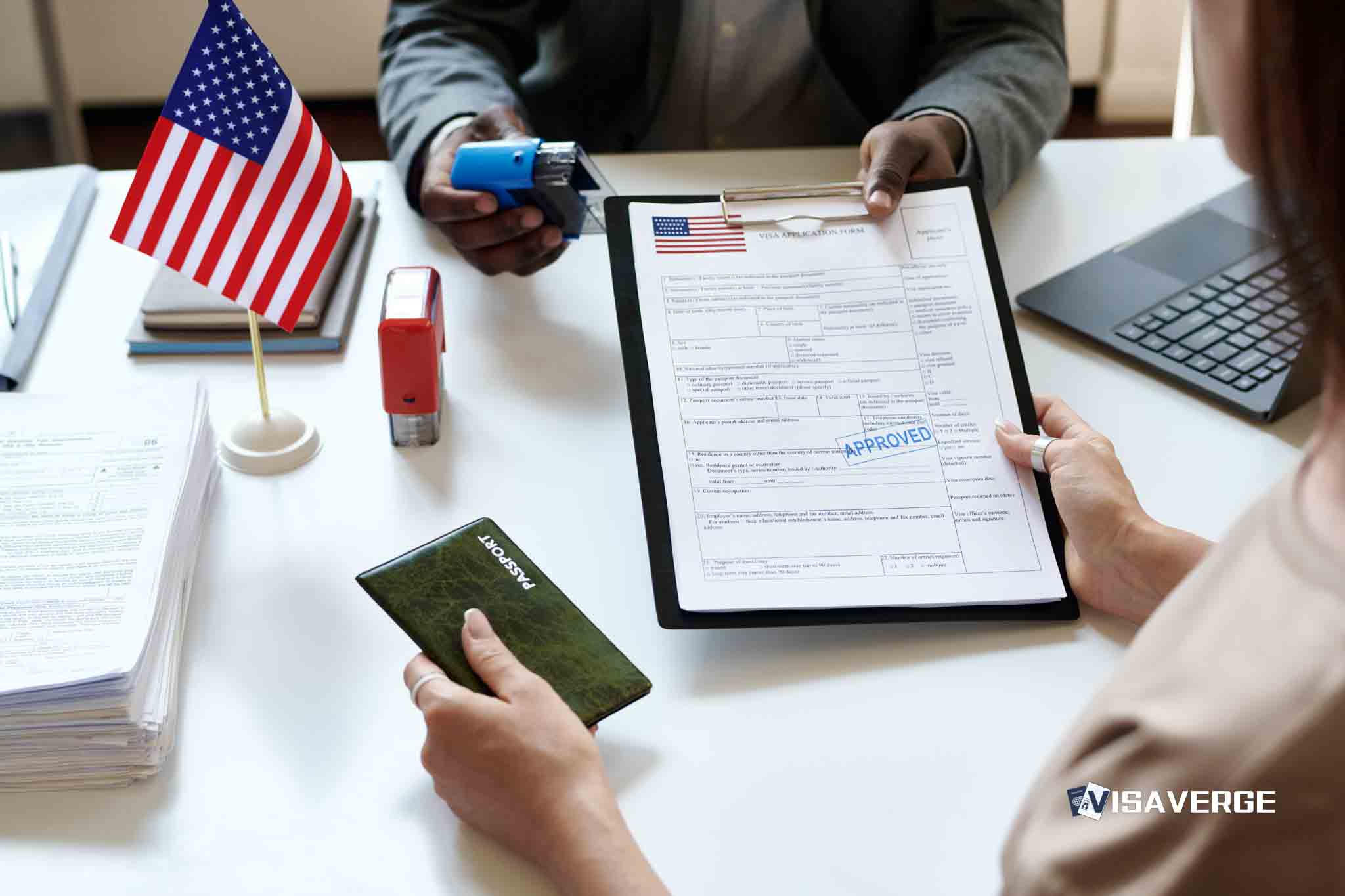
- U.S. visa applicants must disclose social media handles from the past five years on the DS-160 form.
- Consular officers now use public online presence checks to verify identity, intent, and security risks during interviews.
- Private profiles or missing accounts often trigger visa refusals under INA 221(g) or misrepresentation rules in 2026.
(UNITED STATES) U.S. visa applicants now face tighter scrutiny of their online lives, and the pressure starts with the DS-160 form. Applicants for F, M, J, H-1B, and H-4 visas must disclose social media usernames used in the past five years, and consular officers are using that information for expanded vetting before and during interviews.
The change matters because a missing account, a private profile, or a mismatch between an application and online posts can lead to denial or delay. According to analysis by VisaVerge.com, the State Department’s use of social media has moved from a narrow security check into a central part of visa screening, especially as expanded vetting takes hold in 2026.
The DS-160 form now sits at the center of visa screening
Every nonimmigrant applicant must list social media usernames from the past five years on the DS-160 form, including accounts on platforms such as Facebook, Instagram, X, LinkedIn, TikTok, and regional apps. The requirement applies across categories, not just students and exchange visitors.
Free toolI-94 Expiration Calculator OnlineThe official DS-160 online nonimmigrant visa application is where those disclosures begin. Applicants should enter handles exactly as they appear on each platform. Even dormant accounts count. Omissions are treated as material misrepresentation under immigration rules and can trigger a refusal.
Consular officers also expect accounts to be public before the interview. Private settings block review and can lead to a refusal under INA 221(g) for an incomplete application. That is a practical problem for applicants who use locked-down profiles for ordinary privacy, family safety, or professional reasons.
Why consular officers are checking public posts
The State Department has tied social media screening to national security concerns and online activity that may reveal identity, intent, affiliations, or risk. Officers review public posts, photos, comments, contacts, and the broader pattern of an applicant’s digital life. Interview questions now often focus on what appears online.
A student may be asked why an Instagram account shows job-seeking posts. A worker may be questioned about political comments or contacts in certain groups. A visitor may have to explain travel images, deleted posts, or old material that appears inconsistent with the visa story presented in the interview.
These checks are no longer limited to F, M, and J cases. In January 2026, expanded vetting also reached H-1B and H-4 applicants after a December 16, 2025 announcement on “online presence” review. That expansion reflects a broader government push to connect visa decisions with digital behavior, nationality, and travel history.
What changed in 2026 and who feels it most
The 2026 changes arrived alongside wider security measures that affected immigrant and nonimmigrant processing. Officials added heightened scrutiny for applicants from restricted countries and for cases where online activity does not match the stated purpose of travel. In practice, that means more applicants face extra questions and more files move into administrative processing.
Students and exchange visitors feel the shift immediately because their studies, funding, and housing plans often depend on fast visa decisions. Employers feel it too. A delayed H-1B stamping appointment can hold up a start date, disrupt payroll planning, and leave both worker and company waiting for a resolution.
Applicants from countries already subject to tougher screening face even more pressure. Officers may pay closer attention to public posts, screenshots, and online connections. A private account, an omitted platform, or a joking post that reads badly in translation can become the reason an officer asks for more evidence or issues a refusal.
Common mistakes that lead to delays or denials
The pattern is consistent: inconsistency creates risk. If the DS-160 form says one thing and social media shows another, consular officers notice. If an applicant says the trip is for study but posts about looking for U.S. work, that contradiction can support a finding of immigrant intent under INA 214(b).
- Leaving out an old account because it was rarely used
- Forgetting a platform tied to another email address
- Keeping accounts private before the interview
- Posting content that suggests violence, extremism, or hostility toward the United States
- Using sarcasm, memes, or jokes that read differently outside the original context
Some applicants try to delete old material before the appointment. That can raise suspicion if it looks like evidence was hidden. Officers already know that accounts can be archived, reposted, or captured through screenshots. Digital cleanup does not erase the original footprint.
How applicants are preparing for interviews
Applicants are approaching these interviews like a document check and a digital check at the same time. The first step is accuracy. The second is consistency. The third is making sure the online story matches the paper story.
A careful review should cover:
- All social media usernames used in the last five years
- Privacy settings on every active account
- Posts, comments, and photos that may look inconsistent
- Travel images, political statements, and group affiliations
- What to say if an officer asks about a specific post
If a post is old, harmless, and easy to explain, the better response is a clear explanation, not denial. If an account is linked to the applicant, it must be disclosed. If a platform was forgotten at first, the safest course is to correct the record before the interview rather than hope it is never found.
The State Department’s visa information page remains the main official reference for visa procedures, interview expectations, and category-specific guidance.
Why the policy keeps expanding
The Department of State has steadily widened its use of online screening since the policy first became a routine feature of visa processing. The original 2019 framework focused on disclosure and review. The 2026 version adds broader online presence checks and a sharper focus on work visas.
That expansion reflects a larger security posture. Officials now treat public digital behavior as part of the visa record, not as a side issue. Supporters say the approach helps identify fraud, extremist ties, and false claims faster. Critics say it invites overreach, misreading, and self-censorship, especially for people who use social media casually or in more than one language.
For applicants, the main consequence is simple: the internet is now part of the interview file. A post written years ago can still matter. A username used briefly can still matter. A private profile set up for personal reasons can still matter if it blocks review or creates an inconsistency.
VisaVerge.com reports that the pressure is unlikely to ease soon, especially as expanded vetting becomes more routine across student, exchange, and work categories. The practical response is full disclosure, careful review, and a paper trail that matches the applicant’s online presence from start to finish.