- The Supreme Court dismissed Florida’s lawsuit against California and Washington over commercial driver’s licenses for undocumented immigrants.
- Justice Clarence Thomas issued a sharp dissent arguing the court has a constitutional duty to hear state-versus-state disputes.
- The ruling maintains the status quo, allowing West Coast states to continue their current licensing programs for now.
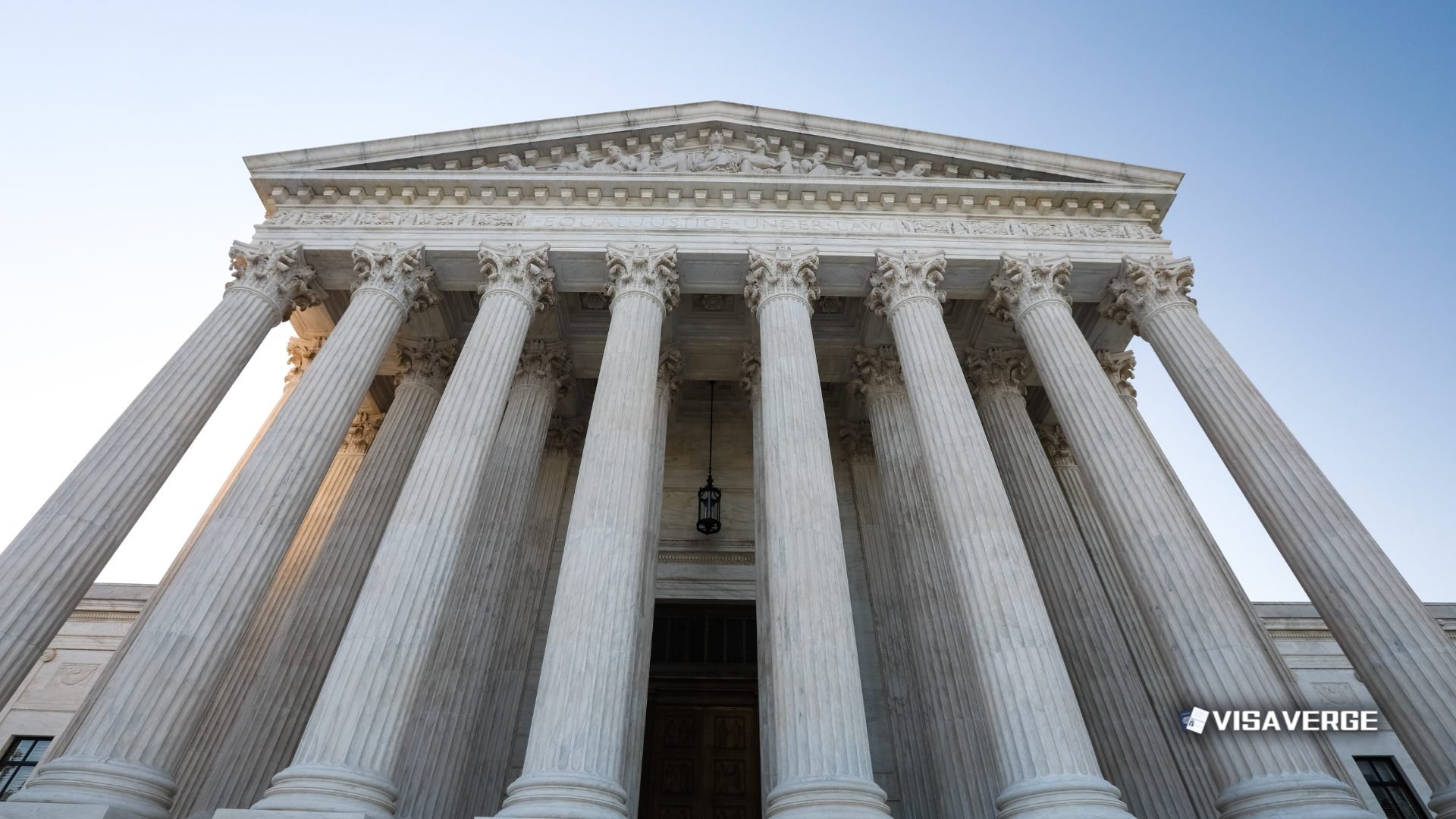
(FLORIDA) — The Supreme Court dismissed Florida’s original lawsuit challenging California and Washington programs that let undocumented immigrants obtain commercial driver’s licenses, leaving those licensing systems in place for now.
The Court denied Florida’s motion for leave to file a complaint in its original jurisdiction. That ended the case before any merits review and left Florida without immediate Supreme Court review of its claims.
Justice Clarence Thomas, joined by Justice Samuel Alito, dissented. He argued the Court had a constitutional duty to hear a dispute between states because Florida had “nowhere else to bring” its claims.
Florida aimed its case at the two states after the deadly August 2025 Florida Turnpike crash involving Harjinder Singh, a 28-year-old native of India. He was accused of making an illegal U-turn that killed three people.
State lawyers argued California and Washington had “chosen to ignore” federal standards. Florida said the states were not adequately checking English proficiency and immigration status before issuing commercial licenses.
Thomas described the California license at issue as a “nondomiciled CDL,” a short-term commercial license for immigrants who lack lawful permanent-resident status. He wrote that federal law and regulations require applicants to pass a driver’s test, understand English, and show appropriate immigration status.
The Court denied Florida’s request without explanation. Thomas and Alito were the only justices who indicated a willingness to hear the case.
That procedural posture matters. The denial did not decide whether California and Washington licensing rules comply with federal law, and it did not endorse the two states’ reading of those standards.
Instead, the ruling left the status quo in place. California and Washington can continue their current CDL regimes unless later litigation, legislation, or federal enforcement changes them.
Florida had tried to bring the case directly in the nation’s highest court by invoking the tribunal’s original jurisdiction over disputes between states. The Court’s refusal to let the complaint be filed shut that route before briefing on the merits could begin.
Thomas said the Constitution required the Court to take the case because one state had sued two others over an alleged injury tied to their official policies. In his view, Florida had no other forum available to press the dispute.
His dissent also tied the licensing fight to road safety in blunt terms. Thomas wrote that an “illegal alien who cannot read English road signs cannot drive an 80,000-pound tractor-trailer.”
The phrase “nondomiciled CDL” sits at the center of the dispute. Florida argued that California and Washington used that licensing category in ways that did not match federal requirements for commercial drivers.
Thomas’s description of the license tracked that argument. He called it a short-term credential for immigrants without lawful permanent-resident status, then pointed to federal rules on testing, English ability, and immigration documentation.
Nothing in the Court’s brief action resolved those competing readings. The justices gave no explanation for turning Florida away, leaving no majority opinion that addressed the licensing programs or the federal standards they are accused of violating.
That silence leaves both sides where they stood before Florida filed. California and Washington keep their programs, while Florida’s legal theory remains untested in a merits ruling.
The underlying dispute grew out of one crash, but Florida framed it as a broader conflict between state licensing practice and federal commercial driving rules. Singh’s case gave state officials a concrete example as they challenged the two licensing systems.
Florida’s filing focused on whether applicants were being screened closely enough for English proficiency and immigration status. Those were the same federal requirements Thomas highlighted in dissent.
Because the Court acted at the filing stage, none of those allegations received a full airing before the justices. There was no merits decision on whether the two states had complied with federal law or departed from it.
The practical result is narrow and immediate. The Supreme Court closed this case, but it did not settle the legal question behind it.
Future changes, if they come, would have to arrive through another lawsuit, new legislation, or action by federal authorities. Until then, the California and Washington commercial licensing rules that Florida attacked remain intact.
Thomas’s dissent leaves a record of the objections Florida wanted the Court to hear. The majority left only a one-step outcome: Florida asked to sue, and the Court said no.