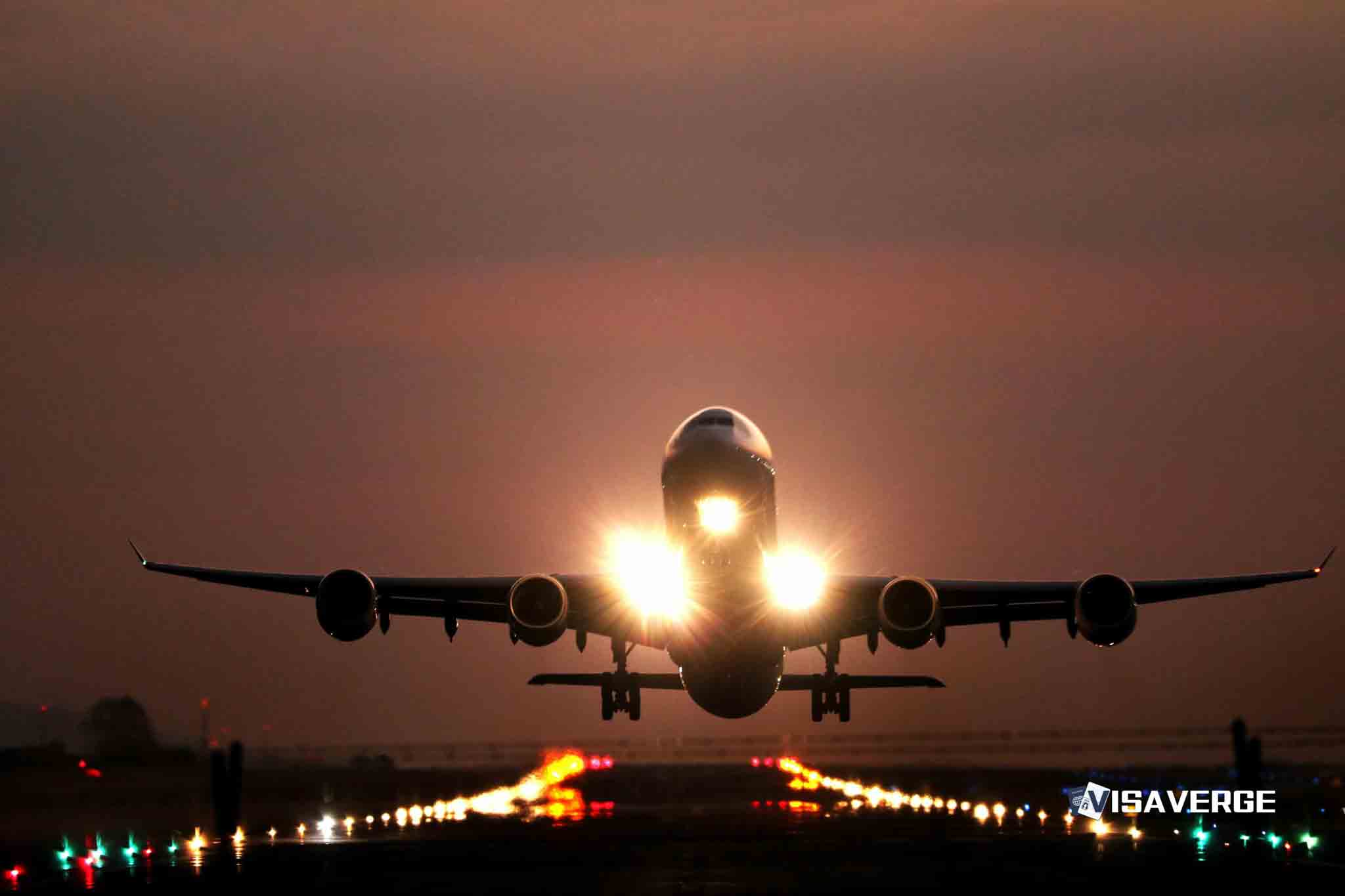
- Oslo Airport will halt all scheduled flights for five hours on Sunday, August twenty-third, twenty twenty-six.
- Over one hundred twenty-two flights are canceled, impacting ninety-five thousand travelers at Gardermoen.
- The strike centers on work rules and staffing rather than salary, with potential expansion on August twenty-fifth.
Oslo Airport will close to all scheduled air traffic for five hours on Sunday, August 23, 2026, after controllers continued a walkout that has disrupted Norway’s aviation network. The closure runs from 06:30 to 11:30 local time.
The shutdown covers scheduled flights during that window. Travelers with departures, arrivals or connections in Norway face cancellations and delays beyond the closure itself.
Free toolB1/B2 Tourist Visa Stay Calculator online
Around 95,000 passengers were expected at Gardermoen on Sunday. Norwegian Air Shuttle separately canceled 72 flights, affecting about 9,000 passengers.
The airport’s reported figures are different. Gardermoen recorded at least 122 canceled flights, including 75 departures and 47 arrivals, during the five-hour period.
SAS canceled at least 26 flights. The airline totals and the airport total should not be added together without qualification, because they describe different counts.
The airport also expected approximately 89 of 135 scheduled movements to be removed from its board. That is an expected reduction in planned movements, not another passenger total.
The airport’s movement cuts are expected to trigger delays elsewhere
| Measure | Reported figure | Scope |
|---|---|---|
| Closure period | 5 hours | Scheduled traffic at Gardermoen |
| Canceled flights at Gardermoen | 122 | 75 departures and 47 arrivals |
| Expected removed movements | 89 of 135 | Scheduled movements during the window |
| Norwegian cancellations | 72 | About 9,000 passengers affected |
| SAS cancellations | At least 26 | Airline-specific figure |
Avinor warned that the disruption could continue after the scheduled closure period. Cancellations, delays and missed connections can move through the network as aircraft and crews fall out of position.
The airport operator also said the disruption would reach beyond the capital. Helene W. Jensen, a press officer at Avinor, said the effects could intensify later in the day.
“The effects will increase during the day and become worse toward evening. The consequences will be felt throughout the country because it concerns the two largest airports.”
The warning covers both Oslo and Bergen, Norway’s two largest airports. Regional services may feel the impact even when their own control facilities remain open.
The walkout began after talks broke down
The strike began on Friday, August 21, after mediation failed. Twelve controllers initially joined the action.
They work at Gardermoen, Bergen Flesland, the approach control serving Gardermoen and the area control service for western Norway. Those positions connect the capital with domestic and international routes.
Mats Ruland, the National Labour Mediator, said the talks collapsed on August 20. He said “the gap between the two sides was too wide for mediation to be worthwhile.”
The dispute involves the Norwegian Air Traffic Controllers Association, known in Norway as Norsk Flygelederforening, or NFF. The union has focused on working conditions, breaks and rules governing shifts.
Staffing is another issue. The union says long-term shortages at Avinor have increased reliance on overtime, while disagreements also involve the training of new personnel and instructor rules.
The union says work rules, not pay, are driving the dispute
Robert Gjønnes, chairman of the NFF, said controllers want a clearer framework for their shifts. He rejected the idea that the action centers on monetary compensation.
“Today the work shifts are not regulated as they should be. We want a framework for this, but don’t think our employer will enter into a dialogue. the dispute is not about monetary compensation.”
The union has alleged that some shifts can last up to 16 hours without regulated breaks. Controllers in Norway earn an average of NOK 1.4 million ($140,000 USD) annually.
Spekter, the employer organization, offered an average annual salary increase of NOK 62,000 ($6,650 USD). The NFF rejected the offer while maintaining that the central issue was the framework governing the work.
Anne-Kari Bratten, Spekter’s chief executive, criticized the decision to strike because of its effect on passengers and air traffic.
“It is incomprehensible that the Norwegian Air Traffic Controllers' Association is now launching a strike that will penalise passengers and air traffic in a completely unreasonable way.”
The competing positions have left the dispute unresolved. The union is pressing for work rules and safety-related frameworks, while the employer side has emphasized the cost to travelers and the aviation system.
Bergen and international routes have already felt the effects
The disruption reached Bergen before Sunday’s Gardermoen closure. A Saturday evening shutdown at Bergen Flesland left approximately 100 passengers sleeping in the terminal.
Airport staff provided camp beds. The overnight disruption showed how quickly a control-staff dispute can become a passenger problem.
Flights to and from Stockholm (Arlanda) and Helsinki were canceled or rerouted. The changes also affected travelers using international connections through Norway.
The Røyken control center, which manages approach traffic for the capital region, is another central point in the network. Gardermoen and Røyken support a hub-and-spoke system that links regional airports across the country.
That structure can spread delays beyond the facilities directly affected by the walkout. A missed connection or displaced aircraft can disrupt a later service even when that flight is not part of the original closure.
Eight more controllers could join the walkout on August 25
The union has announced that 8 additional controllers could join from Tuesday, August 25, if the dispute continues. The expansion could affect Tromsø Airport and northern Norwegian airspace.
As of Sunday afternoon, August 23, no new mediation sessions had been scheduled. The strike remains “indefinite.”
Passengers traveling after Sunday should monitor their airline’s app and review connections, not only the first flight on their itinerary. The possible expansion would add northern Norway to the areas facing direct disruption.