(ORLANDO, FLORIDA) Orlando International Airport, Florida’s busiest travel hub, halted all incoming flights for a period on Thursday, October 31, 2025, after a severe air traffic controller shortage tied to the ongoing federal government shutdown left too few certified staff to guide planes safely to the ground. The Federal Aviation Administration said landings at Orlando were temporarily not possible because not enough controllers were on duty, and travelers faced delays of up to four hours as planes were held at departure points and congestion rippled across runways and gates.
What happened and when
The closure—brief but disruptive—landed on the 30th day of the shutdown, a milestone that pulled airport operations into a deeper crisis. The FAA confirmed there were “nine staffing issues at airports and centers around the country” and warned earlier in the day that Orlando could be without certified controllers later Thursday as absences grew. That scenario came to pass, highlighting how thin staffing had become nationwide and how quickly a local pinch can turn into national gridlock.
Transportation Secretary Sean Duffy said the pressure on the system is building in ways that are hard to unwind. “Our traffic will be snarled, right? It’ll be a disaster in aviation,” he said, pointing to the risk of cascading delays and growing safety concerns. Duffy added that 44 percent of delays on Sunday and 24 percent on Monday were caused by air traffic controller absences, a jump from an average of about 5 percent before the shutdown.
According to analysis by VisaVerge.com, those figures reflect a labor pool stretched thin even before the funding lapse.
Nationwide impact and numbers
By Thursday, the numbers told the story across the United States:
- Nearly 5,800 flights were delayed
- 1,050 flights were canceled
- Airports among the hardest hit included Orlando International Airport, Dallas/Fort Worth, and Reagan National
Cristian Benvitz, reporting from the Orlando terminal, described a morning of stop-and-go progress following the landing halt: “Staffing here in Orlando is so limited that yesterday, for a brief moment, the Federal Aviation Administration said that flights wouldn’t be able to land here because they didn’t have enough air traffic controllers. This morning, things are running, but with substantial delays.”
Passenger experience and airport services
Travelers saw the strain beyond the tarmac:
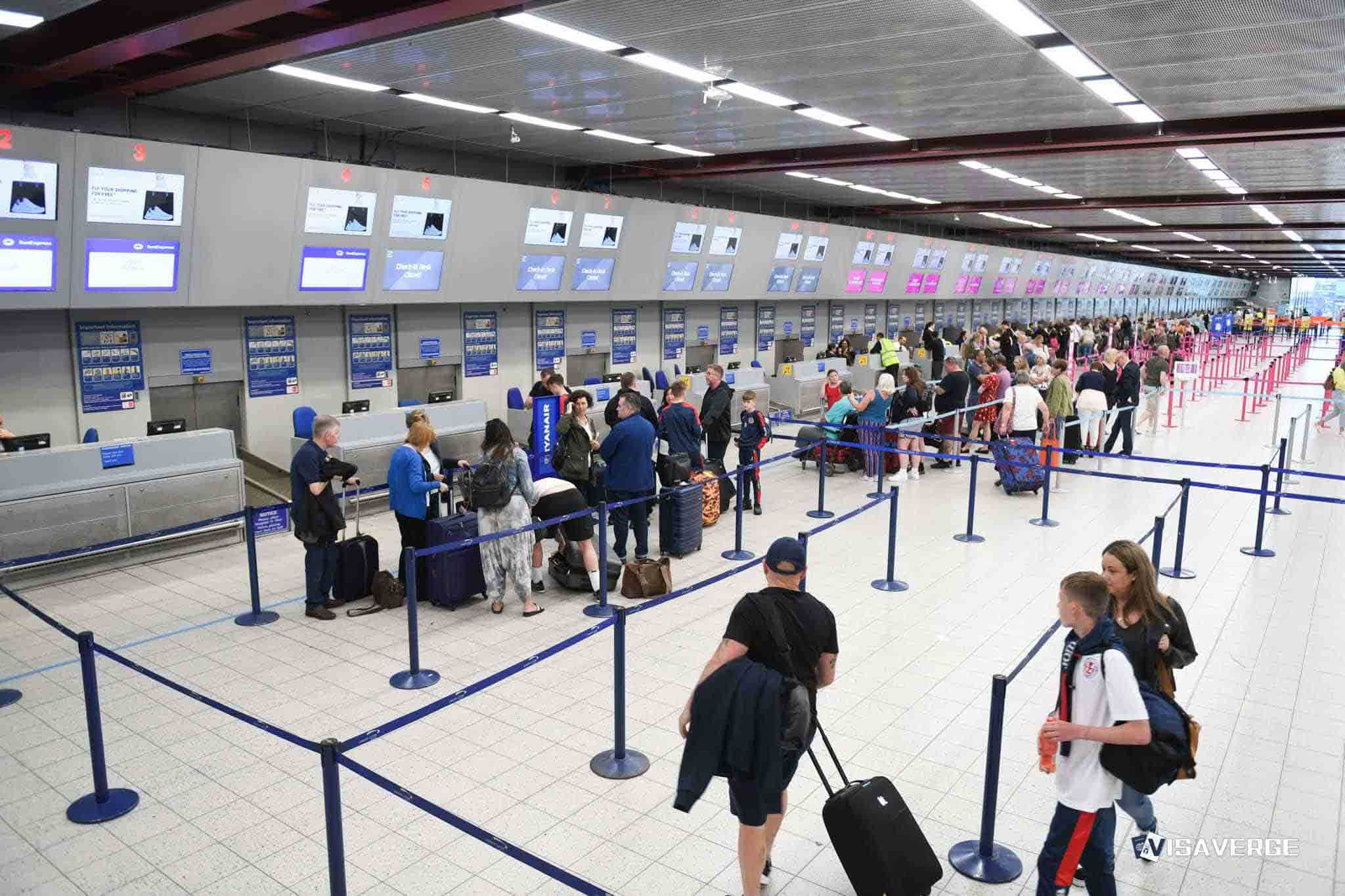
- Security checkpoints moved slowly as TSA staffing thinned
- Customs processing lines stretched longer with fewer officers on duty
- Some airport services that depend on federal workers ran at reduced capacity or paused
With many government offices closed or short-staffed, passengers were told to rely on airline alerts for updates, since official channels were posting less frequent information. Several large carriers offered meal vouchers and set up assistance tables for federal employees reporting to duty without pay.
Why staffing is so fragile
The FAA says the country is about 3,500 controllers short of targeted staffing levels. Even before the shutdown, facilities relied on mandatory overtime and six-day workweeks to keep towers and centers fully staffed.
Key points about the workforce and training:
- Training a new controller can take two to three years
- Many controllers leave the profession or retire upon reaching age 56
- The National Air Traffic Controllers Association has warned Congress for years that staffing levels are at crisis points in several busy regions
The human toll on controllers
Approximately 13,000 air traffic controllers were working without pay. The consequences include:
- Missed first full paycheck on Tuesday, October 28, 2025
- Rising absences as some employees juggle second jobs, family obligations, or cannot afford commutes
- Increased use of ground delay programs to manage safety margins, producing late departures and missed connections that can stretch for days
“We’re still here. We need relief.” — one controller
Operational knock-on effects for airlines and airports
Airline executives privately worry that each additional day of the shutdown makes it harder to reset schedules:
- Crews time out; planes end up at the wrong airports
- Maintenance windows shift, complicating future operations
- At Orlando, pauses in landings forced delays for outbound flights as gates clogged and baggage operations struggled
The airport’s role as a family travel hub added human challenges: parents with strollers near outlets, elderly passengers seeking wheelchairs for longer waits, and service workers juggling late shifts.
Safety, procedures, and agency guidance
Officials stressed that safety remains the first priority. The FAA continues to:
- Meter traffic and hold planes on the ground when necessary to keep controller workloads within safe limits
- Use ground delay programs, reroutes, and brief landing pauses as needed
- Post system-wide advisories and delay programs on its website
For formal updates and safety briefings, the agency’s home page at the Federal Aviation Administration remains the most direct source. A senior FAA manager noted that the agency appreciates airline outreach to unpaid staff, adding that “small gestures matter” during prolonged funding lapses.
Longer‑term implications and warnings
Orlando’s episode serves as a warning for the holidays if funding isn’t restored. Potential consequences in peak travel season include:
- Longer lines and more ground holds
- Frequent cancellations when storms and staffing problems collide
- Training pipelines falling behind, making recovery slow even after reopening
A former tower supervisor with twenty years of experience warned: “You can’t replace experience overnight.” The FAA emphasized that every day without hiring and training pushes recovery further back.
What airports and passengers can expect now
Airport managers and airlines are taking immediate, operational steps:
- Brief crews to expect last‑minute changes
- Work flight by flight to keep passengers moving
- Advise customers to build extra time into travel plans
Orlando International Airport remains open, with flights departing and arriving under tighter controls. The FAA says it will continue managing traffic carefully while the government shutdown continues.
Important takeaway: The system is holding, but only just. As one controller put it, “We’re still here. We need relief.”
This Article in a Nutshell
Orlando International briefly halted incoming flights on October 31, 2025, after the federal shutdown left too few certified air traffic controllers on duty. The FAA reported landings temporarily impossible, producing delays up to four hours and contributing to nearly 5,800 flight delays and 1,050 cancellations nationwide. About 13,000 controllers worked without pay and the agency is roughly 3,500 short of staffing targets. Officials warn disruptions could deepen through the holidays, noting controller training takes two to three years.