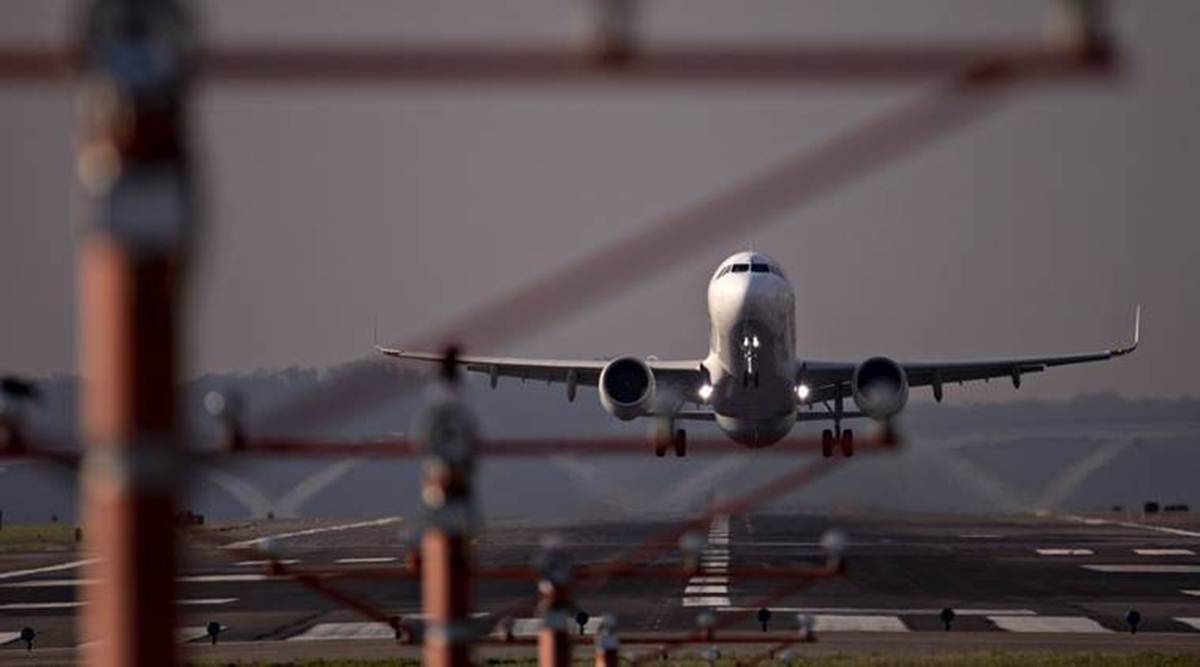
- Houthis launched missiles and drones at Abha Airport in retaliation for a strike on Sanaa’s runway.
- Major airlines canceled regional services to southern Saudi Arabia following threats to the kingdom’s airspace.
- The United Nations convened an emergency session to prevent the collapse of the fragile 2022 truce.
The Houthis said they launched ballistic missiles and drones at Abha Airport in southern Saudi Arabia on July 13, hours after an airstrike damaged the runway at Sanaa International Airport. The group warned airlines to avoid Saudi airspace until flights resume in the Yemeni capital.
Brig. Gen. Yahya Saree, the movement’s military spokesman, said the operation “achieved its objectives” and urged airlines to treat the warning “seriously.” Saudi air defenses intercepted at least one ballistic missile and several drones, according to the additional research.
Free toolB1/B2 Tourist Visa Stay Calculator online
No casualties were reported at the Saudi airport. Regional flights were disrupted, however, with flydubai and Air Arabia canceling services to Abha on July 14.
The exchange marked the first major direct cross-border escalation since the 2022 truce. It also raised fears that the fragile ceasefire environment could break down.
Saree described the attack as retaliation for what the Houthi movement called Saudi aggression against the runway in Sanaa. The Saudi-backed Yemeni government said its forces targeted the runway to prevent an Iranian aircraft from landing.
“We warn all airlines against overflying the airspace of the Kingdom of Saudi Arabia and stress that these warnings should be taken seriously until the blockade on Sanaa International Airport is lifted.”
Saree said the warning would remain in place until the alleged blockade ended. The movement also said its operation used “a number of ballistic missiles and unmanned aerial vehicles.”
A runway strike over an Iranian flight triggered the exchange
The dispute began with an Iranian aircraft carrying a Houthi delegation back from Tehran after the funeral of Iran’s Supreme Leader Ali Khamenei, who died in late June 2026. The Yemeni government said the aircraft lacked authorization and violated Yemeni sovereignty.
Officials based in Aden and Riyadh insisted that the delegation return on Yemenia, the domestic carrier. The delegation refused and demanded that the Iranian flight be permitted to land.
The internationally recognized government then said its forces struck the runway at about 1:54 PM local time on July 13 to stop the aircraft from landing. Houthi-aligned channels blamed Saudi Arabia for the attack and said the strike sought to close the airport to humanitarian flights.
Those flights carry patients and stranded passengers. The runway suffered damage.
Houthi media later claimed that the Iranian aircraft landed at Hodeidah Airport, a facility controlled by the movement, on the evening of July 13.
The competing accounts have not produced a shared explanation of the runway attack. They have produced immediate aviation consequences.
| Development | Reported effect |
|---|---|
| Runway strike in Sanaa | Damage to the runway and dispute over an Iranian aircraft |
| Claimed retaliatory attack in southern Saudi Arabia | At least one missile and several drones intercepted |
| July 14 airline response | flydubai and Air Arabia canceled services to Abha |
| Yemeni government order | All Yemeni airports closed |
Airlines face a warning as airports shut
The closure of all Yemeni airports stranded civilians, including medical patients seeking treatment abroad. The movement’s warning expanded the immediate risk beyond Yemen’s own airports by addressing airlines flying over Saudi territory.
Saree issued the warning directly. He said carriers should avoid the kingdom’s airspace while the airport dispute continued.
Saudi Arabia remained on high aviation alert on July 14. Houthi military media also released footage identifying other “strategic Saudi infrastructure” as possible future targets.
The Red Cross faced a separate disruption. The Houthi-controlled government briefly prevented an International Committee of the Red Cross aircraft from leaving Sanaa, while ICRC spokesman Hachem Osseiran said all staff and crew were safe.
The airline cancellations affect regional connections, while the Yemeni shutdown reaches people already waiting for medical care or a route home. Both developments followed the same day’s runway strike.
Saudi officials confirmed an interception
Maj. Gen. Turki al-Malki, spokesman for the Saudi-led coalition, said air defenses handled a ballistic missile threat launched toward the southern region.
“Air defenses dealt with a ballistic missile threat launched by the terrorist Houthi militia towards the southern region.”
The coalition confirmed the interception but initially did not provide details about the runway attack in Sanaa. The additional research said Saudi defenses also intercepted several drones.
Rashad al-Alimi, head of Yemen’s Presidential Leadership Council, said he had “ordered that the scope of the confrontation not be expanded.” PLC-aligned forces nevertheless claimed the initial strike on the runway.
That position left the government defending the action against the Iranian aircraft while signaling that it did not seek a broader confrontation. The retaliatory claim from the other side came within hours.
The United Nations urged talks to prevent a wider war
The UN Security Council held an emergency session on the afternoon of July 13 as officials tried to prevent a return to full-scale war.
Khaled Khiari, the UN assistant secretary-general for political affairs, warned that another cycle of escalation would put Yemen and the wider region at risk.
“Yemen and the wider region cannot afford another cycle of escalation. We call on all actors to constructively engage in negotiations under UN auspices.”
The UN-brokered truce had largely held since March 2022. The airport exchange became the most serious breakdown of that frozen-conflict status in more than four years.
The confrontation also unfolded alongside separate regional tensions. Reports on July 14 said the Islamic Revolutionary Guard Corps claimed retaliatory strikes against US assets in Bahrain. Those strikes were distinct from the Saudi-Yemeni airport exchange.
The immediate dispute remains narrower: whether the Iranian aircraft could land, who struck the runway, and whether the movement will carry out its aviation warning.
The next flight decisions will come under security pressure
Airlines canceled services to Abha on July 14 as Saudi authorities maintained a heightened aviation alert. Yemen’s airport closure continued to affect patients and stranded passengers who depend on humanitarian or commercial flights.
The Houthi military spokesman tied the warning’s duration to the reopening of the damaged airport. Saudi officials, meanwhile, confirmed the defensive response but did not provide a public account of the runway strike in the material reviewed here.
The United Nations is pressing the parties toward negotiations under its auspices. The next operational test will be whether regional carriers resume flights while the airport dispute and the threat against Saudi airspace remain unresolved.