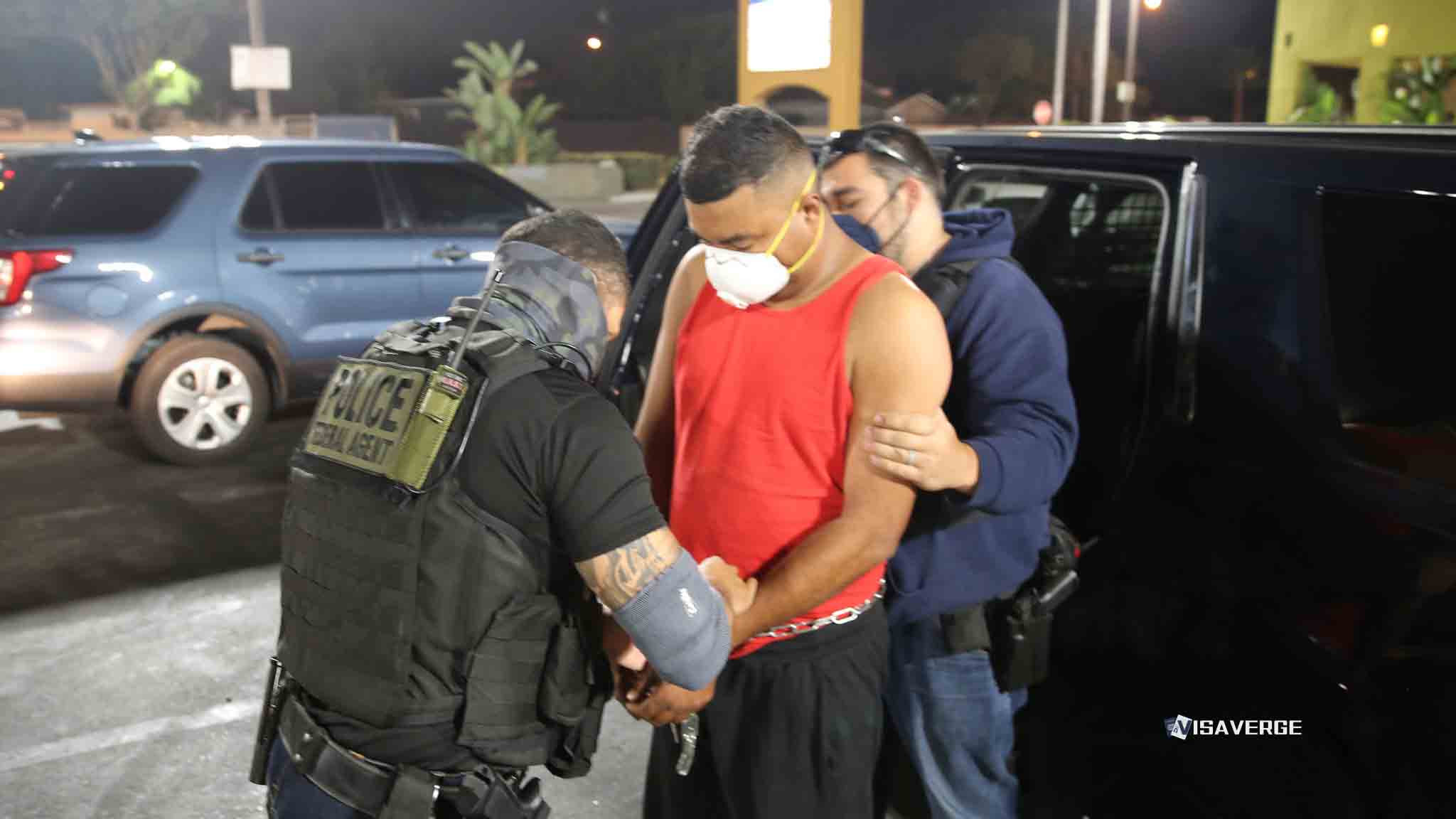
- U.S.-born children retain birthright citizenship regardless of their parents’ Temporary Protected Status termination or deportation.
- The Supreme Court ended judicial reviews for TPS cancellations, allowing the administration to proceed with removals immediately.
- Families face urgent custody decisions as over one million individuals lose protection across four major country designations.
A U.S.-born child generally keeps U.S. citizenship after a parent loses TPS and faces removal. The parent’s detention or deportation can still split the household, disrupt caregiving, and force a decision about whether the child remains in the United States or leaves with the parent.
The child’s legal status does not automatically change. Birthright citizenship applies to children born on U.S. soil, and a parent’s loss of temporary protection does not erase citizenship acquired at birth.

The protection is temporary. It “does not lead to lawful permanent resident status or give any other immigration status,” according to U.S. Citizenship and Immigration Services. A child also “cannot obtain TPS as a derivative because your parent or child has TPS.”
A citizen child can generally remain in the United States. The family consequences can arrive immediately.
Authorities may ask a detained parent whether the child should accompany the parent abroad or stay with a designated safe person. That choice does not change the child’s citizenship, but it can affect custody, schooling, medical care, and travel.
The decisions affect a large group of households. Approximately 1.3 million individuals held temporary protection as of early 2026. About 390,000 U.S. citizen children lived in households with at least one protected parent.
Immigration and Customs Enforcement recorded nearly 17,900 book-ins in FY 2026 involving parents who identified themselves as having U.S. citizen children. That figure was nearly twice the 2024 level.
A Supreme Court ruling removed a path for courts to pause status terminations
The Supreme Court changed the legal setting for terminations in Mullin v. Doe. On June 25, 2026, the Court ruled 6-3 that decisions by the Homeland Security secretary to end protected status are not subject to judicial review.
Lower courts therefore lost the power to pause or stay those decisions while litigation continued. The administration could proceed with removals when a country’s designation ended.
James Percival, the Department of Homeland Security’s general counsel, called the decision and two other rulings victories in a June 25, 2026, press release:
“These three rulings are all victories for the rule of law and common sense. reaffirming that Temporary Protected Status (TPS) was always supposed to be temporary and can be cancelled at the appropriate time.”
The case involving the parent’s status did not decide whether a child born in the United States loses citizenship. That question arose separately.
The parent’s status and the child’s citizenship follow different legal paths
In Trump v. Barbara, decided June 30, 2026, the Court upheld birthright citizenship in a 6-3 ruling. It struck down an executive order issued January 20, 2025.
The Court reaffirmed that the 14th Amendment guarantees citizenship to children born on U.S. soil regardless of their parents’ status. The research identifies extremely narrow exceptions, including children of foreign diplomats.
President Trump signed Executive Order 14418, “Continuing to Protect the Meaning and Value of American Citizenship,” and Executive Order 14419, “Ending Birth Tourism,” on August 6, 2026. The orders do not end birthright citizenship for children in families affected by the protected-status terminations. They target specific “alien enemy” categories and direct agencies to deny visas to people entering solely to give birth.
A child’s documents can still become essential. A passport, birth certificate, or other proof of citizenship may be needed for travel, school, benefits, or custody proceedings.
Those records document citizenship. They do not create it.
Four country designations ended on separate dates
The administration moved to terminate protection for more than 1 million people after the June 2026 Supreme Court ruling. The affected designations have separate effective dates.
| Country | Effective date | People affected |
|---|---|---|
| Yemen | July 20, 2026 | Not stated |
| Haiti | July 27, 2026 | Approximately 350,000 |
| Somalia | August 14, 2026 | Not stated |
| Ethiopia | August 18, 2026 | Approximately 5,000 |
The Department of Homeland Security confirmed Ethiopia’s final termination on August 18, 2026. Percival wrote on social media after a lower court stay was lifted:
“All TPS terminations are in effect!”
Markwayne Mullin, the secretary of Homeland Security, used a similarly direct message in a statement that day:
“Temporary Protected Status is just that—temporary. Those whose status has expired are now in the country illegally. They have two choices: leave immediately or be swiftly deported.”
Kristi Noem, who served as Homeland Security secretary from Jan 2025 through March 2026 and is now a special envoy, initiated many of the current terminations. In September 2025, she said countries including Syria and Venezuela “no longer meet the conditions” for protected status.
Percival also wrote on August 18, 2026:
“The point of TPS is to delay a return home because TEMPORARY conditions do not allow it. everyone agrees you are going home, it’s a question of when. The Left is outraged because the gig is up.”
Detention can turn an immigration case into a family-law emergency
The Haitian Bridge Alliance described the conflict facing families after Haiti’s designation ended. In a June 30, 2026, statement, the organization said:
“A family can be told in the same week that its child belongs here and that its mother does not.”
A removal order against a parent does not terminate the child’s citizenship. It can leave the child dependent on a caregiver while the parent’s immigration case proceeds.
Legal advocates at the Vasquez Law Firm said on August 1, 2026, that parents should consider formal guardianship arrangements for children “left behind” in the United States. Without planning, the advocates said, children could enter the state foster care system.
Several arrangements may become urgent after detention or removal:
- A custody order identifying who can make decisions for the child.
- A guardianship arrangement naming a responsible caregiver.
- Written authorization allowing that caregiver to manage school, medical, and travel matters.
- A plan stating whether the child will remain in the United States or accompany the parent.
- Proof of citizenship, such as a birth certificate or passport.
Immigration authorities may ask a parent to identify a safe person for the child. State family courts generally address custody and guardianship, while immigration counsel handles the parent’s removal case.
Parentage, citizenship, or custody disputes can require both forms of legal assistance. Families facing those issues typically need advice tied to the state where the child lives and the details of the parent’s immigration case.
A birth abroad would produce a different immigration analysis
A child born abroad may face a different set of citizenship rules. Citizenship could depend on whether a parent has a qualifying citizenship or immigration status.
A parent’s temporary protection alone generally does not by itself confer citizenship or immigration status on a child born outside the United States. The parent’s history, the child’s place of birth, and any available citizenship route would need individual review.
Health coverage changes are scheduled for the first week of 2027
Under the 2025 Reconciliation Law, protected-status holders will lose access to subsidized ACA Marketplace coverage starting January 1, 2027, and to Medicare by January 4, 2027.
Those changes could add medical and financial strain to households already facing detention, relocation, or removal. The child’s eligibility and the parent’s eligibility can follow separate rules.
Professional conduct complaints were filed against Percival on August 19, 2026, by groups including the Democracy Defenders Fund. The complaints followed allegations that he intimidated federal judges by placing them on a “Worst of the Worst” list for decisions against the administration’s immigration policies.
This article provides general information and is not legal advice. Consult a qualified immigration attorney about your specific case.