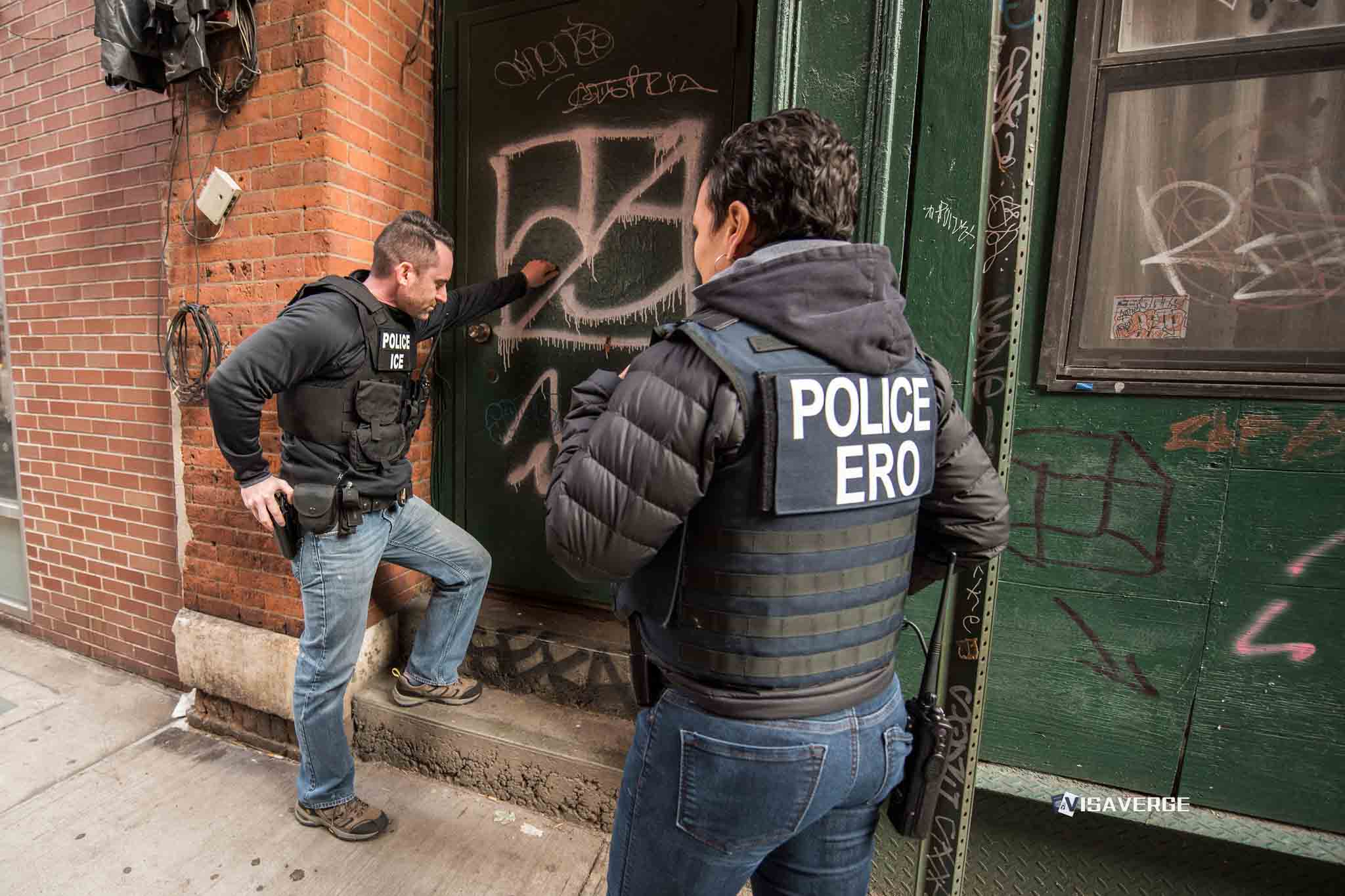
- DHS has published no Federal Register notice extending or ending El Salvador TPS, 17 days after the September 9, 2026 end date.
- USCIS says holders “retain protection including work authorization,” but I-9 guidance still names September 9, 2026 as the EAD end date.
- The statute’s automatic 6-month extension would run to about March 9, 2027, a date DHS has not confirmed.
Seventeen days after its scheduled end date, Temporary Protected Status for El Salvador is still in place, and the Department of Homeland Security still has not said for how long. As of Saturday, September 26, 2026, DHS has published no Federal Register notice extending or terminating the designation that was set to run through September 9, 2026. U.S. Citizenship and Immigration Services says Salvadorans with TPS “retain protection including work authorization” until an announcement is made.
That statement is the only official word. It gives no new end date, no new re-registration period, and no updated work permit validity. The TPS statute fills part of the gap: when DHS does not decide in time, the law says the designation “is extended for an additional period of 6 months.” Counted from September 10, that would run to about March 9, 2027. DHS has not confirmed that date or said it is relying on the automatic extension.
The stakes are large. DHS’s own January 2025 notice counted about 232,000 Salvadoran TPS beneficiaries eligible to re-register, and the Associated Press puts the current population at about 200,000 people, many of whom have lived and worked in the United States since the designation began after the 2001 earthquakes.
This explainer sets out what DHS and USCIS have actually said, what the statute provides, where the paperwork gaps are for workers and employers, and what each possible next step would mean. Where a point rests on the statute rather than a DHS statement, it is labeled that way.
Where Salvadoran TPS Stands on September 26
The last formal action on El Salvador’s designation was the Federal Register notice published on January 17, 2025 (90 FR 5953). It extended TPS for 18 months, from March 10, 2025 through September 9, 2026, and opened a re-registration window that closed on March 18, 2025. No notice has followed it. A search of the Federal Register for El Salvador TPS documents published since June 2026 returns nothing.
On September 9, and again on September 10, DHS issued the same short statement to reporters: “An announcement on El Salvador’s TPS will be made at the appropriate time. Until such announcement is made, Salvadoran individuals present in the U.S. under TPS retain protection.” USCIS posted a matching alert on its El Salvador TPS page, adding the words “including work authorization.” The same page still lists “TPS Continued Through: Sept. 9, 2026.”
Ben Johnson, executive director of the American Immigration Lawyers Association, was blunt about what the statement is not: “Let’s be clear: this is not an official extension or decision by DHS as to the fate of TPS for El Salvador.”
How El Salvador’s TPS Reached This Point
El Salvador was first designated for TPS on March 9, 2001, after two earthquakes struck the country. The designation has been extended repeatedly since then, including after a 2018 termination attempt that was later rescinded. The January 2025 notice was the most recent extension.
The TPS statute required DHS to review conditions in El Salvador at least 60 days before the designation’s end date and publish its decision “on a timely basis” in the Federal Register. Sixty days before September 9 was July 11, 2026. That date passed with no notice, as did September 9 itself.
What the TPS Statute Says When DHS Misses the Deadline
Three provisions of Section 244(b)(3) of the Immigration and Nationality Act, codified at 8 U.S.C. 1254a(b)(3), govern what happens now. The first requires the review and publication DHS did not complete. The second sets how a termination works. The third is the automatic extension.
The statute still says “Attorney General”; that authority now sits with the Secretary of Homeland Security. Read plainly, subparagraph (C) means that without a timely determination that El Salvador no longer qualifies, the designation extends by at least six months. Counting six months from September 10, 2026 lands on about March 9, 2027. That calculation is VisaVerge’s reading of the statute, shared by immigration attorneys, not a date DHS has published.
Subparagraph (B) matters too. Even if DHS publishes a termination tomorrow, the statute says it cannot take effect earlier than 60 days after publication. DHS has not said how it reads the “if later” clause in this situation.
There is precedent for DHS acknowledging a missed deadline in writing. AILA points to South Sudan in May 2025, when DHS published a six-month extension after failing to meet the statutory review deadline. For El Salvador, no such notice has appeared.
Work Permits and Form I-9: Where the Paperwork Stops
USCIS says work authorization continues, but every document a worker can show still points to September 9, 2026. The January 2025 notice automatically extended TPS-based Employment Authorization Documents only through March 9, 2026. On August 12, 2026, USCIS began mailing notices to certain beneficiaries whose EADs with category A12 or C19 had expired, extending those cards to September 9, 2026. Our earlier report on the USCIS extension of Salvadoran TPS work permits to September 9 covers that step.
USCIS’s Form I-9 guidance, last updated September 3, 2026, tells employers to accept an EAD that expired on or after March 9, 2026 and before September 9, 2026, together with the USCIS extension notice, as a List A document, and to enter “Sept. 9, 2026” as the expiration date in Form I-9 and E-Verify. USCIS has not issued guidance for any date after that.
AILA’s practice alert, updated September 10, warned that “SAVE and E-Verify have not provided updated expiration dates and guidance for documenting TPS El Salvador work authorization.” It also cautioned attorneys that continuing employment “based on the auto-extension argument alone is a higher risk,” because USCIS has not issued extended EADs and a silent extension departs from how USCIS normally documents TPS work permits.
What Employers Should Do Now
The USCIS alert is the controlling public statement, and it says work authorization continues. Employers who terminate or suspend Salvadoran TPS workers solely because September 9 passed risk acting against that guidance. At the same time, there is no official document that gives a new date to write into Form I-9.
- Do not treat September 9 as an automatic cutoff. USCIS says holders keep work authorization until DHS announces a decision.
- Document your basis. Print and keep the USCIS El Salvador TPS page alert and the September 3 I-9 Central update with the employee’s Form I-9, and note the date you reviewed them.
- Do not ask for specific documents. Employees may present any acceptable document from the Form I-9 lists, and some may hold another status or employment authorization apart from TPS.
- Watch E-Verify and I-9 Central. Updated instructions will come through USCIS, most likely alongside any Federal Register notice.
- Talk to counsel before any adverse action. AILA’s guidance reflects real uncertainty about how an I-9 record should read after September 9.
How a termination plays out for employers is not hypothetical. When DHS ended TPS for Burma and South Sudan on August 7, 2026, USCIS told employers that the A12 and C19 cards were no longer valid and that affected workers had to be reverified, as covered in our report on I-9 reverification after the Burma and South Sudan terminations. Nothing like that has been issued for El Salvador.
What TPS Holders Should Do Now
Salvadoran TPS holders are protected today, but on the strength of a statement rather than a notice. The practical goal is to be ready for any of the three outcomes described below.
Whether a person has protection beyond TPS decides how much a termination would affect them. Our guide to how long you have before losing legal status after a TPS designation ends walks through the transition rules that applied to other countries.
What Could Happen Next
The decision belongs to Homeland Security Secretary Markwayne Mullin, according to White House border czar Tom Homan, who has argued for ending the program. “Temporary protected status means temporary,” Homan told reporters. “Let’s face it, El Salvador is a much safer country than it’s ever been now.” DHS has given no timeline.
Legal challenges are a weaker backstop than in past years. In Mullin v. Doe, decided June 25, 2026, the Supreme Court held 6-3 that the TPS statute bars judicial review of non-constitutional challenges to TPS designations and terminations. Our explainer on what Mullin v. Doe means for TPS work permits covers the ruling. Constitutional claims remain possible, but the path for a court to pause a termination is narrower.
El Salvador is one of the last large designations left. The administration has ended TPS for countries including Venezuela, Haiti, Honduras, Nicaragua, Afghanistan, Syria, Burma and South Sudan; our current list of TPS countries tracks which remain. The economic tie runs both ways: Salvadorans in the United States sent $9.9 billion in remittances home last year, about 24% of El Salvador’s GDP, according to the Associated Press.
VisaVerge will update this page as soon as DHS publishes a Federal Register notice or USCIS changes its guidance.
Frequently Asked Questions
Did El Salvador TPS end on September 9, 2026?
No termination has been published. DHS issued no Federal Register notice extending or ending the designation, and USCIS says Salvadorans with TPS retain protection, including work authorization, until DHS makes an announcement. The designation’s listed end date was September 9, 2026.
Was El Salvador TPS extended?
Not by any published notice. DHS said an announcement will be made at the appropriate time. The TPS statute says a designation is extended for 6 months when DHS does not decide in time, which would run to about March 9, 2027, but DHS has not confirmed that.
Is my Salvadoran TPS work permit still valid after September 9?
USCIS says Salvadoran TPS holders retain work authorization until DHS announces a decision. However, USCIS Form I-9 guidance updated September 3, 2026 still lists September 9, 2026 as the expiration date, and no new EAD end date has been issued.
What should employers do with Salvadoran TPS workers after September 9?
Do not treat September 9 as an automatic cutoff. Keep a copy of the USCIS El Salvador TPS alert and the September 3 I-9 Central update with the Form I-9, avoid demanding specific documents, and check with counsel before any adverse action.
What does the TPS law say if DHS misses the deadline?
Under INA 244(b)(3)(C), if DHS does not determine that a country no longer qualifies, the designation is extended for an additional 6 months, or 12 or 18 months at DHS’s discretion. DHS was required to review El Salvador’s conditions by July 11, 2026.
If DHS terminates El Salvador TPS, when would it take effect?
The statute says a termination cannot take effect earlier than 60 days after the Federal Register notice is published. Employers would then receive reverification instructions, as happened when TPS for Burma and South Sudan ended on August 7, 2026.
Can Salvadoran TPS holders travel outside the U.S. now?
DHS and USCIS have not addressed international travel for Salvadoran TPS holders after September 9, 2026. Because the designation has no published end date, holders should not travel abroad without first getting advice from an immigration attorney.
How many people have TPS from El Salvador?
DHS’s January 2025 Federal Register notice counted about 232,000 Salvadoran TPS beneficiaries eligible to re-register. The Associated Press puts the current population at about 200,000, many living in the U.S. since the 2001 designation.