January 3, 2026
- Updated entry policy: replaced paper tourist cards with mandatory e-Visa effective July 1, 2025
- Added e-Visa specifics: single-entry up to 90 days, one 90-day extension, maximum 180 days
- Included fees and timing: $50 USD fee, processing up to 72 business hours, apply 7–30 days before travel
- Added D’Viajeros requirement: separate online form within 7 days before arrival and QR code printing
- Clarified exemptions and special rules: Canada nonstop exemption, Cuban-citizen exception, A-1 visa national list and waiver conditions
- Expanded U.S. traveler guidance: OFAC travel categories, insurance needs, payment/receipt guidance, and passport nuances
(CUBA) Cuba now requires most visitors to enter with an electronic visa (e-Visa), not the old paper tourist card. The switch took effect July 1, 2025, and it changes what airlines and border officers will ask you to show39.
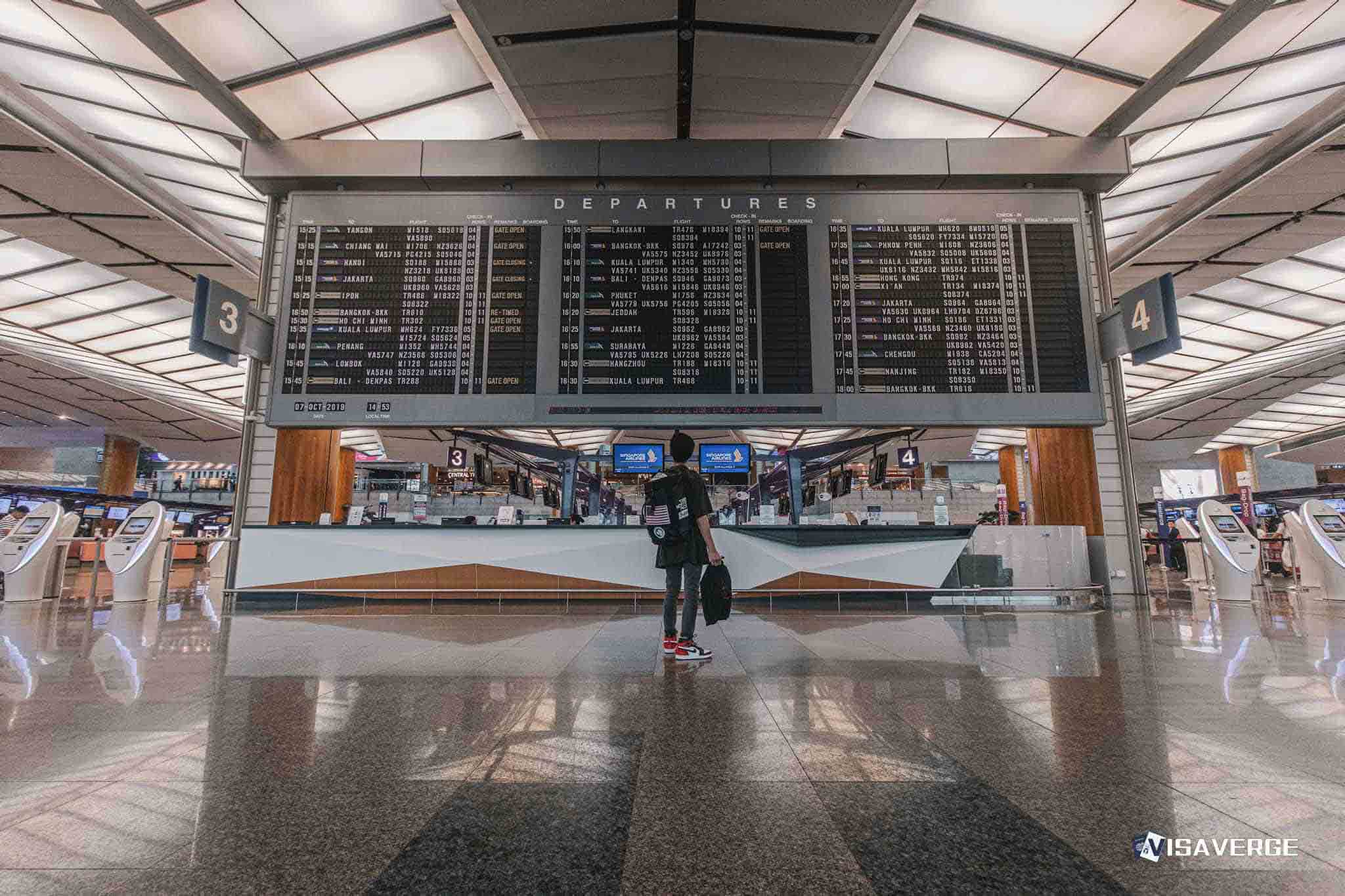
For travelers, the new visa system is simpler in one way and stricter in another: you apply digitally and must still carry printed proof. You’ll also need a second online form, D’Viajeros, to get a QR code for entry and exit control.
Free toolB1/B2 Tourist Visa Stay Calculator onlineJuly 1, 2025: tourist card discontinued
Cuba’s long-used green and pink tourist cards are discontinued, and travelers now request permission to enter through a digital platform. The e-Visa is single entry and covers stays of up to 90 days, with one extension for another 90 days, for a maximum 180 days.
- Standard fee: $50 USD
- Processing time: typically up to 72 business hours after submission
- Apply as early as 30 days before travel
- Practical planning: apply at least seven days before departure to avoid last-minute issues
Most people apply through the official portal, eVisaCuba, or through a Cuban consulate or an authorized travel agency.
Trip timeline: four checkpoints
Think of Cuba’s entry rules as a short journey with four checkpoints:
- Eligibility (passport validity, exemptions)
- e-Visa approval
- D’Viajeros submission (QR code)
- Inspection at airline check-in and on arrival
If planned well, the whole process fits into the last month before you fly, with the heaviest work in the final week. Travelers who wait until the day before departure run into two predictable problems: they can’t show airlines a printed e-Visa, and they miss the seven-day window for the D’Viajeros form. According to analysis by VisaVerge.com, most travel disruptions around new digital visas come from timing and paperwork, not denial rates.
Step 1: Confirm you need the e-Visa
Nearly all non-Cuban travelers must get the e-Visa.
- Passport requirements:
- Valid for at least six months beyond your planned departure date
- Enough blank pages for entry and exit stamps
- Renew your passport before paying any Cuba fees if it expires soon
- Exemptions:
- Cuban citizens with a valid Cuban passport
- Canadian citizens flying nonstop from Canada (see below for details)
- Everyone else: assume the e-Visa is mandatory
Step 2: Apply and budget for the fee
You have three channels to request the e-Visa:
- Online via the official eVisaCuba portal
- Through a Cuban consulate
- Via an authorized travel agency (intermediary)
Key points:
- Fee: $50 USD (same regardless of nationality or purchase channel)
- Processing: allow up to 72 business hours; weekends and email delays may extend this
- Recommendation: submit seven days before departure; earlier is fine (up to 30 days)
- After approval: download and print the e-Visa — airlines and immigration officers expect paper
Payment note: the eVisaCuba platform does not currently take direct online payment. Payment methods vary by consulate. If using an intermediary, confirm which portion is the official $50 USD and which is a service fee. Keep all receipts with your travel documents.
Step 3: Complete D’Viajeros and save the QR code
The e-Visa alone is not enough. Every visitor must also complete the D’Viajeros online form within 7 days before arrival.
- Official site: D’Viajeros travel entry form
- Purpose: collects immigration, health, and customs details; issues a QR code
- Use and storage:
- Officials check the QR code at entry and at departure control
- Screenshot the QR code and print a copy
- Internet access in Cuba can be unreliable — do not rely solely on live access
Step 4: Check-in and border inspection — be ready
Airlines are the first gatekeepers under the new system. At check-in, staff commonly ask for:
- Passport
- Printed e-Visa
- Printed D’Viajeros QR code
Carry paper copies in a carry-on folder, not in checked baggage. On arrival, Cuban immigration will normally:
- Stamp your passport
- Ask where you will stay — have the accommodation address ready (hotel booking or private rental contact)
- Potentially ask for proof of insurance — bring the policy page or confirmation email
Canada and Cuban-citizen exemptions
Two groups have notable differences:
- Cuban citizens holding a valid Cuban passport do not complete the e-Visa procedure.
- Canadian citizens flying directly from Canada ?? do not apply for the e-Visa because the cost is included in airline ticket prices.
Important details:
- In January 2025, more than 88,000 Canadian visitors arrived.
- If a Canadian traveler connects through a third country (i.e., not nonstop from Canada), the ticket-included coverage no longer applies and the traveler must apply for the e-Visa like everyone else.
- Children born abroad to Cuban citizens who do not hold Cuban passports do need the e-Visa.
United States travelers: legal basis and practicalities
For United States ?? citizens, U.S. law governs the legal basis to visit Cuba before Havana’s entry rules apply.
- Pure tourist trips remain prohibited under U.S. embargo rules.
- Americans may travel under one of 12 Office of Foreign Assets Control (OFAC) categories, such as family visits, educational activities, humanitarian work, or “Support for the Cuban People.”
- Guidance: U.S. Treasury’s OFAC Cuba sanctions
Even with a lawful OFAC category, U.S. travelers must obtain Cuba’s e-Visa and the D’Viajeros QR code like other visitors.
Money and payments:
- U.S. credit and debit cards generally do not work in Cuba
- Bring cash in U.S. dollars (USD) or euros (EUR)
- Cuba limits some U.S. dollar transactions (conversion to Cuban pesos, use in government-run establishments)
- OFAC rules bar spending at many government-run hotels and businesses linked to military or intelligence entities
- Travelers using the “Support for the Cuban People” category typically stay in private rentals and spend at independent businesses
- Keep a daily log and save receipts to meet recordkeeping duties
Health insurance:
- Cuba requires U.S. airlines to provide health insurance for each passenger, valid for 30 days on arrival
- If extending your e-Visa beyond 90 days, extend insurance first, then request the extra 90 days in Cuba
Cuban-born U.S. citizens who maintain Cuban residency face extra rules: Cuban authorities do not recognize their U.S. citizenship for entry/exit and require a Cuban passport.
A-1 visa nationals: additional document requirement
Cuba requires an A-1 Visa in addition to the e-Visa for nationals of the following countries:
- Afghanistan, Bangladesh, Cameroon, Eritrea, Ethiopia, Ghana, Guinea, India, Iraq, Iran, Kenya, Nepal, Nigeria, Pakistan, Philippines, Sierra Leone, Somalia, Sri Lanka, Syria, Yemen
Waiver exceptions if the traveler holds any of the following:
- U.S. residency (green card) or European Community residency
- U.S. multiple-entry visa
- Canadian multiple-entry visa
- Schengen multiple-entry visa
People affected should confirm the latest practice with the Cuban Consulate in Washington at (202) 797-8518.
Practical document pack for smooth entry
Before you leave, build a “carry-on packet” that matches the new visa system. At minimum, pack:
- Passport valid six months beyond departure
- Printed electronic visa (e-Visa) approval (two copies recommended)
- Printed D’Viajeros QR code and a phone screenshot
- Flight itinerary and return/onward ticket details
- Accommodation address and contact information
- Proof of medical insurance (especially for U.S. travelers)
- Cash in USD or EUR, split between two secure places
- A pen for customs slips
Additional tips:
- Email PDFs of e-Visa and QR code to yourself
- Keep one printed set in your carry-on and another in a separate secure place
- Do not store all documents only in checked luggage
Common trouble spots and official responses
Most issues arise before immigration:
- Airlines deny boarding if you cannot show a printed e-Visa or the D’Viajeros QR code.
- Border officers focus on identity, length of stay, and accommodation details.
- If extending beyond 90 days, start the extension process soon after arrival and before the first 90 days end.
- Overstays can result in fines and travel blocks.
Souvenir rules:
- Cuban law requires authorization to take paintings and sculptures out of the country.
- Officers can confiscate items without export permits.
If you still have an old tourist card in a drawer, it won’t help at the airport. From July 1, 2025 onward, Cuba’s system expects the e-Visa record and a printed copy in your hand.
Key actions: apply within the 30-day window, watch for the approval email, complete D’Viajeros in the final week, print and carry all documents with your passport, and keep digital backups on your phone.
Cuba has transitioned to a digital entry system, making e-Visas mandatory for most international visitors as of July 2025. This $50 USD digital permit replaces the old green and pink tourist cards. Travelers must also obtain a D’Viajeros QR code shortly before departure. While the application is online, physical printouts remain essential for airline check-in and border control to ensure a smooth entry process into the country.