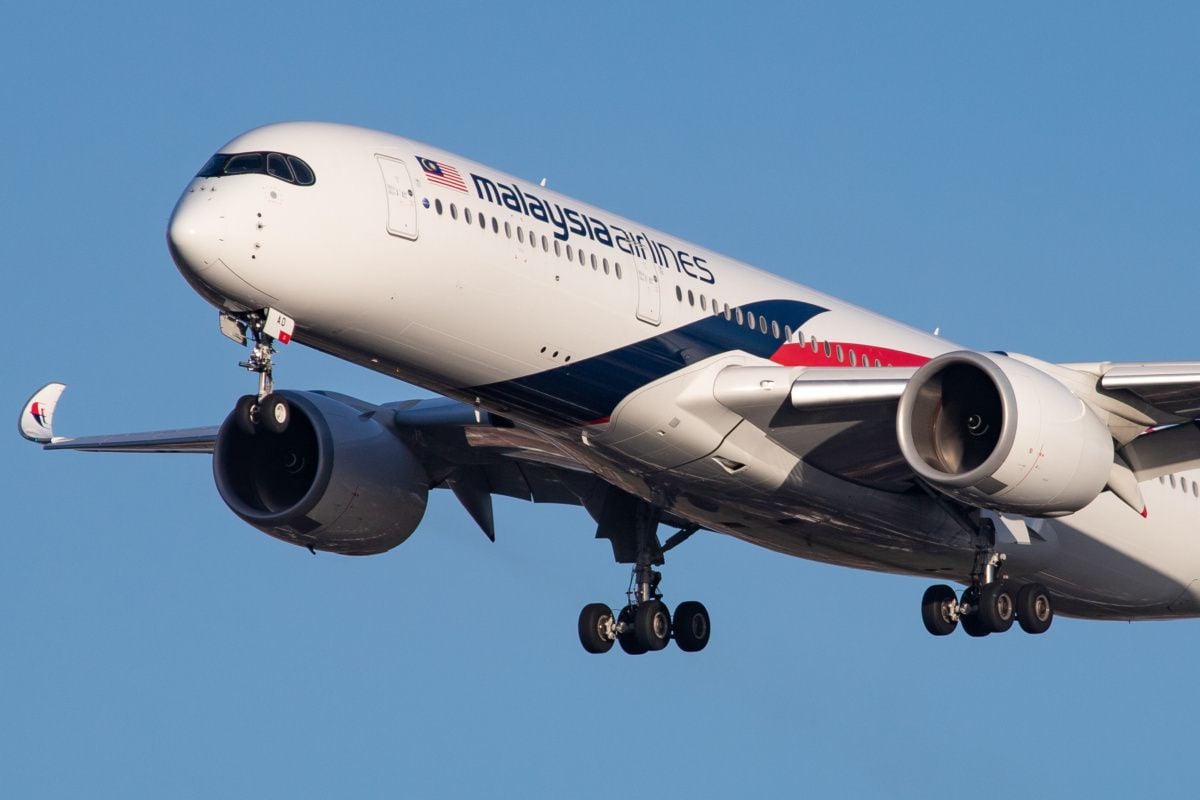
Malaysia Aviation Group may consider a passenger green tax to help cover the cost of sustainable aviation fuel, but the government would decide whether to impose one. Capt. Nasaruddin A. Bakar, the parent company’s president and chief executive, said Monday the group was considering its options as fuel costs strain airlines.
Background: Malaysia Weighs Malaysia Airlines, Batik Air as AirAsia Fallback Amid Fuel Cost Strain
The charge remains a possibility, not a decision announced by the group. Nasaruddin told The Associated Press that any approach must balance airline costs with what passengers can afford.
“Consumers must be able to afford it. The airline must be able to afford to buy it.”
He said it plainly. Higher costs cannot simply be passed through without limit.
- Singapore plans to start its government-mandated aviation levy in January 2027.
- The International Air Transport Association puts SAF at under 1% of global jet fuel use.
- Malaysia Airlines has orders for 40 Airbus A330neos and 55 Boeing 737 MAX jets.
The government would have to approve any passenger levy
Nasaruddin said a decision on a passenger charge belongs to the government. Regulators, fuel suppliers and airlines would need to work together to bring fuel costs down, he said, warning that passing the entire expense to consumers could make air travel less attractive.
The amount airlines might pass to ticket buyers would depend on fuel prices. Nasaruddin said a lower cost could leave room to transfer some expense, while a price that is too high would make that difficult. His comments set out no charge or start date for Malaysia.
Singapore offers a regional comparison. It was the first country to announce a government-mandated aviation levy, scheduled to begin in January 2027. The amount will vary according to destination and cabin class.
Fuel prices limit what airlines can pass on to passengers
The group is already facing higher conventional jet fuel prices amid the Iran war. Nasaruddin said the airline has limited room to recover those increases through fares, and he expects the same constraint to apply to SAF.
“If the cost is not that high, maybe some more of it can be passed on to the passenger,” he said. “If the cost is just too high, we won't be able to do that.”
He did not rule out more fare increases. “I don't have a crystal ball,” he said.
SAF can be made from renewable materials such as used cooking oil, waste fats and agricultural residues. Airlines can blend it with conventional fuel and use it in existing aircraft. But it costs much more than conventional jet fuel, and limited production capacity and access to feedstocks restrict wider use.
The International Air Transport Association says SAF accounts for under 1% of global jet fuel use. Aviation emissions contribute about 2.5% of annual global carbon emissions, according to the International Energy Agency.
The U.N.-backed International Civil Aviation Organization has set a goal of zero net carbon emissions for aviation by 2050. The organization says SAF could cut about 65% of the industry's emissions.
Fleet renewal and aviation targets shape the cost debate
Nasaruddin said the group plans to cut emissions through fleet renewal as well as fuel changes. Malaysia Airlines has orders for 40 fuel-efficient Airbus A330neos and 55 Boeing 737 MAX jets.
The group’s Mid-Term Sustainability Roadmap 2026–2035 targets a 30 to 35 per cent reduction in emissions intensity by 2030 and 40 to 45 per cent by 2035. It also aims to reduce energy intensity by 20 per cent and reach a 55 per cent waste diversion rate by 2030.
Nasaruddin said the roadmap turns the group's net-zero commitment into measurable priorities across its operations and value chain. He said the next task is putting those priorities into practice through partnerships and coordinated work across aviation.
The group recently became the first airline group in Southeast Asia certified under the sustainable procurement module of the International Air Transport Association's Integrated Sustainability Program. It also became the first airline group in Malaysia to retire CORSIA-eligible emissions units, with 80,100 units retired toward its Phase 1 compliance obligations.
MAG and the airport operator have separate decarbonisation milestones
The group is working with Malaysia Airports Holdings Bhd on cleaner energy, fuel use and more efficient airport and airline operations. The collaboration supports Malaysia's transition to net-zero greenhouse gas emissions as early as 2050 and KLIA's position as a regional aviation hub.
Malaysia Airports managing director Datuk Mohd Izani Ghani said the two organizations need to align their investments and operational priorities. “Our respective decarbonisation journeys cannot progress independently,” he said. “We must ensure that our investments and operational priorities complement one another so that we can achieve meaningful progress together.”
The airport operator targets net-zero emissions from Scope 1 and Scope 2 sources by 2040, followed by selected Scope 3 emissions by 2050. Its planned KLIA Aeropolis Solar Park will have 36-megawatt-peak capacity and 45 megawatt-hours of battery storage. The project is expected to avoid about 35,000 tonnes of carbon emissions annually.
The airport and airline initiatives support the Malaysia Aviation Decarbonisation Blueprint.