- AirAsia planea recaudar más de US$1,000 millones en los mercados internacionales de deuda para refinanciar pasivos existentes.
- Tony Fernandes negó un rescate estatal y afirmó que la aerolínea tiene suficiente liquidez para resistir el golpe del combustible.
- Los costos de combustible subieron 66% en el segundo trimestre, lo que llevó a una pérdida neta de RM831 millones.
AirAsia plans to raise more than US$1 billion from international debt markets, mostly to refinance existing debt, as co-founder Tony Fernandes rejects reports that Malaysia is preparing a bailout for the budget carrier. He said the fundraising could come by December or January 2027, alongside 700 million ringgit in local credit.
Fernandes said the carrier has enough liquidity to withstand the shock from jet fuel costs and does not need state support. “We do not need rescue, bailout, whatever,” he said on September 18, 2026.
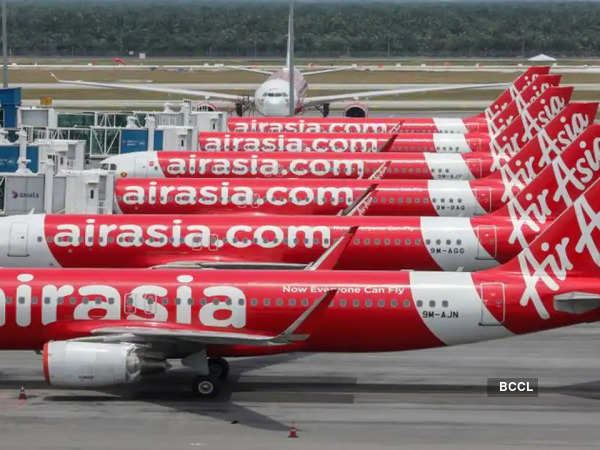
The denial followed a steep market selloff. Shares fell as much as 21% on September 17 after reports that Malaysia’s government had asked Malaysia Airlines and Batik Air whether they could absorb the carrier’s domestic market share.
Fernandes called the bailout reports “most ludicrous.” He also said the airline had never received government support during its 25-year history.
“We’re okay, we’re sustainable.”
“We are good at managing cash and we are strong in liquidity.”
The pressure behind the speculation is clear. Fuel costs jumped 66% in the second quarter of 2026 from the previous quarter, reaching an average of US$183 a barrel. The airline had no fuel hedging in place.
The second quarter ended with a net loss of RM831 million, including RM331 million in foreign-exchange losses. Fernandes described it as the airline’s toughest period, but said fares could improve the outlook as the carrier passes higher costs to passengers.
The market selloff followed reports of contingency planning
The stock closed September 17 at 50.5 sen, after more than 155 million shares changed hands. It had already lost more than 70% of its value since the start of 2026 and remained under pressure on September 18.
| Market measure | Reported figure |
|---|---|
| One-day share decline on September 17 | 21% |
| Closing price on September 17 | 50.5 sen |
| Shares traded | More than 155 million |
| Decline since the start of 2026 | More than 70% |
| Share of Malaysia’s overall aviation market | About 40% |
| Share of Malaysia’s domestic flying | About 60% |
The reports put the carrier’s dominant domestic position at the center of the government’s contingency planning. Authorities were monitoring its financial health while asking two rival airlines whether they could absorb routes and passengers.
Malaysia Airlines and Batik Air indicated that they could expand organically. Neither signaled a plan to acquire the entire business.
Rival airlines were asked about routes, not a takeover
The discussions concerned the possibility of taking on domestic market share if needed, rather than an announced transfer of the carrier’s operations. That distinction allowed rivals to consider adding routes and passengers without committing to a purchase of the airline.
Fernandes pushed back against the reports with humor as well as a denial. “I sneeze, it’s a big story,” he said.
He characterized the current pressure as a geopolitical shock rather than a balance-sheet crisis. The situation, he said, was “far, far” less severe than COVID-19.
Travel demand remains strong, according to Fernandes. The carrier plans to restore capacity to pre-war levels by the fourth quarter, even as it adjusts fares to reflect fuel prices.
Higher fares are the carrier’s first line of defense
The airline has already adjusted fares for fuel prices of about US$180 a barrel. Fernandes said the company is currently planning around prices between US$160 and US$190 a barrel.
A further increase could follow if oil reaches US$250 a barrel. “This is an adjustment. If oil prices stay at this level, all airlines will have to adjust,” Fernandes said.
He also defended additional fare increases as a way to protect the carrier’s finances without abandoning demand.
“I still think we should go higher if need be,” Fernandes said. “It’s not what we want to do, but I think there’s a lot more room for elasticity before it kills the market.”
The carrier is also using technology to reduce consumption. Artificial intelligence already delivers about 3% in fuel savings, Fernandes said.
Debt refinancing and fare increases therefore form the immediate response to the fuel shock. The company’s liquidity position, rather than government assistance, is the basis of its plan.
Capacity and Airbus plans point beyond the immediate fuel shock
Fernandes said the airline is planning for growth despite the difficult quarter. Its capacity target is a return to pre-war levels during the fourth quarter, supported by continued travel demand.
The carrier also expects a “pretty exciting announcement” with Airbus within the next month. Fernandes said the announcement would concern its growth strategy.
The fundraising timeline extends into the next phase of the recovery. The airline expects to access international debt markets by December or January 2027 while pursuing local credit at the same time.
Fernandes said the company could withstand the fuel-price spike and manage through the adjustment. The next scheduled milestones are the Airbus announcement within the next month, restored capacity by the fourth quarter and the planned debt-market raise by December or January 2027.