The Harris County District Attorney’s Office said the substance found in Lorenzo Salgado Araujo’s van tested negative for narcotics, undercutting earlier federal filings that tied the material to methamphetamine. The update sharpens the dispute over the July 7 Houston ICE shooting, after federal agents had described the bags as consistent with drug packaging.
- The district attorney’s office said it was notified that testing confirmed the material in the van was not drugs.
- In an affidavit, FBI Special Agent David McNeilly wrote that bags found in the van were “consistent with how users of drugs package controlled substances.”
- Ruby Powers, who represents the family, said the circulation of the unproven claims “did real damage, diverting attention from what actually matters in this case.”
- Recent reporting also says ICE stated Salgado Araujo was not the intended target of the operation and was stopped because someone in the work van resembled a person agents were seeking.
- Passengers claim ICE agents surrounded the van and fired without facing any immediate physical danger.
- The shooting killed Lorenzo Salgado Araujo, a longtime Houston homebuilder with no previous criminal record.
- A federal judge blocked the deportation of a key witness to preserve testimony during the investigation.
Two passengers have challenged the federal account of the July 7 ICE shooting in court filings, saying agents surrounded their van while the driver parked and fired without facing danger.
The shooting killed 52-year-old Lorenzo Salgado Araujo, a Houston homebuilder who had lived in the United States for 35 years. Immigration and Customs Enforcement says he rammed an agency vehicle and created an imminent threat.
The passengers dispute that account. They wrote that agents “suddenly cornered us” and were never positioned in front of or behind the van when the shot was fired.
The driver was parking, they said.
Federal officers were investigating two Guatemalan men in a similar vehicle when the pursuit began, according to Assistant Attorney General Aaron Reitz. The court filings say Salgado Araujo and the passengers had no criminal records.
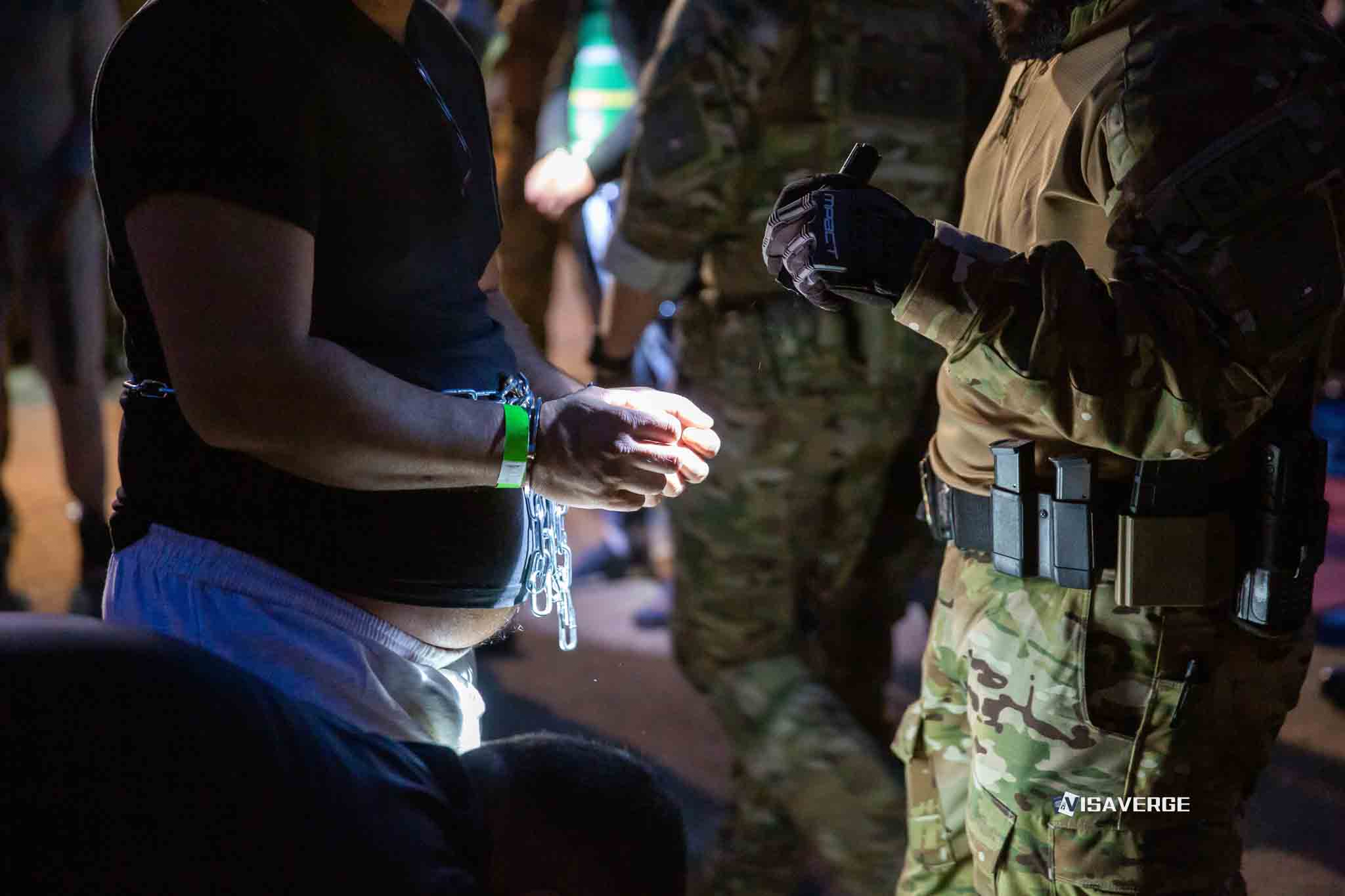
Three witnesses who were present during the encounter are now held in immigration detention. They filed habeas corpus petitions seeking release, alleging that the detention is unconstitutional and intended to suppress their testimony.
A federal judge moved to protect at least one witness. On Monday, July 20, 2026, U.S. District Judge Keith Ellison barred the government from deporting Jose Trinidad Rojas Pliego or transferring him outside the Southern District of Texas without court approval.
The government says the van became a weapon
The Department of Homeland Security said shortly after the encounter that Salgado Araujo “rammed an ICE law enforcement vehicle, refused to follow multiple verbal commands, and weaponized his vehicle.” The agency said an officer fired in self-defense.
Reitz, the U.S. attorney for the Southern District of Texas, offered a preliminary account on July 16, 2026. He said officers saw the driver shift the van into reverse and then forward again during a confrontation.
“Preliminary information indicates the driver shifted the van into reverse, then forward again, while an officer was partially inside the van or immediately next to it. During this confrontation. one of the officers fired a single shot.”
Reitz also said agents found a “white crystal-like substance” inside the van. That discovery prompted an FBI narcotics investigation, according to his update.
The federal account describes an officer standing partly inside or immediately beside the vehicle. The passengers describe a stationary van and agents positioned away from its path.
Witnesses point to physical evidence
The agents involved were not wearing body cameras, according to official reports cited in the court proceedings. That leaves the filings and the vehicle damage among the central evidence used to contest the shooting account.
Experts and lawyers for Salgado Araujo’s family said the damage pattern showed side impact. They argue the pattern suggests agents rammed the van rather than the van striking an agency vehicle.
The passengers’ handwritten filings make a separate point about positioning. They say the agents were never in front of or behind the vehicle, a claim that conflicts with the description of an officer immediately next to, or partly inside, the van.
The filings also challenge the government’s description of the occupants as “non-compliant aliens.” Family members and court documents say Salgado Araujo and his passengers had no criminal records.
Salgado Araujo was reportedly close to obtaining legal status when he died. He was a Mexican national and had worked as a homebuilder in the city after spending 35 years in the United States.
The detention fight now overlaps with the shooting inquiry
The witnesses’ petitions say immigration detention threatens their ability to provide evidence about the encounter. Their lawyers are asking the courts to release them while the case proceeds.
Ellison’s order prevents the government from removing Rojas Pliego or moving him beyond the Southern District of Texas without permission. The order keeps a key witness within the region as investigators examine the conflicting accounts.
The other two witnesses are also in immigration detention. Their petitions form part of the legal fight surrounding testimony from inside the van.
Community leaders and Rep. Sylvia Garcia have called for an independent investigation. Protests have spread across Houston since the shooting.
Civil rights groups have placed the death within a broader pattern, saying at least 10 deaths have occurred during immigration enforcement operations since the start of 2026. They also criticize the repeated use of “vehicle weaponization” to justify lethal force.
The July 7 encounter remains contested on the core question of where the officers stood when the shot was fired. The court filings, missing body-camera footage and competing interpretations of the damage pattern will shape the continuing investigation.