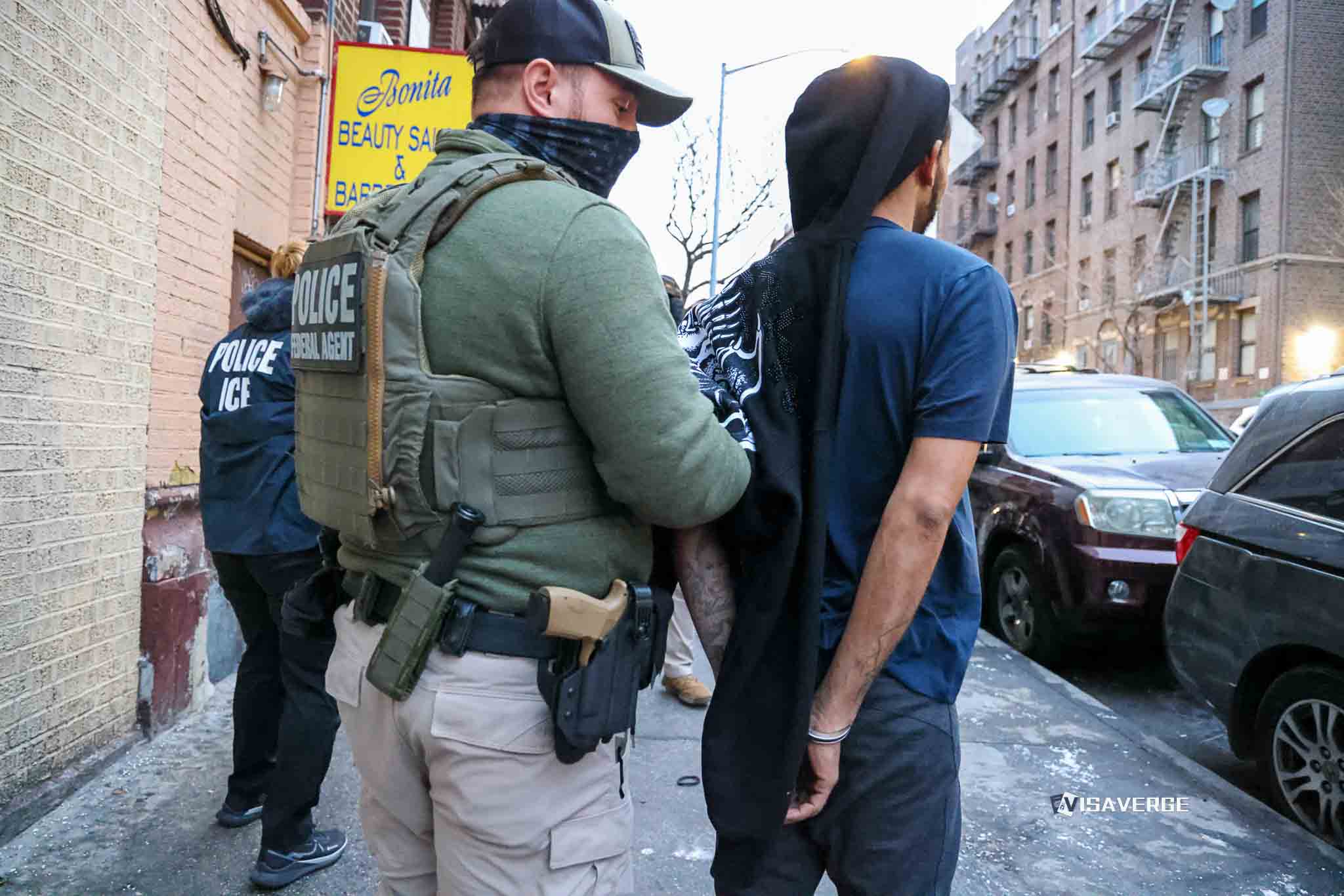
- Denied travelers often face mandatory ICE detention because Mexico frequently refuses undocumented re-entry for non-nationals.
- Stricter 2026 enforcement includes expanded expedited removal authority and enhanced social media screening at ports.
- Most denials result in a five-year re-entry bar unless a rare withdrawal of application is granted.
(U.S.-MEXICO BORDER) Denied entry at the U.S.-Mexico border does not usually end with a quick return trip home. For many foreign nationals, the decision triggers ICE detention, federal removal processing, and days or weeks of waiting while officers arrange the next step.

That reality applies to travelers from Europe, Asia, Latin America, and elsewhere. It matters because a person turned away at a port of entry often cannot simply cross back into Mexico and leave on their own. Mexican rules block undocumented re-entry for non-Mexican nationals, while the Immigration and Nationality Act gives U.S. officers the power to hold many denied entrants until removal is carried out.
Why a denial at the port of entry starts a longer process
Every traveler arriving at a port such as San Ysidro or El Paso faces inspection by Customs and Border Protection. Officers check passports, visas, travel purpose, prior immigration history, and any security concerns. They deny admission when a traveler lacks proper documents, gives a work-related answer while holding a tourist visa, overstays under the Visa Waiver Program, or triggers an inadmissibility ground tied to crime, health, unlawful presence, or national security.
Free toolB1/B2 Tourist Visa Stay Calculator onlineThe screening has grown stricter in 2026. U.S. authorities expanded expedited removal authority, added enhanced vetting at ports of entry, and introduced new travel restrictions effective January 1. The government also broadened social media screening from March 30 for several visa categories, including H-1B and K-1 cases. In practice, that means more travelers face intense questioning before they ever step inside the country.
CBP denied over 500,000 people at southwest ports in fiscal year 2025, and non-Mexicans made up 20% of those cases. VisaVerge.com reports that the combination of digital tracking and fraud detection has made weak cases easier to spot, especially when travelers cannot show ties to home or a clear reason for the trip.
Why people are not sent straight back into Mexico
A denial at the border does not give most third-country nationals a free exit into Mexico. Mexican immigration law treats undocumented entry as illegal, and border authorities often refuse to accept non-Mexican nationals without valid Mexican documents. Mexico’s rules are designed to curb irregular migration and reduce exploitation risks.
That creates a practical trap. A traveler from France, India, or South Korea who is denied by CBP may not be allowed to walk back across the border. Unless that person has a valid Mexican visa or, in some cases, an FMM tourist card, Mexico can reject immediate entry. The result is transfer into federal custody while U.S. officers coordinate travel documents and return plans.
The U.S. also has its own legal reason for holding people. Under the Immigration and Nationality Act, particularly the detention rules tied to removal, CBP usually transfers denied entrants to ICE custody. Officers do that to prevent absconding, protect public safety, and secure the paperwork needed for deportation.
The two paths after denial: removal or withdrawal
After denial, most travelers face one of two outcomes. The first is expedited removal. The second is withdrawal of application for admission.
Expedited removal is the default for many people at or near the border. It usually brings no hearing before an immigration judge. CBP or ICE issues a removal order, often with a five-year re-entry bar. The person remains in custody until travel is arranged. If the traveler says, “I fear return,” officers must screen that claim through a credible fear interview, usually within 48 hours. A positive finding sends the person into asylum proceedings. A negative finding leads to removal.
Withdrawal of application is different. It is a discretionary choice by CBP, not a right. The traveler must usually sign Form I-275 and leave without a formal removal order. That path is rare for non-Mexican nationals because Mexico must accept the person back, and that often does not happen.
Here is the practical distinction:
- Expedited removal: mandatory custody in most cases, a removal order, and a five-year bar.
- Withdrawal: no removal order, but only if CBP approves and Mexico accepts the return.
What ICE detention looks like after a denial
Once CBP finishes its initial processing, many denied travelers go to ICE detention centers such as Otay Mesa or Eloy. They are not free to book their own flight out. ICE uses detention to keep people from disappearing before removal, to finish security checks, and to wait for embassy travel documents.
That waiting period can be long. Europeans may spend 2 to 4 weeks in detention before removal. Others wait longer, especially when their home governments are slow to issue documents or when flight routes are hard to arrange. The average detention period was 21 days in 2025 and rose to 35 days or more in 2026 because of backlogs and delays linked to visa pauses.
ICE rarely grants bond or parole in these cases. When it does, the case usually involves a low-risk person with strong proof of identity and stable support.
What travelers can still do after being stopped
A denied traveler’s options narrow fast, but they are not zero. A person who fears return should say so clearly and immediately. That statement changes the process and triggers asylum screening. A traveler who wants to pursue protection should file Form I-589, the official asylum application, and present evidence of the risk at home.
Other cases turn on documentation. A traveler trying to seek withdrawal needs a valid passport and, when required, a Mexican visa or FMM. A person hoping for release needs embassy travel documents, a sponsor affidavit, or other proof that departure is ready. Attorneys often push for bond or parole hearings when the facts support low flight risk.
Important documents in these cases include:
- Form I-275 for withdrawal of application.
- Form I-589 for asylum claims.
- A Notice to Appear, when DHS places the person into immigration court.
- Embassy travel papers for removal coordination.
Official forms and guidance are available through USCIS’s asylum form page and related government channels. That is the safest starting point for anyone in custody or helping a detained family member.
Why 2026 has made border denials harder to reverse
The 2026 enforcement shift has made the U.S.-Mexico border less forgiving. A December 16, 2025 Presidential Proclamation, effective January 1, widened scrutiny to include birth country, dual citizenship, and recent travel from restricted areas. A January 21 immigrant visa pause covering 75 countries also complicated travel logistics for many nationalities. Those rules do not just affect new visa applicants. They also shape how officers judge credibility at the port of entry.
Travelers arriving with weak documents, uncertain stories, or poor explanations now face more intense vetting. Green card holders also face more scrutiny on re-entry if officers think they are inadmissible. For that reason, travelers are now carrying return tickets, bank statements, and stronger proof of intent to leave when they arrive for short visits.
The system still balances speed and control, but the person turned away often feels the cost first: detention, separation from family, and days of uncertainty while governments sort out the next flight.