- USCIS has suspended Form I-134A acceptance through April 2026, halting financial sponsorship for humanitarian parole programs.
- The policy overhaul restricts entry for 39 countries and adds strict social media vetting for various visa types.
- Applicants face indefinite processing delays as the administration reviews humanitarian mechanisms and enforces higher sponsorship income thresholds.
(UNITED STATES) — U.S. Citizenship and Immigration Services suspended acceptance of Form I-134A on January 27, 2025, and the halt remains in place as of April 2026, leaving would-be sponsors and migrants without a financial support route that had underpinned several humanitarian parole programs.

The continued suspension, ordered after President Donald Trump signed the “Securing Our Borders” executive order on January 20, 2025, has become one part of a wider immigration overhaul that unfolded through 2025 and into 2026. USCIS has not announced a timeline for reinstating the online declaration of financial support.
Form I-134A, formally titled the “Online Request to be a Supporter and Declaration of Financial Support,” had allowed U.S.-based supporters to back people seeking temporary entry through humanitarian parole. Its removal has affected sponsorships tied to Uniting for Ukraine, programs for migrants from Cuba, Haiti, Nicaragua, and Venezuela, and other crisis-based parole efforts.
Free toolI-94 Expiration Calculator OnlineUnlike Form I-864, the affidavit used in many family-based immigration cases, Form I-134A did not impose the same long-term legal financial obligations on sponsors. That made it a more flexible tool for people and organizations willing to offer temporary support in emergency situations.
The administration’s move came as it reviewed humanitarian parole programs more broadly. The stated aim of that review was to ensure parole mechanisms matched border security priorities and did not bypass standard immigration procedures.
For migrants and sponsors, the effects have extended well beyond a procedural pause. People who planned to file Form I-134A, or were preparing to support relatives or other beneficiaries through parole, have faced an indefinite wait with few replacement options.
Pending cases have added to the uncertainty. USCIS has not given clear direction on how Form I-134A applications filed before January 27, 2025 will be handled, leaving applicants and sponsors unable to plan around those submissions.
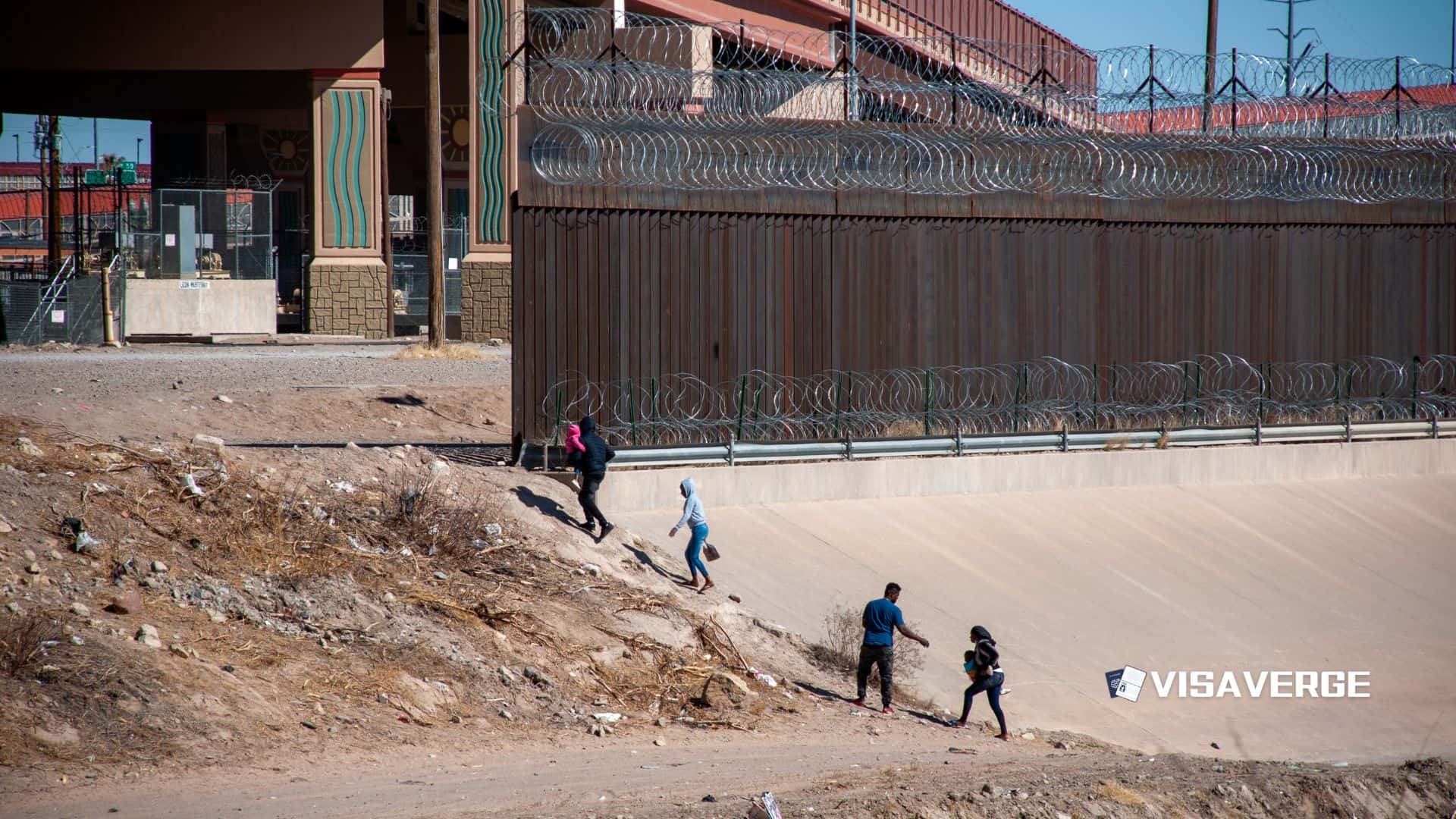
That uncertainty has unfolded as the administration imposed other restrictions across the immigration system. Effective January 1, 2026, Presidential Proclamation 10998 expanded travel restrictions affecting 39 countries.
Those measures included total suspension of entry for Afghanistan, Myanmar, Chad, Republic of Congo, Equatorial Guinea, Eritrea, Haiti, Iran, Libya, Somalia, Sudan, Yemen, Syria and South Sudan, along with partial restrictions on Burundi, Cuba, Laos, Sierra Leone, Togo, Turkmenistan and Venezuela, among others. The State Department also suspended visa issuance entirely for nationals of 19 countries as of January 1, 2026.
In January 2026, the administration also suspended approval of immigrant visas, though not other visa types, for people born in approximately 75 countries. The measure was estimated to block roughly half of all legal immigration to the United States.
Those restrictions do not turn only on passport nationality. They also consider country of birth, dual nationality, prior long-term residence abroad and recent travel history.
Vetting rules tightened as well. Beginning December 3, 2025, the U.S. State Department expanded its “online presence review” requirement to H-1B workers and H-4 dependents, requiring applicants to disclose social media identifiers and keep accounts public during adjudication.
As of March 30, 2026, that screening had expanded again to additional nonimmigrant visa categories, including K-1 fiancé(e) visas, religious workers, trainees, domestic workers, and humanitarian categories such as T and U visas. Employers and immigration professionals have reported longer processing times and more denials under the broader scrutiny.
Humanitarian parole changes have been part of the same policy turn. In late 2025, USCIS announced a temporary pause in asylum application processing while it reviewed internal regulations and procedures in light of new rules and an emphasis on “maximum vigilance.”
That pause delayed interviews, decisions and adjudications, though it did not amount to a blanket ban. At the same time, legal protections including Temporary Protected Status and humanitarian parole were cancelled or revoked for over 1.5 million people.
For those who once relied on Form I-134A, alternatives remain limited. Form I-864 is still available in family-based immigration and some employment-based cases, but it carries legally binding obligations that can last for years or until the beneficiary becomes a U.S. citizen or earns 40 quarters of Social Security credits.
That makes it a poor substitute for many people who wanted to offer temporary humanitarian support without assuming long-term liability. Some employment-based routes do not require the same type of financial sponsorship, but those pathways now face tighter vetting and higher wage rules.
The H-1B program itself changed sharply in 2025-2026. The administration introduced a $100,000 fee for new petitions for workers located outside the United States and replaced the random lottery with a wage-based selection system favoring higher-paid jobs.
In March 2026, the Department of Labor proposed broad increases in H-1B wage requirements. Entry-level wages could rise by more than 30%, moving from the 17th to the 34th percentile of local wage data, with the proposal covering H-1B, H-1B1, E-3, and PERM filings for new cases only.
Even within that restrictive environment, some visa categories moved forward. The April 2026 Visa Bulletin showed progress in several employment-based and family-sponsored lines.
For EB-1, all countries remained current except China and India, which advanced to April 1, 2023. In EB-2, all countries were current except China, which showed no movement, and India, which advanced to July 15, 2014.
Rest of World, Mexico, and Philippines in EB-2 became “Current” for final action dates. In EB-3, most countries advanced, with Rest of World final action dates moving by 8 months to June 1, 2024, while Dates for Filing advanced to Current.
USCIS said it would keep accepting adjustment of status applications under the Dates for Filing chart for the sixth consecutive month. That allowed eligible applicants to submit Form I-485 and seek work permits and Advance Parole travel documents.
The State Department tied that movement to lower consular issuance rates after the nationality-based travel restrictions and immigrant visa pauses. It warned that retrogression could follow later in fiscal year 2026 if demand changes or current policies shift.
Family-sponsored categories also advanced in the April 2026 bulletin. F-2B, for unmarried adult children of permanent residents, and F-3, for married children of U.S. citizens, each moved forward by an average of four to five months.
Sponsorship requirements in family-based immigration also rose in 2026. Most sponsors must now earn at least $27,050 to support a household of two under updated poverty guidelines, with higher thresholds for larger households.
Sponsors who do not meet that level can still qualify by combining household income, using a joint sponsor or counting certain assets. Those rules apply to the Affidavit of Support process rather than to Form I-134A, which remains suspended.
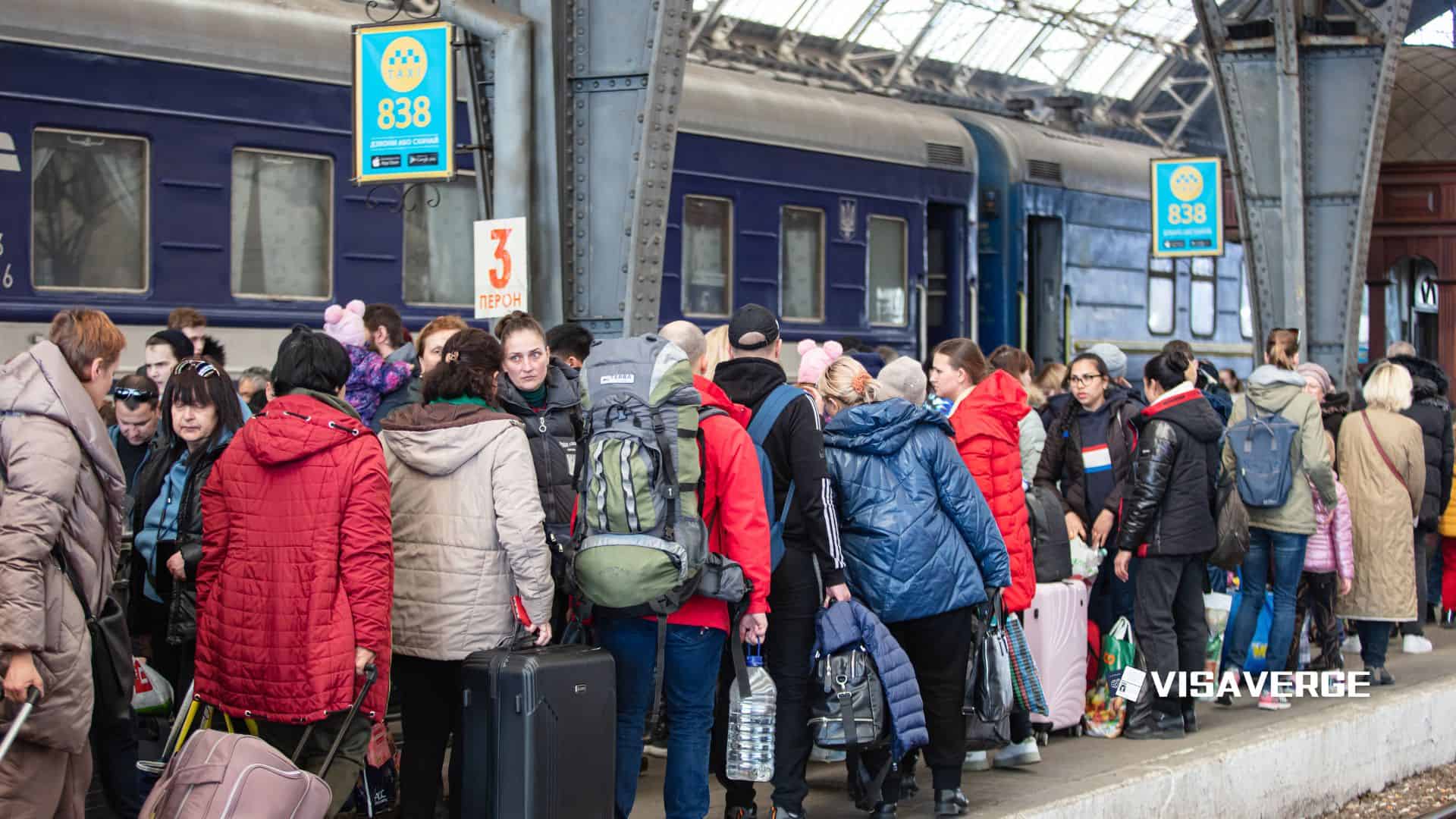
The disappearance of Form I-134A has been especially acute for populations that had depended on categorical parole programs. Uniting for Ukraine had used U.S. sponsors to support displaced Ukrainians, while the Cuba, Haiti, Nicaragua and Venezuela initiatives also relied heavily on the form.
Without that mechanism, people fleeing armed conflict, political unrest, economic collapse and other humanitarian crises have lost a route to temporary U.S. entry that had been faster and less burdensome than many traditional immigration channels. For separated families, the suspension has also blocked one of the few available paths for near-term reunification.
Immigration attorneys have taken on a larger role as clients try to piece together alternatives. They are reviewing family-based petitions, employment options and other visa categories case by case, but the lack of clear USCIS guidance on the parole review has made those assessments harder.
The administration’s broader direction has pointed toward more centralized screening. A new USCIS Vetting Center announced in December 2025 was designed to centralize enhanced checks on applicants, including screening for terrorists, criminal aliens and other foreign nationals who may pose threats to public safety or who have engaged in fraud or criminal activity.
That shift has reduced predictability for foreign nationals well beyond parole applicants. Expanded travel restrictions, wider social media checks, immigrant visa pauses and shorter Employment Authorization Document validity periods, capped at 18 months as of December 2024, have all narrowed the margin for applicants, employers and schools trying to plan ahead.
Critics of the changes have argued that the cumulative effect falls hardest on people already in crisis. They say weakening humanitarian programs punishes refugees from war zones, people facing political persecution and others escaping unstable conditions.
Others have pointed to the deterrent effect on sponsors. With Form I-134A unavailable and no announced replacement, some potential supporters have stepped back rather than enter a system shaped by shifting rules and few clear options.
Questions also remain about what comes next. The suspension has now lasted more than 15 months, and the range of possible outcomes includes narrower parole eligibility, new sponsorship procedures with tighter vetting, greater liability for supporters, or a deeper restructuring of categorical humanitarian parole programs.
For now, USCIS has left Form I-134A outside the system that once connected U.S. sponsors to people seeking temporary refuge. More than a year after the shutdown began, humanitarian parole applicants, their backers and immigration lawyers are still waiting for the government to decide whether that pathway will return at all.