- Corporate payouts are dividends only if supported by E&P under Section 316 rules.
- Tax character follows earnings and profits measurement rather than internal company bookkeeping labels.
- Excess payments become nondividend distributions reducing basis after E&P is fully exhausted.
(U.S.) — Corporations determine whether shareholder payouts count as dividends by measuring earnings and profits, not by relying on the label owners put on a check, a bookkeeping entry, or a year-end payment.
That rule comes from Section 316 of the Internal Revenue Code, which treats a corporate distribution as a dividend only to the extent it comes out of current or accumulated earnings and profits. In 2026, that remains the controlling framework for distribution analysis.

The distinction changes the tax result. If a corporation has sufficient earnings and profits, a payment to a shareholder is generally taxed as a dividend. If it does not, the same payment can be a nondividend distribution, usually a return of capital that reduces stock basis, and any excess beyond basis is generally taxed as capital gain.
IRS Publication 542 continues to describe that structure, and `Form 1099-DIV` still separates ordinary dividends from nondividend distributions. The form matters because the reporting follows the tax character of the payment.
Earnings and profits, often shortened to E&P, is a tax-law concept distinct from book profit, retained earnings under financial accounting, or taxable income reported on Form 1120. A corporation starts from taxable income and then makes tax adjustments to arrive at E&P, as Publication 542 explains.
That means a corporation can post taxable income and still produce a different E&P number, or make distributions in a year when book income and tax income do not neatly explain the shareholder result. Informal accounting labels inside the business do not control whether a payment is a dividend.
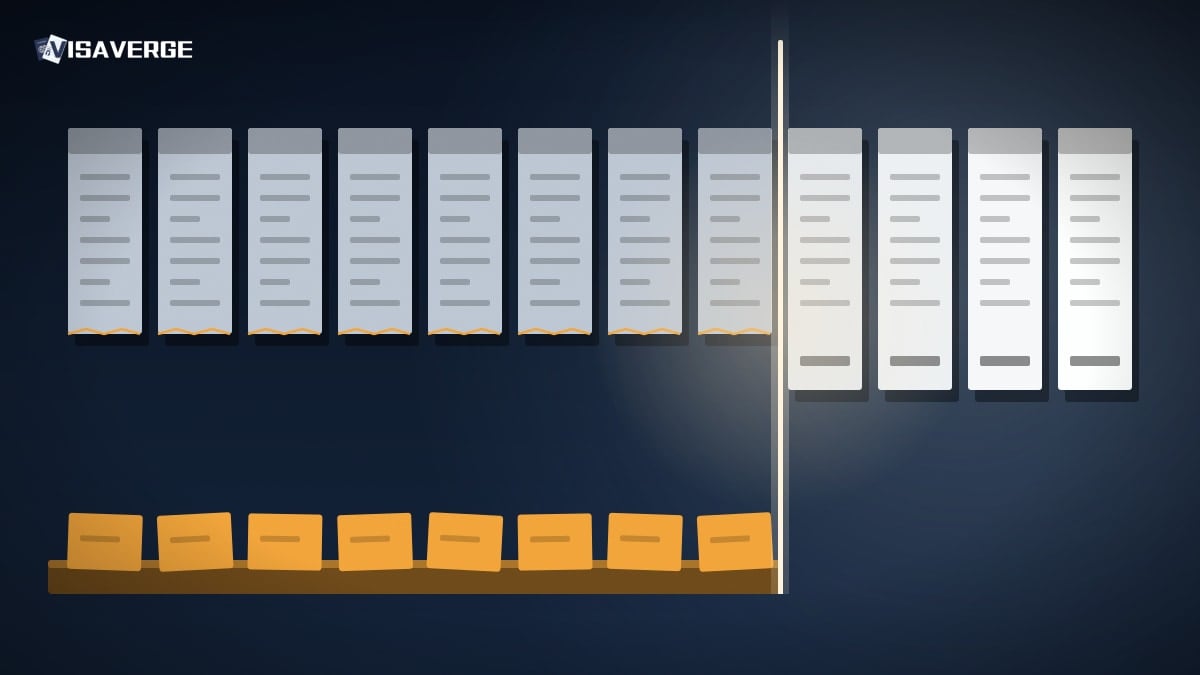
Federal tax law generally orders distributions first to current-year E&P and then, if needed, to accumulated E&P from prior years. Section 316 states that every distribution is made out of earnings and profits to the extent thereof and from the most recently accumulated earnings and profits.
Timing often trips up closely held companies. If current-year E&P is large enough to cover all distributions made during the year, those distributions are generally dividends even if the cash went out before the corporation had earned the profits on a cash-flow basis.
The tax law does not ask whether the dollars in the bank account on the payment date came from that month’s sales or from an earlier capital contribution. E&P measurement follows tax rules, and that tax measure governs distribution character.
When distributions exceed current E&P, the analysis does not end. The corporation then looks to accumulated E&P from prior years, and that prior pool can still support dividend treatment.
If both current and accumulated E&P are exhausted, the payment is no longer a dividend for tax purposes. It becomes a nondividend distribution that reduces the shareholder’s stock basis, and any amount beyond basis is generally taxed as gain from the sale or exchange of property.
That sequence can materially alter tax cost. Dividend treatment generally produces immediate income, while a return of capital is generally not taxed immediately unless basis has already been fully recovered.
Reporting on `Form 1099-DIV` reflects those differences. When a corporation makes a dividend distribution, it is generally reported as a dividend; when it makes a nondividend distribution, IRS instructions direct payers to report that amount in Box 3 if determinable.
A shareholder who receives a `Form 1099-DIV` showing ordinary dividends in one box and nondividend distributions in another is not looking at a clerical split. The form is signaling that one part of the payment is treated as dividend income and another part is treated as basis recovery.
That is why corporations cannot safely classify all year-end shareholder payouts as dividends without first analyzing E&P. A label chosen in haste can overstate income for shareholders, or understate it, if the corporation’s earnings-and-profits position points the other way.
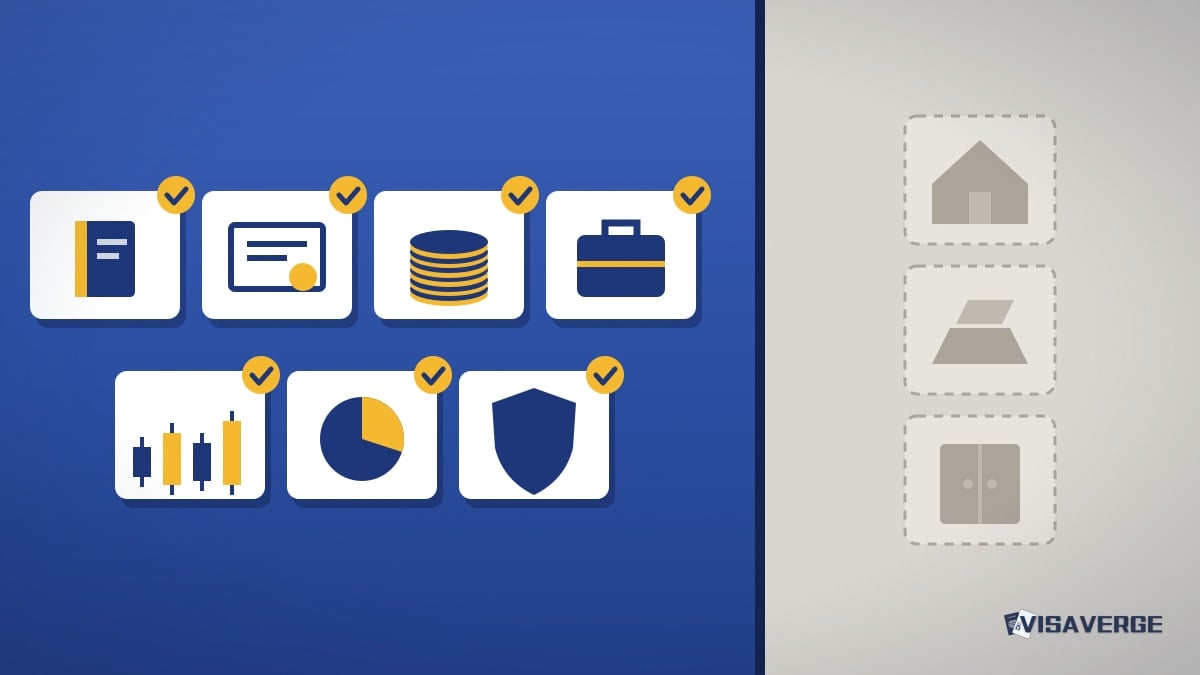
Publication 542 also notes that some items are added back or otherwise adjusted in computing E&P. Examples include tax-exempt income and other items that affect a corporation’s dividend-paying capacity even though they do not fit neatly within ordinary taxable-income calculations.
As a result, E&P can capture value that did not get taxed in the usual way at the corporate level. The measure aims to determine dividend-paying capacity under tax law, not to mirror financial-statement profit or a simple cash ledger.
That gap between tax concepts and day-to-day bookkeeping becomes sharper in closely held corporations. Public companies usually systematize distribution reporting, but family-run businesses and immigrant-founded corporations often handle shareholder withdrawals more informally, through periodic draws, year-end payments, or reimbursements booked without a clean tax classification in real time.
Informality does not change the federal rule. If a corporation with positive earnings and profits makes payments to shareholders and calls them owner withdrawals, the IRS can still treat them as dividends to the extent E&P exists.
The reverse problem can happen too. If a corporation has no current or accumulated E&P, treating shareholder payments as dividends may overstate shareholder income because the payment may instead be a nondividend distribution that first reduces basis.
The E&P computation decides the issue, not the phrase used in internal bookkeeping. That point carries weight in businesses where shareholders and managers are the same people and tax classification is often addressed after the cash has already moved.
A simple example shows how the rule works. Assume a corporation distributes cash to its sole shareholder several times during the year.
If total distributions are less than or equal to current-year E&P, the entire amount is generally dividend income. If current-year E&P is smaller than total distributions but the corporation has accumulated E&P from prior years, part of the distributions may still be treated as dividends from that earlier pool.
If the corporation lacks both current and accumulated E&P, the payment is generally a nondividend distribution that reduces stock basis. Any amount beyond basis is generally taxed as gain.
The example also shows why cash timing can mislead owners. A payment made early in the year does not escape dividend treatment if current-year E&P ultimately covers the year’s distributions, because the tax law applies the ordering rule across the year rather than tracing one payment to one day’s earnings.
Cross-border taxpayers face an additional layer of exposure. Nonresident Indians and other global founders often focus first on entity formation, withholding, treaty questions, and business structures tied to immigration status, but distribution classification still sits at the center of the tax result once a U.S. corporation starts generating profits.
A founder may view cash taken from the corporation as previously taxed business money or a routine owner withdrawal. Under U.S. tax law, that payment can still be dividend income if the corporation has current or accumulated earnings and profits.
Dividend treatment in cross-border cases can trigger domestic reporting, withholding, or treaty issues depending on the shareholder’s status. The first step, however, remains the same domestic-law question that applies to every corporation: whether the payment came out of E&P.
That point often gets lost because corporate owners tend to think first about how much cash left the business, not how the tax law characterizes the transfer. Section 316 does not turn on management’s intent, nor on whether the payout felt like compensation, a draw, or a distribution of old cash already sitting on the balance sheet.
It turns on earnings and profits. Current E&P comes first. Accumulated E&P comes next. Once both are gone, the payment shifts into return-of-capital treatment and then, after basis is exhausted, into gain.
The framework has not changed for 2026. A corporate distribution is a dividend only to the extent of current or accumulated earnings and profits; if no E&P exists, the payment is generally a nondividend distribution that reduces basis, and any excess is generally capital gain.
Publication 542 and `Form 1099-DIV` continue to reflect that structure. Before a corporation calls a shareholder payment a dividend, a draw, or a return of capital, the tax character still follows one calculation above all others: its earnings-and-profits position under Section 316 of the Internal Revenue Code.