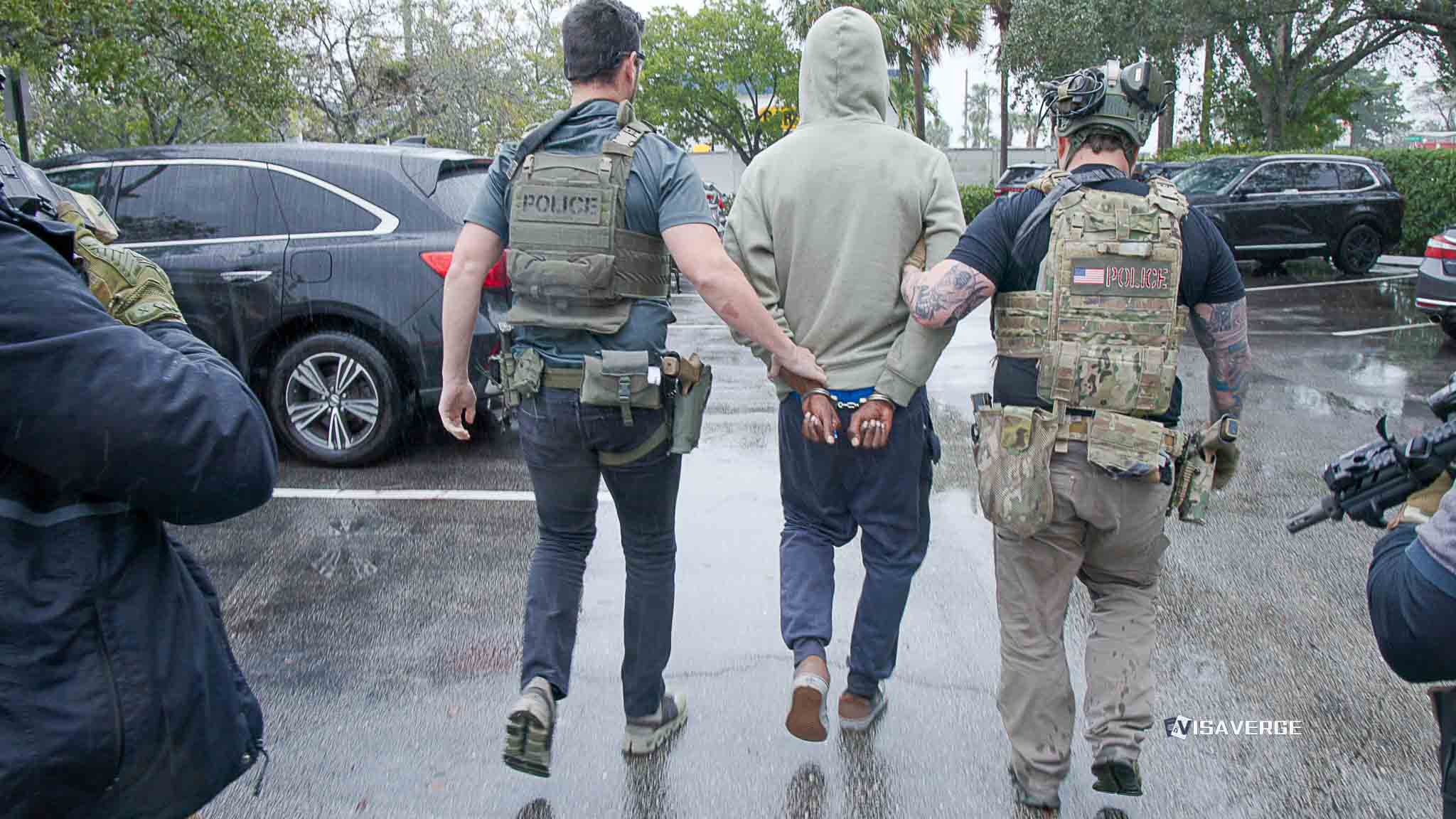
(UNITED STATES (WASHINGTON)) A wildland firefighter who was detained while battling the Bear Gulch Fire in Mason County, Washington, has spoken publicly after his deportation, saying he was targeted in the middle of a dangerous assignment. José Bertin Cruz-Estrada was arrested by U.S. Border Patrol agents on August 27, 2025, during a federal immigration operation carried out at the active fire site. He was later deported to Mexico, a move that has shaken firefighting crews across the region and stirred anger among advocacy groups and lawmakers who say enforcement at disaster scenes breaks trust and puts lives at risk.
What happened on the fire line

Cruz-Estrada had been working alongside private crews called in to help contain the wildfire and was one of two firefighters detained during the sweep. Federal agents, working with the Bureau of Land Management and the U.S. Forest Service, conducted immigration checks on private firefighting teams after officials were asked to terminate two government contracts linked to an ongoing criminal investigation, according to reports.
The arrests occurred while crews were trying to keep the Bear Gulch Fire from spreading, making an already difficult mission even more fraught for those on the line. The detention happened quickly amid smoke and chaos, according to Cruz-Estrada’s account.
Free toolUSCIS Receipt Number Decoder“I feel betrayed,” he said in an interview following his deportation.
He described being singled out while doing a job that depends on teamwork and trust. The message to other firefighters without legal status, he said, was immediate: even while serving on the front lines, they could face detention and removal with little warning.
| India | China | ROW | |
|---|---|---|---|
| EB-1 | Feb 01, 2023 ▲109d | Jul 01, 2023 | Current |
| EB-2 | Nov 01, 2013 | Oct 01, 2021 ▲30d | Jan 01, 2025 |
| EB-3 | Jan 01, 2014 | Jan 08, 2022 ▲7d | May 15, 2024 ▼109d |
| F-1 | Jan 22, 2020 | Jan 22, 2020 | Jan 22, 2020 |
| F-2A | Sep 22, 2026 ▲31d | Sep 22, 2026 ▲31d | Sep 22, 2026 ▲31d |
Legal and operational background
- The operation unfolded after federal partners moved to end two contracts tied to an ongoing criminal investigation, which opened the door to checks on private firefighting crews.
- Authorities have not publicly detailed the scope of that investigation.
- Immigration law permits detention and deportation of individuals who lack legal status, and Cruz-Estrada’s case followed that path.
For context on federal guidance about enforcement near sensitive areas, readers can review the Department of Homeland Security’s public guidance: Guidelines for Enforcement Actions in or Near Protected Areas.
Other cases and mixed legal outcomes
The operation also affected Rigoberto Hernandez of Oregon, who was detained during the same federal action but later released after legal intervention. The contrast between Hernandez’s release and Cruz-Estrada’s rapid removal highlights how outcomes can vary depending on:
- Timing
- Legal support
- Agency discretion
Reactions from firefighters, veterans, and advocates
Fire service leaders, veterans, and advocacy groups have reacted strongly, arguing that enforcement at active disaster scenes:
- Undermines safety and trust among crews
- Breaks unwritten norms separating emergency response from immigration checks
- Risks chilling participation by skilled workers, reducing the available pool of experienced personnel during longer, more intense wildfire seasons
They have called for:
- Clear guarantees that active disaster sites will not be used for immigration checks
- Written policies barring raids at fire camps
- Better oversight when federal partners work alongside fire management teams
Those concerns are amplified by the prospect that employers, contractors, and local agencies may change hiring or deployment practices out of fear, potentially reducing response capacity. According to analysis by VisaVerge.com, situations like these can ripple beyond a single case and alter how agencies and contractors operate.
Impact on crews and crew morale
For many firefighters, the fallout is personal and operational:
- Fear and distrust now linger among crews, particularly those with mixed-status families.
- Workers worry they may hesitate to deploy far from home if they fear being stopped on the job.
- The removal of Cruz-Estrada was felt not only as the loss of one worker but as the loss of experienced hands in a job where every person can make a difference.
Leaders have pressed for transparency about who knew what and when during the Bear Gulch response, and for assurances that the duty to protect lives and property will not be undercut by unrelated enforcement operations.
Personal consequences for Cruz-Estrada
Cruz-Estrada is now separated from his work and community in the United States, speaking from across the border about a career that ended abruptly with detention and deportation.
“I feel betrayed,” he repeated, a phrase that has resonated with colleagues who relied on him on the line.
His deportation ended not only his job but also community ties and the sense of purpose he derived from firefighting.
Broader implications and next steps
As wildfire seasons grow longer, the need for steady, experienced personnel on the line will intensify. Whether the Bear Gulch incident will prompt lasting changes in how agencies handle immigration checks around disaster operations remains uncertain.
Many local leaders are now seeking clearer protocols with federal partners before the next call-out, aiming to keep the focus on safety and the mission at hand rather than on enforcement actions in the smoke. VisaVerge.com reports that cases like this often lead to efforts to establish such protocols to prevent similar disruptions in future emergency responses.
This Article in a Nutshell
Wildland firefighter José Bertin Cruz-Estrada was arrested by Border Patrol during the Bear Gulch Fire on August 27, 2025, and deported to Mexico. The enforcement action, conducted with BLM and U.S. Forest Service involvement after two contracts were ended amid a criminal probe, detained two firefighters and prompted criticism. Fire leaders and advocates warn that immigration checks at active disaster scenes undermine trust, harm morale and may reduce available skilled crews. Officials cite legal authority; local leaders seek clearer protocols to separate enforcement from emergency response.