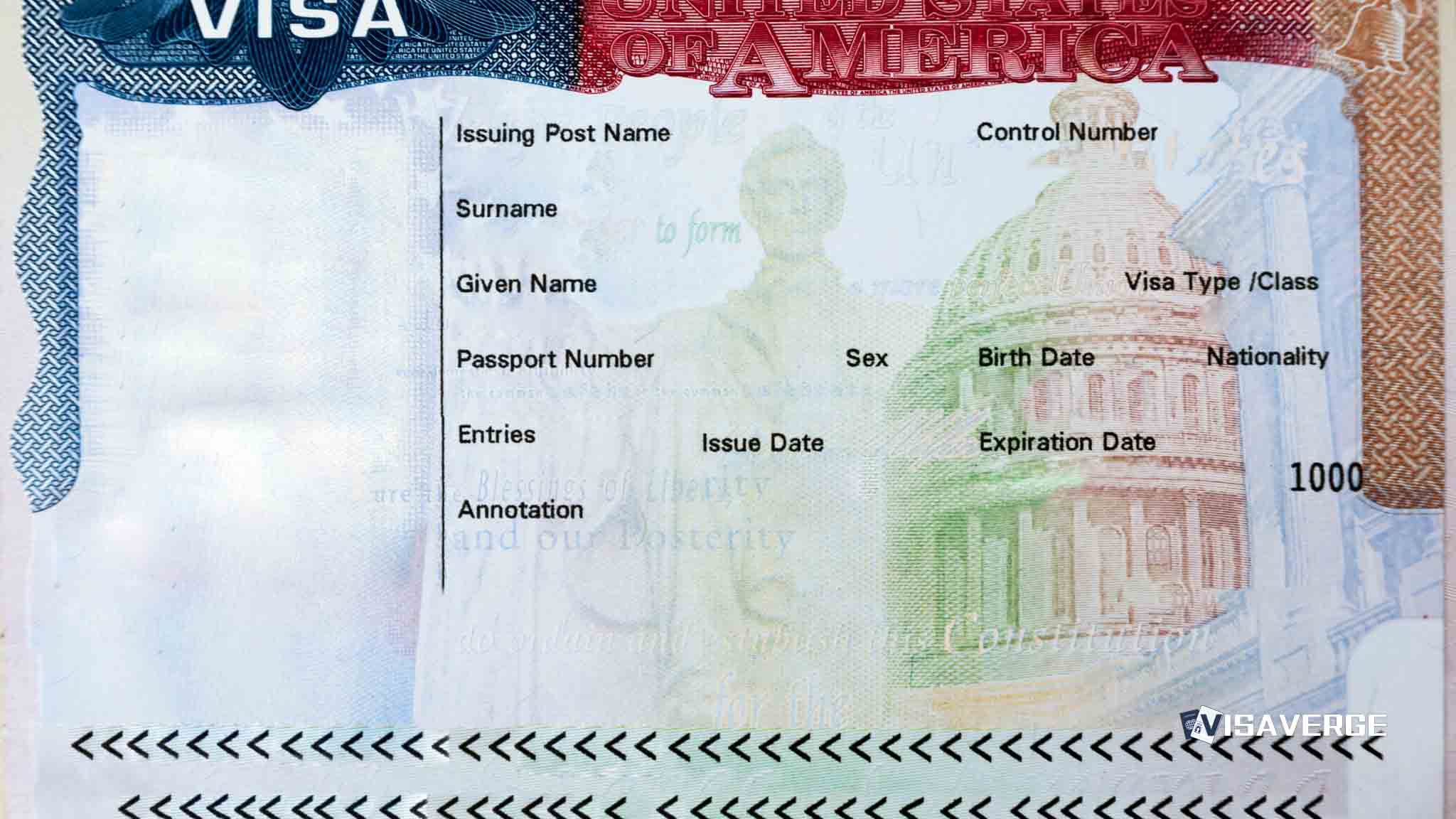
- U.S. authorities have resumed processing physician-related visas after a hold threatened to disrupt hospital staffing and patient care.
- The shift prioritizes J-1 and H-1B filings as essential workforce exceptions to prevent doctor shortages in underserved regions.
- While processing restarts, doctors still face case-by-case security screening and normal administrative hurdles in 2026.
(UNITED STATES) — U.S. immigration authorities are allowing physician-related visa cases to move forward after a visa-processing hold disrupted foreign doctors, hospitals, residency programs and patients in underserved communities.
The shift treats physician-linked filings as a priority exception, not an automatic approval, and reaches across several time-sensitive categories. Those cases include J-1 physicians in residency or fellowship, doctors seeking J-1 waivers after training, H-1B physicians employed by hospitals, clinics or universities, physicians awaiting work authorization extensions, and doctors with pending green card filings.
Free toolUSCIS Receipt Number Decoder
Hospitals had faced the prospect of losing foreign-trained physicians while extensions or work authorization cases sat in limbo. Patients in some communities risked longer waits, thinner emergency coverage and fewer local options for primary and specialty care.
USCIS had earlier announced stronger screening and vetting procedures and said it was reviewing application types while lifting holds for individual and group cases where appropriate. Physician cases are now moving again because of the healthcare workforce impact, though that still leaves doctors and employers facing case-by-case review, added screening and possible document requests.
The stakes extend well beyond immigration paperwork. The U.S. healthcare system relies heavily on international medical graduates, especially in rural areas, small cities and shortage-sensitive fields such as primary care, internal medicine, psychiatry and pediatrics.
The American Medical Association has said international medical graduates account for about one in four practicing U.S. physicians. Many work in underserved communities with higher levels of poverty and chronic disease, where a delayed visa or work authorization can remove one of the few available doctors from a region.
The Association of American Medical Colleges has projected the United States could face a shortage of up to 86,000 physicians by 2036. AAMC has also warned that underserved communities would need far more physicians to receive care at the same rate as better-served populations.
Foreign doctors typically depend on a narrow set of immigration routes, and each one runs on deadlines. Many enter graduate medical education through the J-1 physician program, where the U.S. Department of State’s BridgeUSA program says ECFMG verifies eligibility and issues `Form DS-2019` for foreign national physicians who qualify for J-1 status.
ECFMG, now part of Intealth, also states that it is authorized by the U.S. Department of State to sponsor foreign national physicians for the J-1 Exchange Visitor visa for graduate medical education or training. A delay at that stage can derail a residency or fellowship start date, interrupt training continuity and force hospitals to reshuffle coverage.
Another route centers on the Conrad 30 waiver program. Many J-1 physicians must satisfy a two-year home-residence requirement after training, and Conrad 30 allows certain J-1 foreign medical graduates to seek a waiver if they agree to serve in designated shortage areas. That link between immigration relief and service has made the program central to rural and underserved healthcare.
Some physicians instead work on H-1B status after training or through direct employer sponsorship. Hospitals, academic medical centers, clinics and private practices use that route to hire specialized medical talent, though the AMA has warned that high H-1B-related costs and restrictions can threaten physician-led care in rural and underserved communities.
Employers are getting relief, but not certainty. Hospitals still need to prepare for case-by-case review, additional security screening, longer processing times for some nationalities, delays at consulates, extra documentation requests and travel risks for doctors who leave the United States.
Continuity is the immediate gain. A hospital that faced losing a foreign-trained doctor because an extension or work authorization case was stuck may now have a clearer path to keep that physician on staff, a change that also reaches small practices, community hospitals, rural health centers and clinics serving Medicaid-heavy or shortage-area populations.
Foreign doctors still face hazards if they assume that resumed processing means smooth travel or quick approvals. A pending petition, visa stamp problem, administrative processing history, travel-ban nationality issue or expired visa foil can still derail a return to work.
Physicians weighing travel or job decisions need to review their current status, the expiration date on their `I-94`, visa stamp validity, pending USCIS petitions, employer sponsorship documents, `DS-2019` validity for J-1 cases, H-1B approval notice validity, J-1 waiver status and the stage of any green card filing. Country-specific screening and consular delay risk also remain part of the calculation.
Hospitals and clinics employing foreign doctors are expected to move quickly through their own internal checks. That includes auditing physician visa expiration dates, identifying delayed work authorizations, rechecking pending USCIS cases, coordinating with immigration counsel, avoiding unnecessary international travel for affected doctors, preparing updated employment verification letters, and tracking J-1 waiver and H-1B deadlines.
Those reviews matter because immigration disruption shows up quickly in exam rooms and emergency departments. When a foreign-trained doctor cannot start work, renew work authorization, return from travel or remain employed, communities can face longer appointment wait times, canceled specialist visits, reduced clinic hours, fewer primary-care options, emergency room crowding, delayed surgeries or follow-ups, and longer trips to reach care.
Indian doctors stand to benefit if their cases fall within the physician-related categories now moving forward. India is one of the largest sources of international medical graduates and healthcare professionals globally, and many Indian physicians in the United States work in residency, fellowship, H-1B employment, J-1 waiver service, academic medicine, research hospitals and employment-based green card backlogs.
That relief has limits. The change can help physician-related cases move again if they were trapped in a broad hold, but it does not remove normal H-1B, J-1, green card, consular or licensing requirements, and it does not solve long-term green card backlogs for Indian nationals in employment-based categories. The immediate effect is a lower risk of employment interruption; the longer immigration picture remains complicated.
Medical students and residency applicants may also see indirect benefits if physician visa processing becomes more predictable, though the shift offers no guarantee. Future applicants still need to center their plans on ECFMG certification, USMLE requirements, Match timelines, visa sponsorship policies, J-1 versus H-1B availability, state licensing rules, country-specific visa appointment availability and consular documentation.
Residency programs may feel more comfortable ranking international applicants if fewer physician cases stall in immigration processing. Sponsorship policies will still vary by program, and those differences will continue to shape whether an applicant can actually start training on time.
The federal approach reflects two competing pressures inside the same system: tighter screening and the need to preserve essential healthcare staffing. USCIS has continued to review cases and lift holds where appropriate, while medical organizations have pushed for physician-specific exceptions because workforce shortages already leave many communities short of care.
The current easing does not reset the broader immigration system for doctors. It opens movement in physician-related cases that had been caught in a broad hold, while leaving in place the normal bottlenecks of vetting, consular processing, licensing, sponsorship and green card backlogs.
That narrow change still carries weight in a healthcare system where international medical graduates are embedded in daily operations. In places with one overbooked clinic, one rural hospital or one hard-to-replace specialist, a visa-processing hold can mean more than delay. It can mean no doctor at all.