The Trump administration’s visa processing freeze remains in force for foreign physicians, with Presidential Proclamation 10998 suspending visa issuance to nationals of 39 countries as of January 1, 2026. The Department of State also paused immigrant visa processing for 75 countries on January 21, 2026, leaving more than 10,000 physician H-1B holders and more than 17,000 doctors on J-1 visas under the hold.
- USCIS halted processing of immigration benefits, including work authorization extensions, for individuals from 39 nations already in the United States, deepening delays for foreign-trained doctors working in shortage areas.
- H-1B visa holders can continue treating patients for 240 days after their visa expires while renewal applications are pending, but many physicians have been forced onto unpaid leave during the delay.
- A group of senators sent a letter on April 22, 2026 to the Government Accountability Office requesting review of the USCIS adjudication pause and the 75-country processing pause.
- Foreign medical graduates on J-1 visas can still use the Conrad 30 waiver pathway if they commit to serving in physician shortage areas after U.S. training.
- The DHS has frozen immigration benefits for doctors from 39 high-risk countries, halting H-1B extensions and green cards.
- Hospitals in several states face exponential administrative burdens as physicians exceed their 240-day grace periods.
- Medical groups warn that patient care is suffering amid a projected national shortage of up to 124,000 doctors.
(U.S.) — The Department of Homeland Security has frozen nearly all immigration benefit decisions for nationals of 39 countries deemed high-risk for vetting issues, halting H-1B extensions, Employment Authorization Documents, green card approvals and naturalizations for thousands of foreign-born physicians already working in the United States.
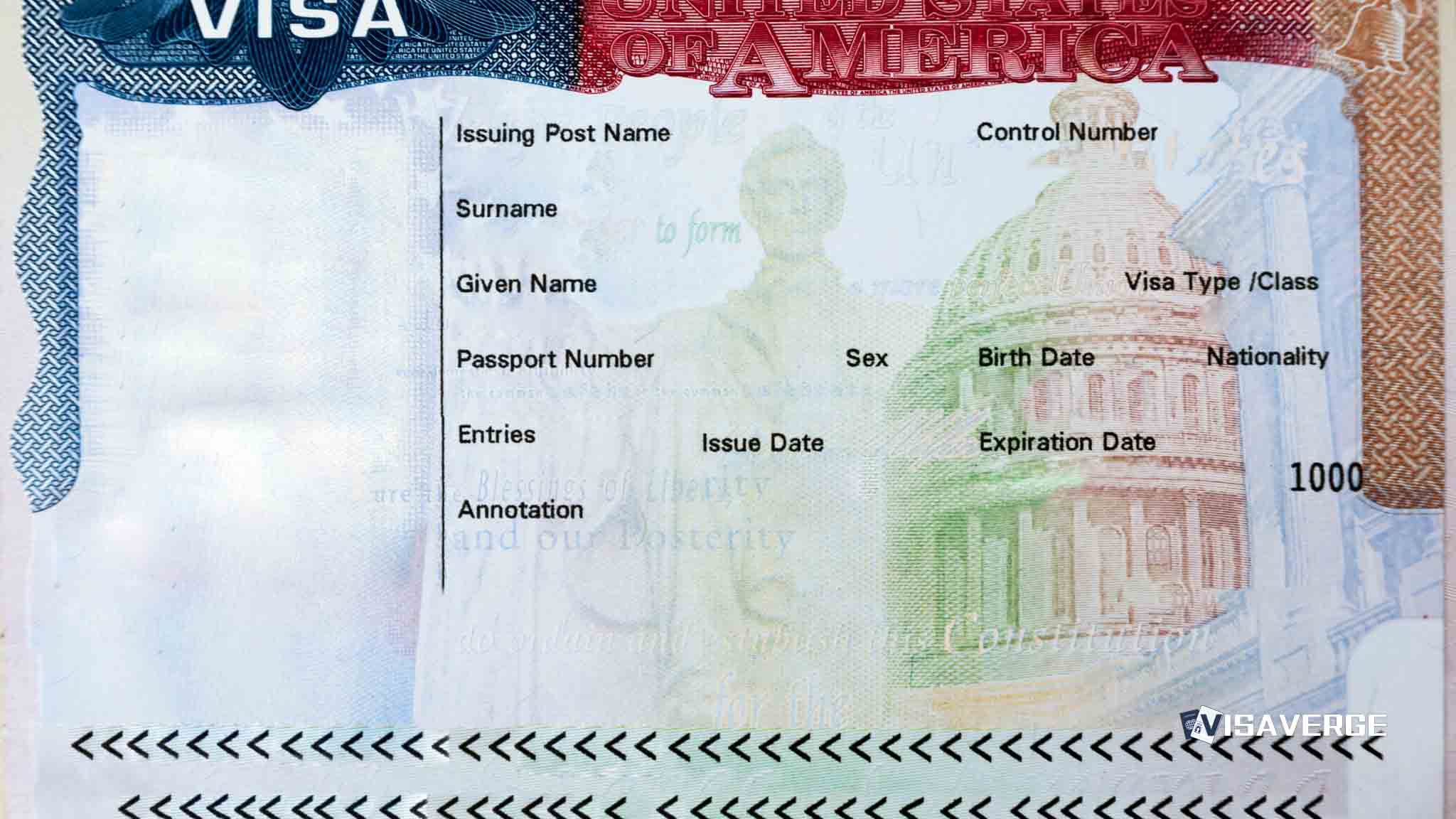
The freeze, imposed since late January 2026 under DHS Secretary Kristi Noem, has left hospitals in Ohio, Pennsylvania, Michigan and Texas canceling clinics, rerouting emergency coverage and taking on what hospital leaders called “exponential administrative burdens” as some doctors pass the 240-day grace period after filing extension requests.
Free toolDS-160 Form Filling Online Helper ToolThose disruptions are colliding with a widening physician shortage. The United States faces a projected shortfall of 86,000 to 124,000 doctors by 2034, while immigrants make up 25% of the physician workforce nationwide and nearly 40% in rural counties, where hospitals often struggle to recruit American graduates.
The latest restrictions build on earlier visa freezes and travel curbs that had already slowed the pipeline for international medical graduates. A U.S. Department of State pause on J-1, F, and M visa interviews began in May 2025 and lifted June 18, but backlogs remained. On June 4, 2025, an executive order expanded travel bans to 12 countries, including Afghanistan, Haiti, Iran, Libya, Somalia, Sudan, and Yemen, with partial restrictions on others such as Cuba and Venezuela.
| India | China | ROW | |
|---|---|---|---|
| EB-1 | Feb 01, 2023 ▲109d | Jul 01, 2023 | Current |
| EB-2 | Nov 01, 2013 | Oct 01, 2021 ▲30d | Jan 01, 2025 |
| EB-3 | Jan 01, 2014 | Jan 08, 2022 ▲7d | May 15, 2024 ▼109d |
| F-1 | Jan 22, 2020 | Jan 22, 2020 | Jan 22, 2020 |
| F-2A | Sep 22, 2026 ▲31d | Sep 22, 2026 ▲31d | Sep 22, 2026 ▲31d |
New rules now require home-country visa stamping, wider social media vetting and a $100,000 H-1B fee. For doctors and training programs, that has turned ordinary visa processing into a prolonged test of whether physicians can start work, extend work authorization or remain in place.
More than 10,000 H-1B physicians and more than 17,000 J-1 physicians are caught up in the 2026 freeze, while over 6,600 international medical graduates matched into 2025 residencies and many now face delayed starts or uncertain onboarding. Hospitals and physician groups say the effect reaches far beyond new arrivals.
For residency programs in the 2026 match cycle, ongoing USCIS delays, travel restrictions and added scrutiny have forced hospitals to rethink staffing plans. Some programs have adjusted schedules, extended staff hours or curtailed services as incoming doctors wait for approvals.
At Mercy, a Midwestern health system, stalled petitions blocked specialist fellows from starting employment. Barb Martin of Mercy described the problem as an “exponential burden.”
In Pennsylvania, one Nigerian physician who had moved past the 240-day H-1B grace period described the strain of waiting at home while colleagues worked. “You have a bunch of physicians, well-trained, who are just sitting at home doing nothing. It’s like being on the bench of a team, watching everyone play, and you can’t play.”
A Michigan doctor captured the uncertainty facing physicians who left temporarily or considered travel while cases were pending. “Some said, ‘I’ll see you in three months’. Deep down, I knew that might not happen.”
St. Julian’s Hospital, cited in earlier cases, saw 5 of 9 interns delayed and 1 denied in 2025. Similar ratios have continued into 2026, with programs across the country trying to fill gaps when matched doctors do not arrive on time.
The freeze also lands at a moment when the U.S. health system depends heavily on international medical graduates to cover underserved communities. Foreign-trained doctors have long helped fill a mismatch between 27,860 residency openings and 18,668 domestic graduates each year. In rural areas, their role is even larger.
Patients are already feeling the strain through longer waits, disrupted continuity of care and reduced access in areas that were short of doctors before the latest measures took effect. The Texas Hospital Association and the Healthcare Association of New York State warned that if visas remain inaccessible, workforce shortages will deepen and millions of Americans will face reduced care.
Physician organizations have pressed the administration to carve out exemptions. In February 2026, the American Medical Association and the American College of Physicians sent letters to DHS calling for National Interest Exemptions for doctors, arguing they support national security through healthcare delivery.
Andrew W. Gurman, president of the AMA, warned of “unnecessary delays to patient care” and said the restrictions were stalling medical knowledge exchange. Intealth and ECFMG have also pushed for exemptions, saying international graduates remain indispensable to hospitals and residency programs.
Program directors have spoken of confusion as they prepare for incoming classes without knowing who will clear immigration hurdles. One director summed up the uncertainty this way: “We don’t know if matched doctors will arrive.”
DHS has defended the freeze as necessary to “re-validating prior security vetting” from the Biden era and has offered no timeline for lifting it. The policy has no end date, and doctors seeking waivers have sent requests into a dedicated inbox without acknowledgment.
Legal action is gathering pace. More than 100 Syrian doctors met with lawyers in late March 2026 as they weighed federal lawsuits, joining dozens of cases already filed over the freeze and related restrictions.
Travel barriers have widened the disruption. Proclamation 10949 and INA 212(a)(1)(A)(i) now cite public health risks alongside security concerns, extending the impact beyond the original 12-country travel ban announced in 2025. Social media screening and home-country stamping requirements add another layer of risk for doctors who must travel for visa appointments.
For many physicians, the route into U.S. training or practice now depends on a chain of steps that can break at several points. Doctors first secure residency positions through the National Resident Matching Program, then rely on their institutions to petition for J-1 or H-1B visas. J-1 applicants need ECFMG certification, while H-1B applicants now face the $100,000 fee and, in some cases, lottery exposure.
After that comes USCIS adjudication, where the January 2026 freeze has stopped even extension requests for nationals of the 39 countries. Then applicants must secure interviews at U.S. embassies or consulates, where post-pause backlogs remain and social media disclosures can invite deeper scrutiny. Many can no longer interview in third countries and must seek stamping in their home countries.
Even premium processing offers limited help if a case cannot move forward at all. And when approvals do not arrive before grace periods expire, hospitals can lose physicians already on staff and push them onto unpaid leave or out of the country.
Another proposed rule has added to the concern. A DHS measure to eliminate “duration of status” for J-1, F and I visas drew opposition from the AMA in September 2025 because fixed periods of stay could interrupt multi-year medical training.
The April 2026 Visa Bulletin showed modest movement in employment-based categories, with EB-2 and EB-3 dates for India at July 2014 and China at June 2021. That offered little relief to physicians whose cases remain trapped by the broader freeze.
The current crunch follows years of strain in the immigration system. COVID backlogs lingered, and earlier Trump-era travel bans set precedents for tighter screening. But hospitals, physician groups and doctors say the 2026 restrictions are broader and reach deeper into the existing workforce because they stop not only new entries but also routine extensions for doctors already treating patients.
That reach matters for communities with few alternatives. Previous estimates put more than 750,000 patients at risk as doctor shortages intensify in underserved areas. Rural hospitals, where nearly 40% of physicians are immigrants, face the sharpest pressure.
The financial toll on doctors is also mounting. Many have already spent money on exams, applications and relocation, only to find themselves unable to start training or continue work. Some now face unpaid periods in the United States. Others risk losing hard-won residency spots if programs cannot defer their start dates.
The Conrad 30 waiver program, another pathway that can help place physicians in underserved communities, remains stalled in reauthorization efforts. Groups advocating for international doctors have also sought H-1B fee waivers and broader exemptions for healthcare workers, but no broad physician carve-out has emerged.
Hospitals are responding with stopgap measures. Some are building larger staffing buffers, some are extending overtime for existing physicians, and some are reducing services. None of those options fully replaces trained doctors who matched into programs or were already serving patients before their paperwork stalled.
The dispute now turns on two competing arguments. Administration officials say tighter vetting is necessary. Medical groups say doctors themselves are a national asset and that limiting their ability to practice worsens shortages that already threaten care.
For now, the practical effect is clear across hospitals and residency programs: visa freezes are interrupting work for physicians the country already relies on, H-1B extensions are stalling for doctors who thought they had a path to remain, and a physician shortage that was already projected to deepen by 2034 is becoming harder to manage.
Without relief, the backlog may take months to clear, leaving international doctors, hospitals and patients to absorb the consequences of an immigration system that has become, for many physicians, the deciding factor in whether care reaches the bedside.