- U.S. officials remind travelers that visas do not guarantee admission upon arrival at ports of entry.
- CBP officers make the final decision using biometrics and document verification for all international visitors.
- Increased scrutiny and device searches are expected ahead of the 2026 World Cup surge.
(UNITED STATES) — U.S. Customs and Border Protection and other Homeland Security agencies have urged international travelers to arrive with complete paperwork and a clear understanding that a visa or ESTA approval does not guarantee admission to the United States.
CBP officers make the final decision at the port of entry, not consular staff who issue visas abroad, and travelers can face questioning about the purpose of their trip, finances, prior immigration history and the documents they carry on arrival.
That distinction has gained renewed attention as U.S. Customs and Border Protection prepares for heavier international traffic in 2026 and repeats a longstanding rule: authorization to travel is not the same as permission to enter. Travelers arriving on visitor, student, exchange or Visa Waiver Program documents can still be sent to secondary inspection or denied entry if officers find inconsistencies between the stated purpose of travel and the records or answers presented at inspection.
The Department of State says a visa allows a foreign national to travel to a U.S. port of entry and ask for admission. Homeland Security officers decide admissibility case by case when the traveler arrives.
CBP’s public guidance for international visitors states that authorization under the Visa Waiver Program also stops short of admission. “Authorization via ESTA does not determine whether a traveler is admissible to the United States. CBP’s officers determine admissibility upon travelers’ arrival,” the agency said in its World Cup guide released on April 16, 2026.
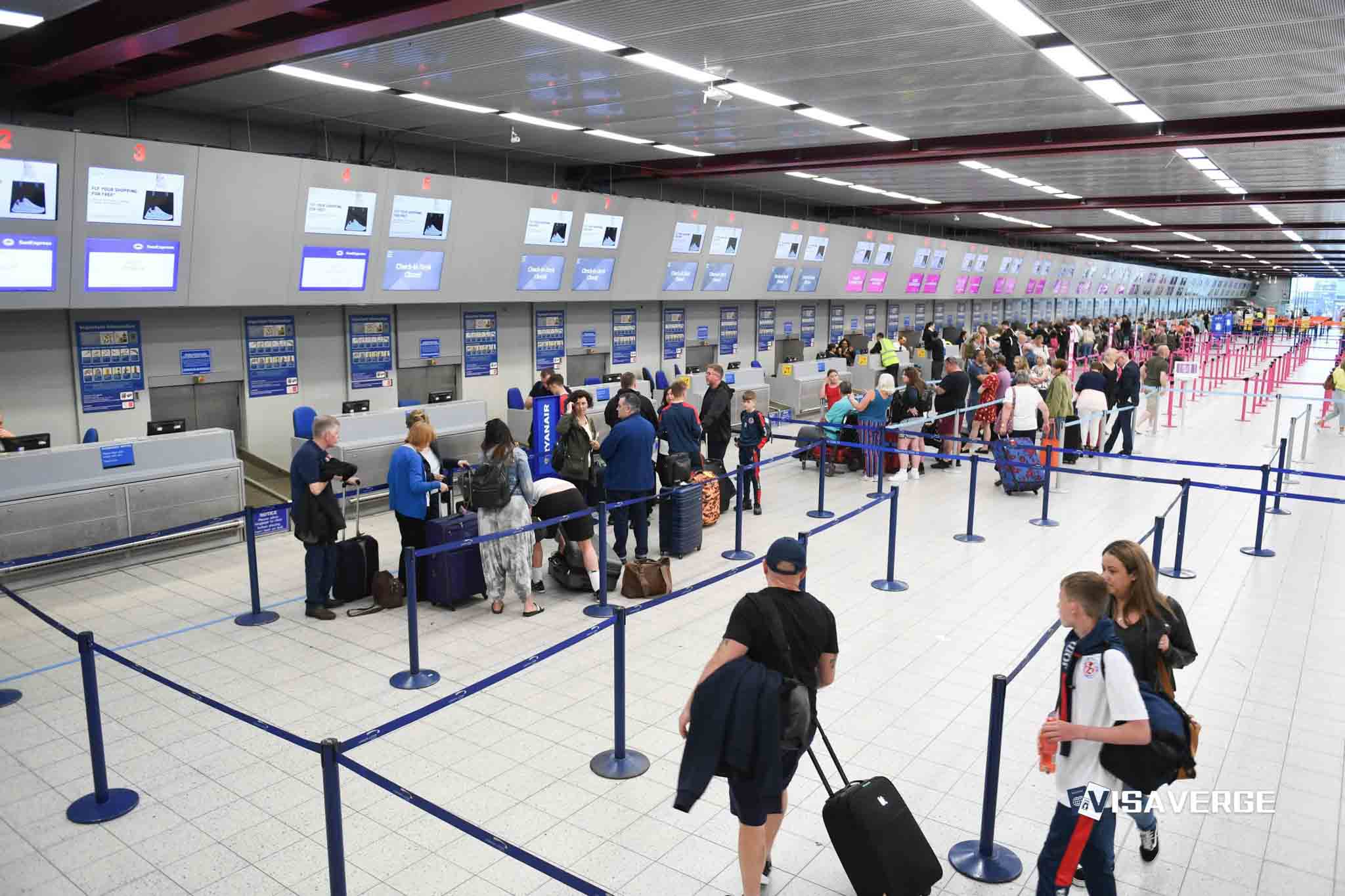
That warning carries practical consequences at inspection booths in airports and at land crossings. Officers may ask to see a passport valid for the trip, the visa foil or the passport linked to the ESTA record, return or onward travel details, hotel or host information, school records for students, employment letters or conference invitations, proof of funds and evidence of ties outside the United States.
Students should be ready to explain their school, program and funding. Tourists should be able to show a short-term itinerary and how they will pay for it, while business visitors need documents that match permitted B-1 activity rather than material suggesting unauthorized employment.
Prior overstays, visa denials, status violations and frequent long visits can also draw closer scrutiny. In those cases, an incomplete file or an answer that conflicts with past immigration history can lengthen inspection and increase the chance of referral to secondary screening.
Border searches have also become a central part of the discussion. CBP says officers may, on rare occasions, inspect phones, laptops, cameras and other electronic devices during the border inspection process, using authority that is broader than what law enforcement usually has in domestic encounters away from the border.
Under the agency’s current device-search policy, a basic search can occur without suspicion. An advanced search requires reasonable suspicion of activity in violation of laws enforced or administered by CBP or a national security concern.
Civil-liberties groups, including the ACLU, say travelers retain constitutional protections at the border even though inspection powers there are unusually broad. The group has also warned that refusing to unlock a device may not prevent CBP from taking or examining it, and that refusal can carry immigration consequences for noncitizens seeking admission.
Several policy changes have raised the stakes in 2026. A DHS final rule that took effect on December 26, 2025 requires facial-recognition biometric collection for all non-U.S. citizens entering and departing the United States, including lawful permanent residents and Visa Waiver Program travelers.
CBP’s Simplified Arrival system now uses facial biometrics at U.S. international airports to automate checks that officers once performed manually. The process is designed to be touchless, but discrepancies between a live photo and government records tied to passports or visas can trigger automatic referral to secondary inspection.
Homeland Security has also expanded social media and digital-footprint vetting for certain travelers and applicants, adding another layer to inspections that already compare a person’s stated purpose of travel with paperwork in hand. Mismatches between a visa application, travel plans, documents in baggage and material on an electronic device can become part of that review.
USCIS signaled the broader policy direction on March 30, 2026, when it issued an alert titled “Update on USCIS’ Strengthened Screening and Vetting.” The agency said, “USCIS will continue to strengthen our screening and vetting procedures to ensure maximum protection for national security and public safety. only eligible and vetted individuals are granted immigration benefits.”
DHS Secretary Markwayne Mullin added another political dimension on April 7, 2026 when he discussed airport inspections and cooperation with federal immigration policy. “If they’re a sanctuary city and they’re receiving international flights. and they’re not going to enforce immigration policy [once they walk out of the airport], maybe we need to have a really hard look at that because we need to focus on cities that want to work with us,” Mullin said.
The pressure on inspection systems is rising as the FIFA World Cup approaches. The tournament begins on June 11, 2026, and U.S. officials expect a sharp increase in international arrivals, a surge that has pushed CBP to publish more detailed travel guidance while stressing that admissibility decisions remain individualized.
Another recent change affects visa issuance before travel even begins. As of January 20, 2026, the State Department paused immigrant visa issuance for 75 countries and reduced non-immigrant visa validity for several others to three months or single-entry only.
That means travelers now face two separate checks with little room for confusion: the visa or travel authorization process abroad, followed by inspection on arrival. Passing the first step does not settle the second.
Secondary inspection becomes more likely when documents are missing, travel plans are vague or a traveler’s answers do not match the visa category. A biometric mismatch can send a person there as well, and device searches remain possible during the process.
CBP also continues to rely on electronic admission records through the I-94 system, which travelers can review at [the agency’s official I-94 site](https://i94.cbp.dhs.gov). The agency has sent automated email reminders from [email protected] to people who have 10 days or less remaining on their authorized stay.
Those reminders turn border admission into an ongoing compliance issue after arrival. A traveler admitted without incident can still face later problems if the I-94 record is wrong, if the period of stay is misunderstood or if departure does not occur by the authorized date.
CBP directs international visitors to [its travel guidance page](https://www.cbp.gov/travel), where the agency outlines inspection rules and entry procedures. USCIS has posted screening updates and related announcements in [its newsroom](https://www.uscis.gov/newsroom), while the State Department maintains visa information at [its travel portal](https://travel.state.gov).
The practical effect is straightforward. Travelers who carry documents that fit the visa category, answer questions consistently and check their records before departure stand a better chance of a routine inspection than those who treat visa issuance or ESTA approval as the end of the process.