1 earlier update
- President Trump signed an executive order restricting birthright citizenship for children of undocumented or temporary-visa parents.
- The Supreme Court allowed partial enforcement by limiting nationwide injunctions, creating a patchwork of state-by-state rules.
- Children born after February 19, 2025 may be denied federal documents like passports and Social Security cards.
President Donald Trump signed an executive order on January 20, 2025 that seeks to restrict birthright citizenship for some children born in the United States, and the policy remains tied up in a patchwork of court orders after a Supreme Court ruling allowed it to proceed in some states while blocking it in others.
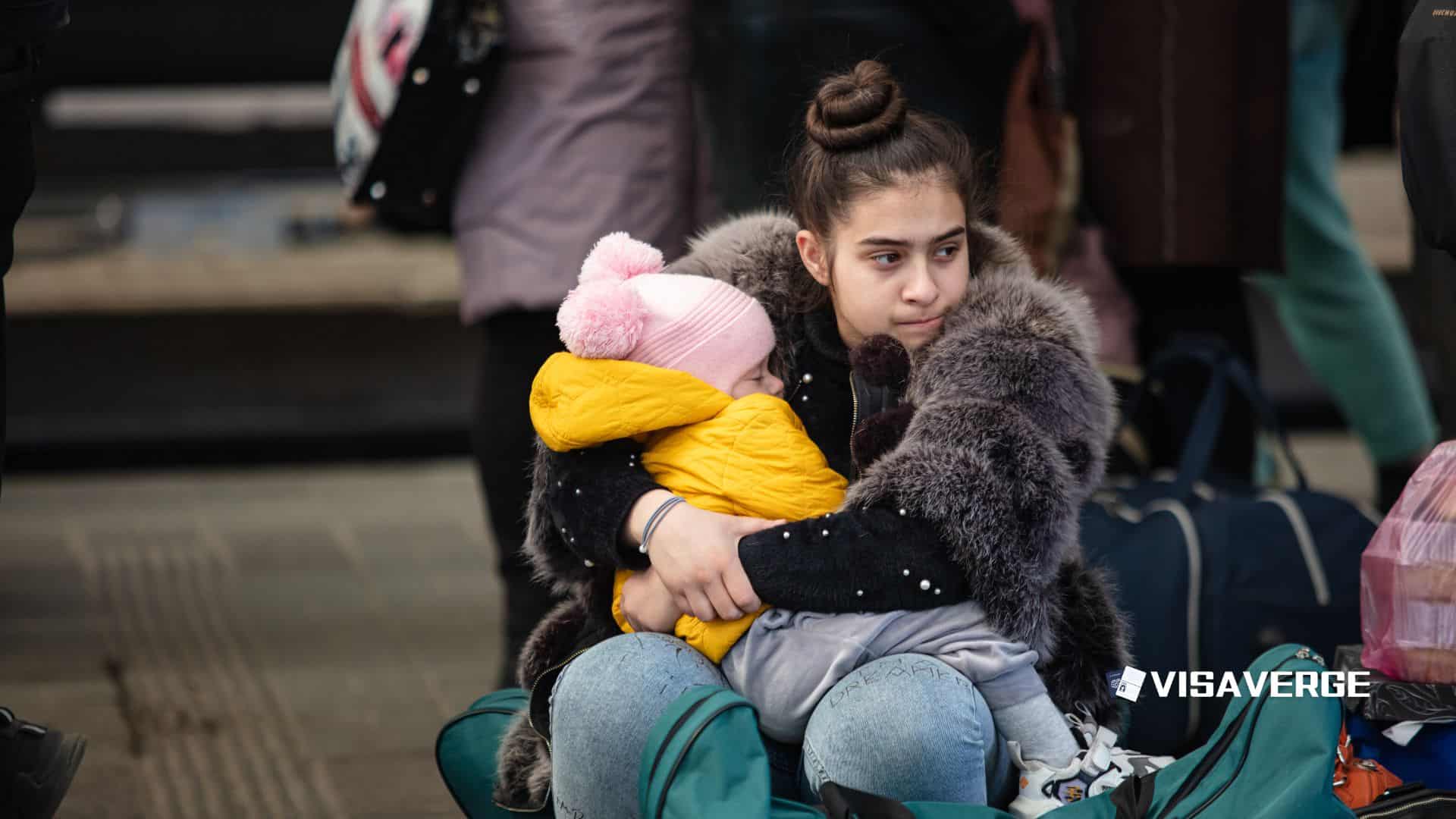
The June 27, 2025 decision did not decide whether Trump’s order is constitutional. Instead, the court limited the power of lower courts to block federal actions across the country, leaving the order in effect in states without legal blocks and paused where challengers won injunctions.
That means no single nationwide rule now governs every birth covered by the order. Federal agencies can enforce the policy in some states, but not in others, while lawsuits continue.
Free toolSubstantial Presence Test CalculatorWhat the order changes
Birthright citizenship has long meant that a child born on U.S. soil automatically becomes a U.S. citizen regardless of the parents’ immigration status. Trump’s order, Executive Order 14156, would change that for a defined group of children born after February 19, 2025.
Under the order, a child born in the United States after that date would not receive automatic citizenship if the mother is in the country without legal papers or is present on a temporary visa and the father is not a U.S. citizen or a lawful permanent resident. The order names temporary presence to include people on tourist, student or work visas.
The Supreme Court ruling set the earliest enforcement date at July 27, 2025, or 30 days after the decision. Federal agencies were directed to issue public instructions on how the policy would work within that period.
In practice, the order focuses on federal recognition. Agencies such as the State Department and Social Security Administration would stop issuing citizenship documents to children covered by the new rules in places where the policy can operate.
That means affected children could be denied U.S. passports or Social Security cards even if a state-issued birth certificate identifies them as born in the United States. Federal agencies would not accept state-issued documents as proof of citizenship if the child falls under the order’s restrictions.
The practical reach of the order depends on where a child is born and whether a legal block applies there. Families in states where courts halted enforcement face a different reality from families in states where no injunction stands.
For immigrant parents, that split has created legal uncertainty rather than a clear nationwide shift. A child’s status may turn on the parents’ immigration category and the state where federal officials apply the order.
Who is affected
The children directly affected fall into a narrow but important category. They are babies born in the United States after February 19, 2025 whose mothers are undocumented or present on a temporary visa and whose fathers are neither U.S. citizens nor green card holders.
The order leaves some family situations unresolved. It does not clearly explain how officials would handle cases involving single mothers, LGBTQ+ couples or transgender parents.
That gap has added to the uncertainty facing families and lawyers. It also raises the prospect of more court fights as officials try to apply the order to real cases.
Examples in the policy debate show how broad the temporary-visa category could be. A baby born to a mother on a student visa and a father who is also a student from another country would not get automatic citizenship under the order.
A baby born to an undocumented mother and an undocumented father also would not get automatic citizenship. But if a mother is undocumented and the father is a U.S. citizen or green card holder, the child would still receive citizenship under the order’s terms.
Supporters and opponents
Supporters of the policy, including Trump and many Republicans, argue that the order restores the original intent of the 14th Amendment. They say automatic citizenship should not extend to children of people who entered the country without permission or remain only briefly.
Opponents, including the American Civil Liberties Union and immigrant rights groups, argue that the order is unconstitutional and that only a constitutional amendment, not an executive order, can change the 14th Amendment’s meaning. They also warn that the policy could create children with no recognized nationality.
That risk sits at the center of what affected families need to know. Children denied citizenship under the order may become stateless, leaving them without citizenship in any country.
Families and advocates say that outcome can shape nearly every part of a child’s life. It can make it harder to go to school, get medical care, travel abroad, or work later in life.
Parents also face broader fears around enforcement. Some worry that if their children are not recognized as U.S. citizens, their families will face greater exposure to detention or deportation.
Schools and local governments may also have to adjust. Some schools and other organizations are already changing policies to prepare for children who may be born in the United States but not recognized as citizens by the federal government.
Employers and the economy could feel the effects later if more children grow up without legal status. The policy could leave more people unable to work legally, pay taxes or fully participate in society.
The legal fight and constitutional stakes
The legal fight remains unfinished. The Supreme Court ruling addressed the reach of lower-court injunctions, not the underlying constitutionality of the order.
That distinction matters. The court opened the door to enforcement in some states, but it did not settle whether Trump can lawfully narrow birthright citizenship through executive action.
Legal experts say a lasting change to birthright citizenship would most likely require a constitutional amendment. That process would need approval from two-thirds of Congress and three-fourths of the states.
The order nevertheless marked the first time a president tried to change birthright citizenship by executive order rather than by amending the Constitution. It challenged a principle that has stood at the center of American law since the 14th Amendment was adopted in 1868.
The historical roots of that amendment remain central to the legal arguments. It followed the Civil War and aimed to guarantee citizenship to people born in the United States, no matter their parents’ status.
The debate reaches back even further to the Supreme Court’s 1857 Dred Scott v. Sandford decision, which held that Black Americans could not be citizens. The 14th Amendment reversed that framework and made birthright citizenship part of the constitutional order.
No president before Trump had tried to end that rule by executive order. Previous efforts to change it through Congress or the courts failed.
Public opinion and practical questions for families
Public opinion in early 2025 showed a divided country. A Pew survey found that 56% of U.S. adults disapprove of the executive order and 43% approve.
The partisan split was sharper. Disapproval reached 84% among Democrats, while 72% of Republicans supported the order.
For families trying to make sense of the legal patchwork, the immediate questions are practical. The first is whether the child was born after February 19, 2025.
The next is the parents’ immigration status. If the mother is undocumented or present on a temporary visa and the father is not a citizen or green card holder, the child falls within the category Trump’s order targets.
After that comes geography. The order operates in states where courts have not blocked it, but remains paused where challengers won injunctions.
If officials apply the order, the most immediate effect is documentary. The government would deny federal citizenship documents, including a passport or Social Security card.
Families in that position may need legal help quickly. Lawyers and advocacy groups are preparing for more courtroom fights and advising parents to keep records tied to a child’s birth and their immigration status.
That advice reflects the uneven enforcement landscape, not a settled system. Parents may face one set of federal responses in one state and a different one in another.
The policy’s latest procedural posture can be tracked through this update, but the central point has not changed since the Supreme Court ruling. The nation still lacks a final answer on whether the Constitution allows the government to deny automatic citizenship to some children born on U.S. soil.
Until the courts resolve that question, birthright citizenship in the United States will remain both a constitutional principle and a live legal battle. For immigrant families, the dispute is not abstract: it can decide whether a child born in America receives the documents, status and recognition that have long followed birth on U.S. soil.