Key Takeaways
• National emergency declared at U.S.-Mexico border January 20, 2025, invoking unprecedented military authority.
• Border apprehensions dropped from 140,000 to 7,000 monthly after military deployment and new technology.
• CBP One app suspended, limiting asylum; lawsuits filed over due process and military zones.
The Trump administration’s return to the White House in January 2025 quickly brought some of the most aggressive changes ever seen at the U.S.-Mexico border ??. These new security measures, announced and put into action during President Trump’s first months back in office, weren’t just bigger—they were different in how they shifted power, redefined rules, and involved the military in ways not seen before. This shift has raised many questions among immigrants, legal advocates, and anyone following U.S. immigration policy.
The National Emergency Declaration: A Turning Point
On January 20, 2025, President Trump declared a national emergency at the southern border. This happened through Proclamation 10886. The declaration described unauthorized migration as an “invasion.” This language wasn’t simply strong—it had real effects, allowing the federal government to use powers that aren’t normally available during regular times.
The national emergency declaration set the foundation for all the changes that would follow. By framing increased migration as a national security issue instead of just an immigration challenge, the administration created room to use military power at the border in a way that had not been done before.
Military Involvement: Orders and Operations
Soon after the emergency was declared, President Trump signed Executive Order 14167. This order gave the U.S. Armed Forces a direct role in border security. For years, the military’s role at the border was tightly controlled thanks to something called the Posse Comitatus Act—a law that limits the military’s involvement in domestic law enforcement. Now, with the combination of a national emergency and new legal orders, the military got a much more active assignment.
Through a National Security Presidential Memorandum, NSPM 4, the Department of Defense (DOD) got authority over certain parts of the border—these places became known as National Defense Areas. In these zones, military leaders controlled security decisions, even above regular law enforcement officers.
Analysis from VisaVerge.com suggests that this legal change marked a sharp turn from earlier policies, putting the armed forces squarely at the center of daily border operations.
New Tools and Strategies on the Ground
The results were quickly visible. By March 2025, over 10,000 military service members—including about 6,700 active-duty troops and around 2,500 National Guard personnel—had been deployed or approved for deployment. The Department of Defense spent $376 million on these border operations in the first months of 2025.
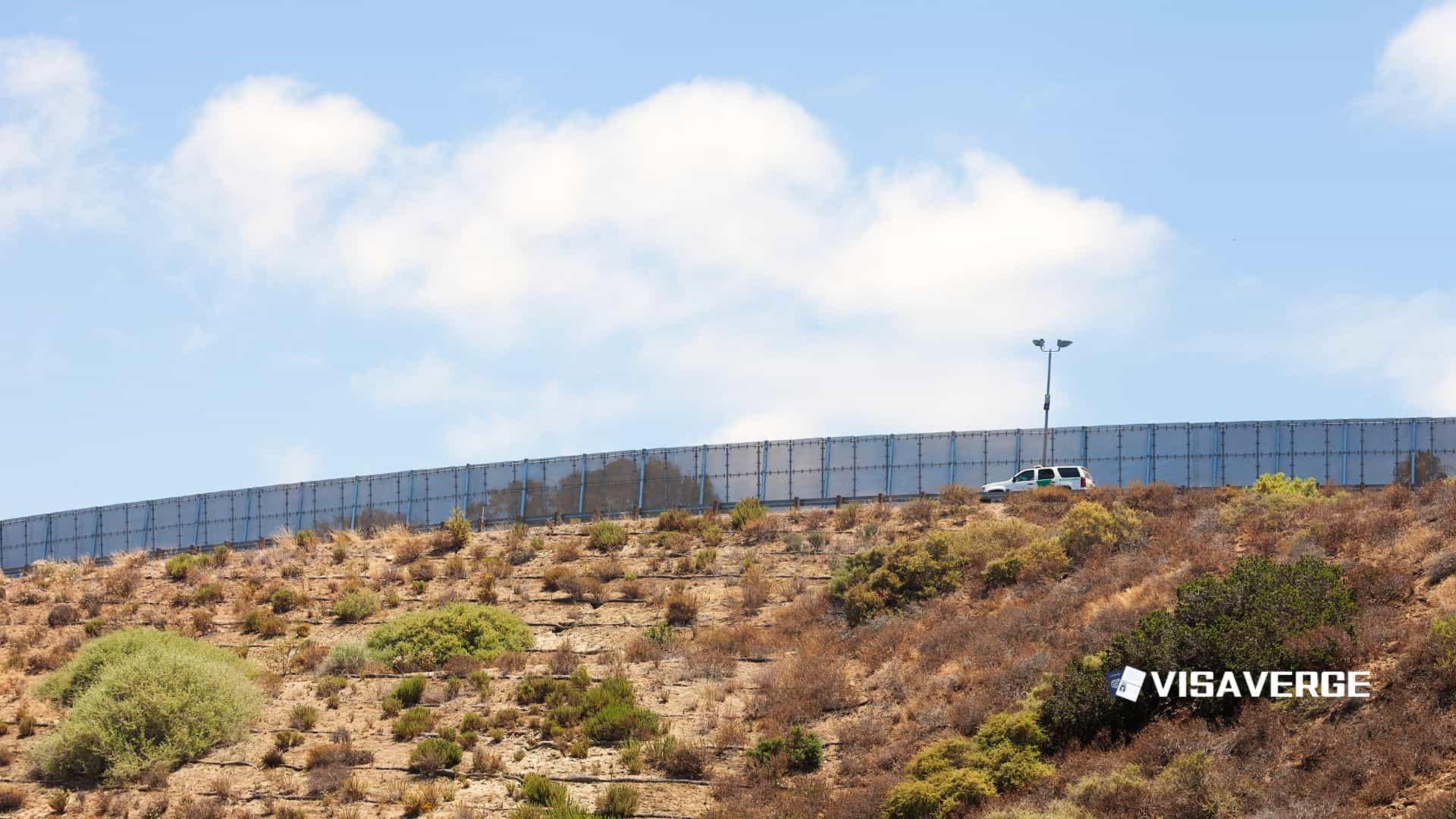
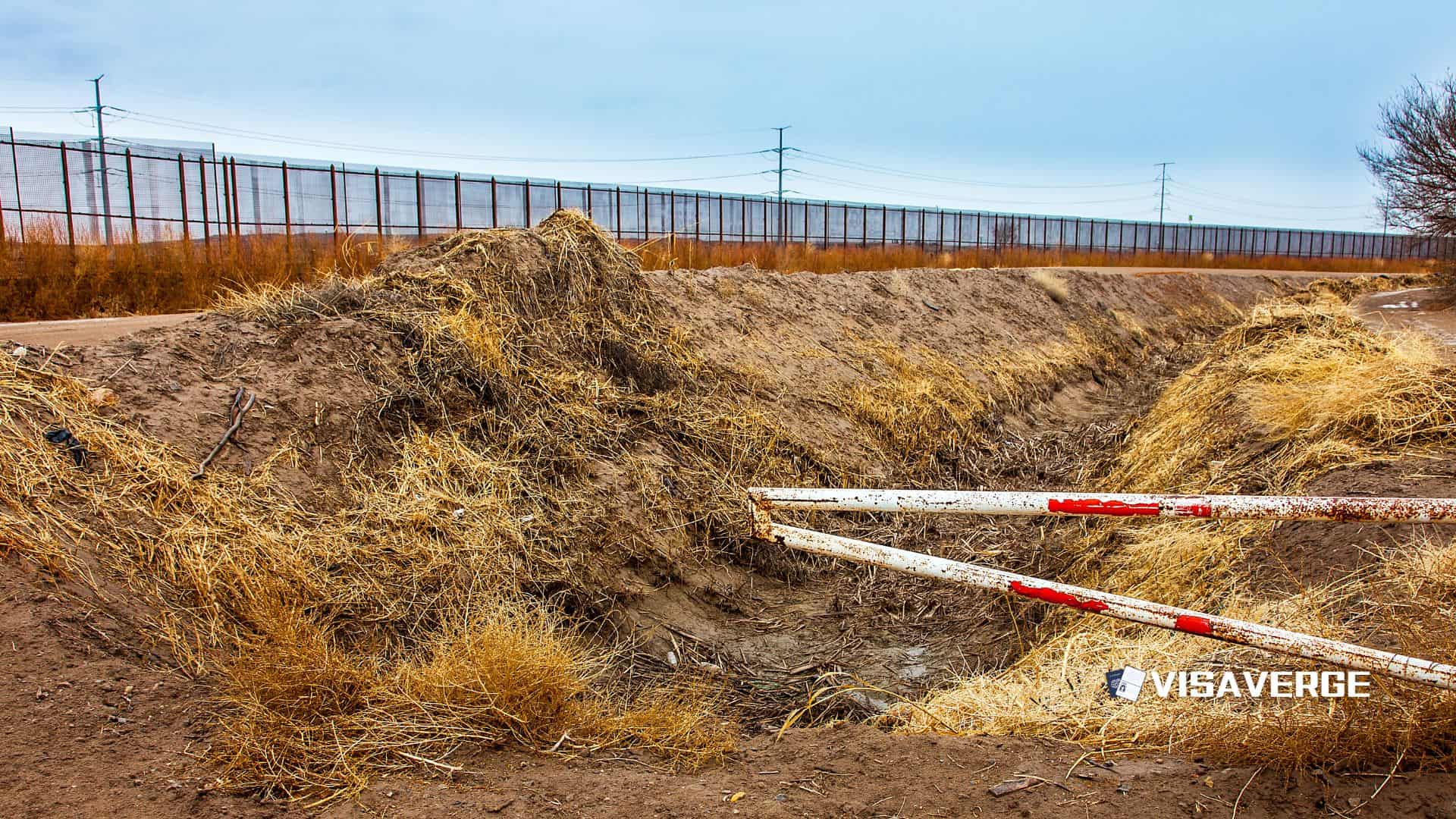
Troops weren’t the only new presence. Advanced technology, like drones, surveillance towers, and sensors, became standard up and down the border. Naval ships started monitoring coastlines to prevent unauthorized entries by sea. Meanwhile, construction resumed on physical barriers—walls and fences—across key stretches of the border.
These efforts added another layer of monitoring. Cameras provided live footage. Ground sensors picked up movement. All of this made it much harder for anyone to cross the border without being noticed.
Shifting Legal Boundaries: Military and Civil Law
A key feature of this new approach was the creation of special “National Defense Areas.” In these parts of the border, the DOD’s authority replaced standard law enforcement. For example, regular local police or border patrol agents took direction from military leaders. This setup was very different from the way border enforcement usually works in the United States ??, where civilian agencies take the lead.
The administration argued that these measures were needed due to the “invasion” narrative set out in the national emergency declaration. By labeling big groups of arriving migrants as an invasion, the administration claimed it could use emergency and military powers that would not be allowed if this was treated only as a criminal or civil matter.
Legal challenges soon followed. Civil rights and humanitarian organizations said this set a dangerous example by blurring the roles of military and civil law. They raised the alarm about possible violations of the Constitution and international rules on asylum.
Impact on Asylum and Entry
Along with more soldiers and stronger barriers, the Trump administration made it harder to apply for asylum. Several tools that helped people book asylum appointments were shut down. For example, the CBP One app—an online tool used by many migrants to schedule meetings with border officials—was suspended.
Document checks became much tougher. Anyone trying to cross needed to show more paperwork, pass stricter health and criminal checks, and prove their eligibility. If someone failed any of these new steps, they could be sent back to their home country far more quickly than in the past.
These changes led to what one legal expert called “severely restricted access” to asylum at the U.S.-Mexico ?? border. People arriving at the border found fewer chances to ask for protection, even when fleeing violence or threats.
Measurable Results: Drastic Drop in Crossings
The sharp new approach brought sudden changes in numbers. By March and April 2025, monthly border apprehensions dropped from over 140,000 just before President Trump took office to about 7,000—a level so low it set a record in modern times.
Several policy changes directly shaped these results:
– Troop deployment and the national emergency declaration led to up to a 95% year-over-year drop in border apprehensions.
– More walls, sensors, and cameras meant there were fewer successful attempts to cross without detection.
– Fast-track removal processes helped reduce the daily number of “gotaways”—people who cross the border and avoid being caught.
The Department of Homeland Security’s website provides more detailed updates on day-to-day numbers and the latest policy actions.
Legal Debates and Challenges
Critics argue the new approach raises serious legal concerns. They question whether the use of military force matches what U.S. laws and international agreements require, especially regarding asylum seekers. For example, asylum is supposed to be available to those facing danger at home, under both U.S. laws and United Nations rules. Cutting off this right on a large scale—and doing so under military order—could break these agreements.
Groups have filed lawsuits against some of the orders, focusing on:
– Limits on due process: Critics say some people are being returned to dangerous situations without a chance to make their case in court.
– Suspension of the CBP One app: Legal groups argue that removing this online tool unfairly blocks access to legal entry.
– Creation of military zones: There are worries that these zones could lead to unnecessary use of force or erode rights usually protected in the United States ??.
The New Border: More Than Walls and Wires
What sets the Trump administration’s current border policy apart isn’t just the scale, but the new logic behind it. Instead of seeing migration through a mostly civil or law enforcement lens, the administration treats it like a national security crisis. This leads to more military involvement, more direct control by the federal government, and fewer opportunities for humanitarian appeals.
Supporters of the policy say the drop in illegal crossings proves the strategy works. They point out that with fewer people crossing without permission, there’s less strain on resources, less chance for dangerous situations on the border, and more order overall.
Opponents say the cost—measured in due process rights, humanitarian protection, and the precedent of putting the military in charge—is too high. They warn that today’s emergency powers could be hard to roll back, even after the crisis has passed.
Historical Context: How This Is Different
In the past, border enforcement in the United States ?? stayed mainly in the hands of agencies like Customs and Border Protection and Immigration and Customs Enforcement, both of which are civilian organizations. The military sometimes provided backup—building fences, flying helicopters, or sharing surveillance data—but didn’t run things.
Emergency powers have been used before, but usually for short periods and with clear limits. For example, in the late 2010s, President Trump declared a national emergency to try and redirect funds to build parts of the border wall. But the current approach goes much further, with lasting legal changes, permanent military control in some areas, and the use of invasion language in official documents.
Effects on People: Immigrants, Border Communities, and Families
For those trying to reach the United States ?? for safety or better opportunities, the environment has grown much tougher and riskier. With fewer legal pathways and the threat of fast removal, some people may turn to more dangerous methods or routes, raising the chance of harm. Families who had hoped to reunite have found new barriers. Children seeking refuge from violence now face higher hurdles.
Meanwhile, people living in border communities have mixed feelings. Some feel safer with the new security measures, but others worry about the presence and power of so many troops near their homes. Daily life has changed, with more checkpoints, restrictions on movement, and visible military patrols.
The Path Ahead: Ongoing Lawsuits and Unresolved Questions
It’s clear that the Trump administration’s changes have permanently shifted the landscape at the U.S.-Mexico ?? border. Court challenges to the orders and policies are ongoing, with federal judges expected to rule on questions of legality and due process in coming months.
Supporters of the approach argue that these actions are justified by the serious drop in border crossings and the need for national security. Opponents focus on the risk to long-held rights and the fear that these emergency tactics could become the new standard, making it even harder for future administrations to take a different approach.
Conclusion
In just a few months following January 2025, the Trump administration has reshaped both the look and the nature of the U.S.-Mexico border ??. The use of a national emergency declaration and the placing of the military at the center of border security has created both praise for the results and deep concern for the impact on immigrants’ rights and due process.
Anyone with a stake in immigration—whether you’re an immigrant, an employer, a legal advocate, or a resident along the border—has reason to watch these developments carefully. The lines, both military and legal, have been redrawn, and it may take years to fully understand how far-reaching these changes will be.
For official updates and the latest policy information, you can visit the White House’s page on border security actions. As reported by VisaVerge.com, it’s vital for those affected to keep informed and seek trusted advice to navigate this rapidly changing environment.
The future of U.S. immigration policy is, once again, being debated at the highest levels—and at the heart of that debate is how the country balances security with its commitment to fair and humane treatment.
Learn Today
National Emergency → A governmental declaration granting special powers and resources to address crises, allowing actions beyond those permitted during normal times.
Posse Comitatus Act → A U.S. law restricting federal military participation in domestic law enforcement activities, aiming to uphold civilian control.
National Defense Areas → Specific border zones where the military, not ordinary law enforcement, controls security decisions and enforcement.
CBP One app → A mobile application used by migrants to schedule legal appointments with border officials for asylum or entry processing.
Due process → The legal right of individuals to receive fair procedures and hearings before being deprived of liberty or property.
This Article in a Nutshell
The Trump administration’s 2025 return sparked sweeping border changes. Declaring a national emergency, the president placed military controls at the U.S.-Mexico border. Advanced surveillance, rapid deportations, and suspended asylum tools redefined U.S. policy. Critics warn of risks to rights, while supporters cite a record drop in border crossings.
— By VisaVerge.com
Read more:
• Canadian Conferences Dump U.S. Over Border Scrutiny
• U.S. Customs and Border Protection to photograph all car travelers leaving country
• UK to raise visa fees in 2025 to boost border security
• U.S. Customs and Border Protection arrests Chinese national in Houlton Sector crossings
• Trump Empties Migrant Shelters at US-Mexico Border