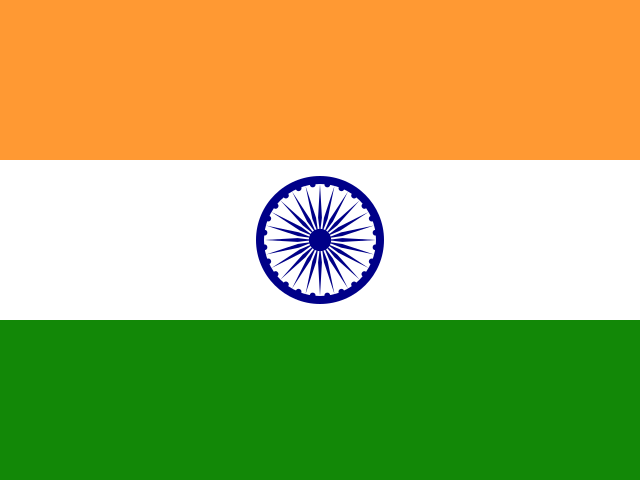
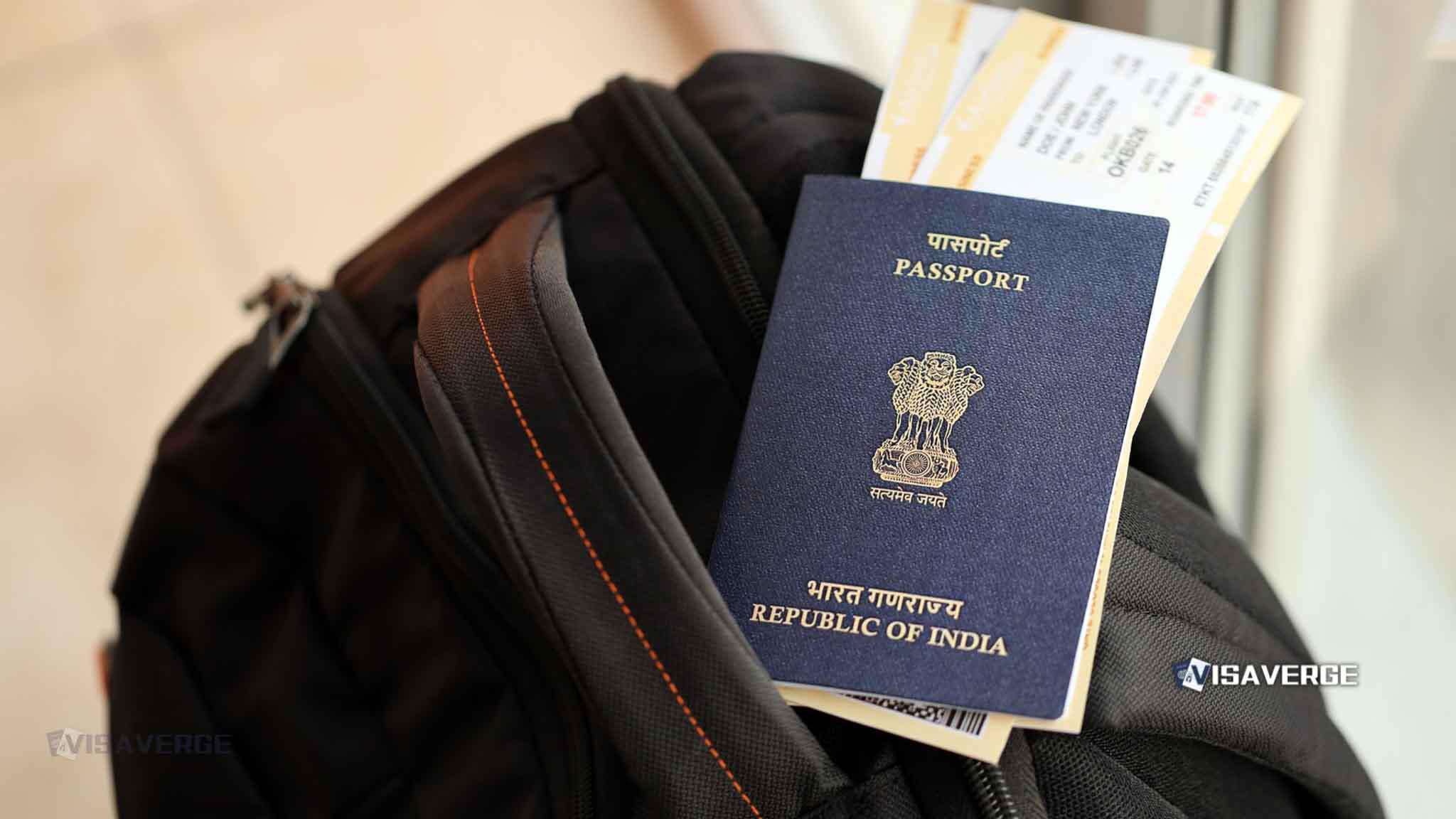
- Indian passport holders can still enter Thailand visa-free for tourism and business stays up to 60 days.
- Travelers must complete the Thailand Digital Arrival Card and show proof of funds upon arrival in 2026.
- The e-Visa system remains active for stays exceeding the exemption period or for specialized visa categories.
(THAILAND) – The Royal Thai Embassy in New Delhi says Indian ordinary passport holders can still enter Thailand visa-free for tourism and short-term business stays of up to 60 days, even as Thai authorities review the policy amid concerns about misuse.
That 60-day stay can be extended once inside Thailand, subject to immigration approval. The embassy also says Thailand’s e-Visa system for India has been in force since January 1, 2025 at 10:00 hrs. UTC+7, giving travelers another route for stays that fall outside the visa exemption.
Free toolB1/B2 Tourist Visa Stay Calculator online
Indian travelers arriving under the current rules still face document checks at the border. Thai immigration may ask for a passport valid for at least 6 months from the date of arrival, proof of funds, and evidence of onward or return travel.
Most foreign visitors must also complete the Thailand Digital Arrival Card, or TDAC, before arrival. That requirement sits alongside the visa-free entry rule rather than replacing it.
The arrangement reflects Thailand’s effort to keep Indian visitors flowing during the summer travel period while holding on to entry screening. The visa waiver covers tourism and short-term business engagements, but it does not erase the distinction between a short visit and a longer stay that needs a separate visa.
Thailand’s e-Visa system now fills that second role for Indian travelers. It offers an alternative to visa-free entry for trips tied to different purposes or for stays that go beyond what the exemption allows.
Embassy guidance in India lists several official visa categories and fees for those cases. A single-entry tourist visa costs INR 3,000, while a single-entry business visa costs INR 5,500.
Longer or more specialized options carry higher charges. A multiple-entry business visa costs INR 25,000, the Destination Thailand Visa, or DTV, also costs INR 25,000, and the Long-Term Resident, or LTR, visa costs INR 125,000.
That fee structure draws a clear line between Thailand’s short-stay entry policy and its formal visa system. Indian passport holders can still arrive without a visa for limited travel purposes, but travelers planning a different type of stay have an established paid route through the e-Visa system.
Thai officials have reviewed the 60-day visa-free regime after raising concerns that some visitors use it for unauthorized work or repeated visa runs. Those discussions have included cutting visa-free stays to 30 days for some nationalities.
India has not seen that change. The Royal Thai Embassy in New Delhi still states that the 60-day exemption for Indian ordinary passport holders remains effective until further announcement.
That leaves Indian travelers in a position that is generous on paper but closely watched at the point of entry. A traveler can board for Thailand without applying for a tourist visa in advance, yet immigration officers may still ask for evidence that the trip matches the terms of admission.
The required passport validity standard is straightforward: at least 6 months from arrival. The TDAC requirement is separate and applies before landing, adding a pre-arrival step even for passengers using the visa-free channel.
Proof of funds also remains part of the screening framework. Thai immigration may ask travelers to show they can support themselves during the trip, a reminder that visa-free access does not guarantee entry without questions.
Onward or return travel can matter just as much. Officers may ask for a return ticket or proof of onward travel, especially where a passenger plans to stay near the upper end of the permitted period.
The embassy’s guidance points Indian travelers in two directions at once. One route is the visa-free stay for tourism and short-term business, backed by the possibility of one in-country extension if immigration approves it.
The other route runs through the e-Visa system, which has been active for India since January 1, 2025 at 10:00 hrs. UTC+7. That route covers travelers whose plans do not fit neatly inside the exemption, whether because of duration or purpose.
Thailand’s approach also reflects competition for Indian outbound tourism, especially during holiday periods when regional destinations chase the same travelers. Easier entry can draw visitors quickly; tighter checks at arrival help authorities answer domestic concerns about abuse.
The balance is visible in the current rules. Thailand offers Indian passport holders a comparatively simple entry option, but it keeps the screening tools that let immigration officers test whether a traveler meets the conditions.
Anyone traveling on the present terms needs to match documents to the trip from the start. A valid passport, a completed Thailand Digital Arrival Card, access to funds, and proof of onward or return travel all sit within the current entry picture.
Travelers whose plans extend beyond a short visit face a separate calculation. A single-entry tourist visa at INR 3,000 or a single-entry business visa at INR 5,500 may fit some trips, while repeat or long-duration arrangements move into the costlier categories.
The DTV and multiple-entry business visa each stand at INR 25,000. The LTR category, at INR 125,000, sits at the top of the fee list provided by the embassy.
Indian summer travelers, then, are entering a system that is open but not casual. Thailand continues to welcome them with a 60-day visa-free stay, while keeping the checks that can decide whether a passenger clears the border or turns to the e-Visa channel instead.