Congress has advanced beyond the earlier $70 billion plan, with Senate Republicans passing a $69.5 billion reconciliation package to fund immigration enforcement through FY 2029. The measure now heads to the House and includes major allocations for ICE and CBP as part of President Trump’s deportation agenda.
- The Senate-passed bill provides $38.5 billion for ICE and $22.6 billion for CBP.
- It also sets aside $3.5 billion for border security, technology, and screening, plus $5.0 billion in additional DHS funding.
- Lawmakers removed $1.5 billion in extra Department of Justice funding and $1.0 billion in extra U.S. Secret Service funding after Byrd Rule issues and political pushback.
- The Congressional Budget Office estimates the package would raise primary deficits by $69.5 billion over FY 2026–2035 and total deficits by $94.5 billion after interest costs.
- The U.S. Senate passed the $70 billion Secure America Act to fund immigration enforcement through 2029.
- Funding includes $38.5 billion for ICE and expansion of detention capacity to 100,000 beds.
- The bill uses budget reconciliation to bypass the typical 60-vote threshold and annual appropriations fights.
(UNITED STATES) — The U.S. Senate passed the Secure America Act on June 5, 2026, approving roughly $70 billion in new money for immigration enforcement, border security and deportation operations through the end of President Trump’s term in 2029.
Lawmakers cleared the budget reconciliation bill, S.2, by a 52-47 vote along party lines. The procedure let Republicans move the measure without the 60-vote threshold that usually applies in the Senate.
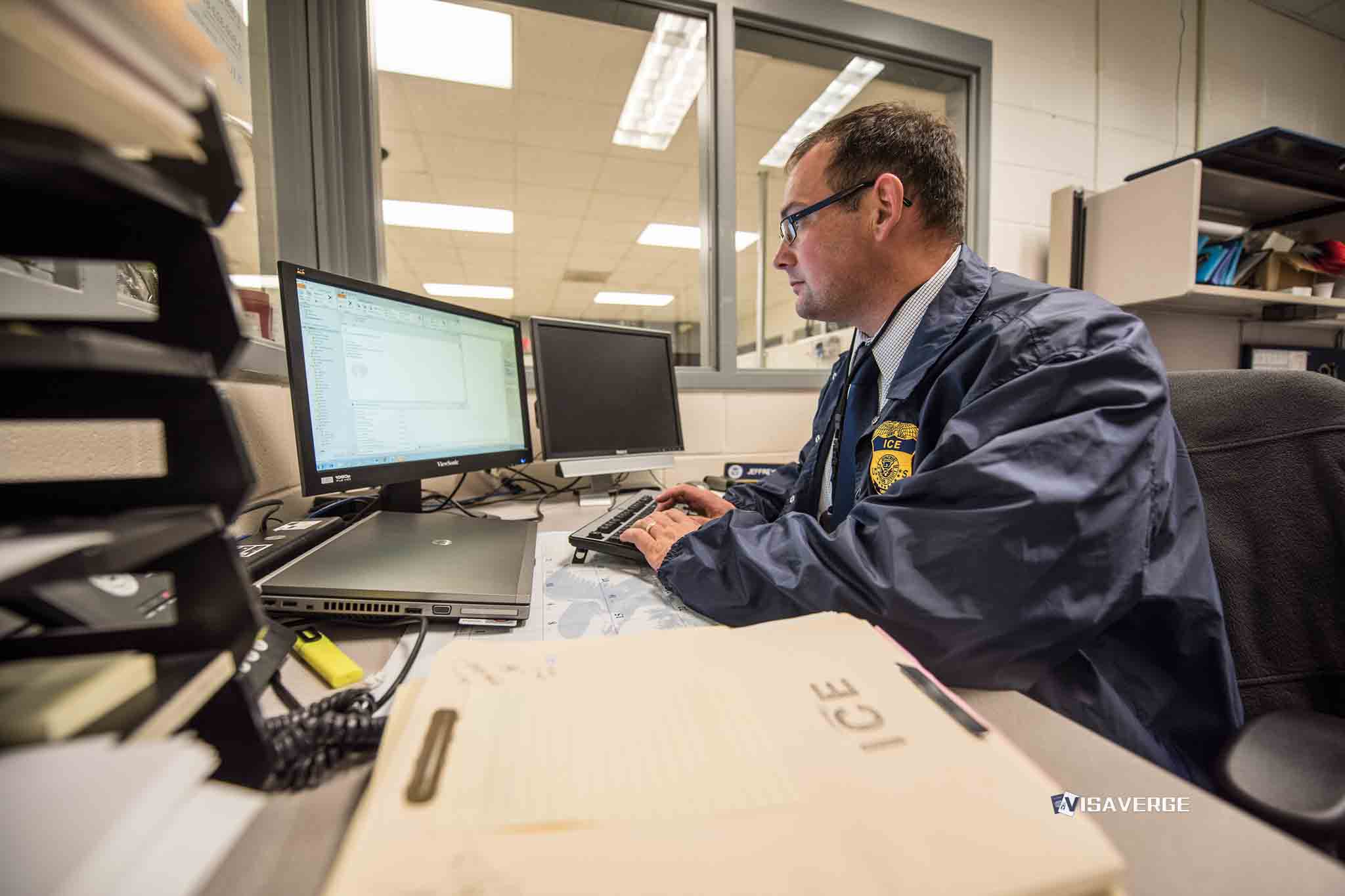
The package appropriates about $69.5 billion, a figure lawmakers and administration officials have rounded to $70 billion. The money is appropriated in fiscal year 2026 and remains available through September 30, 2029.
| India | China | ROW | |
|---|---|---|---|
| EB-1 | Feb 01, 2023 | Aug 01, 2023 ▲31d | Current |
| EB-2 | Nov 01, 2013 | Oct 01, 2021 | Apr 01, 2025 ▲90d |
| EB-3 | Jan 22, 2014 ▲21d | Jan 22, 2022 ▲14d | Jun 15, 2024 ▲31d |
| F-1 | Jan 22, 2021 ▲366d | Jan 22, 2021 ▲366d | Jan 22, 2021 ▲366d |
| F-2A | Oct 22, 2026 ▲30d | Oct 22, 2026 ▲30d | Oct 22, 2026 ▲30d |
DHS Secretary Markwayne Mullin defended the request during testimony on June 2, 2026, casting the bill as a way to shield immigration spending from annual political fights. “We swore to uphold the Constitution. the Secure America Act will ensure DHS funding is no longer held hostage by radical agendas,” Mullin said.
Senate Majority Leader John Thune framed the push as a funding priority a day before the vote. “Right now, the goal is to get the base bill across the finish line. Republicans are going to continue to ensure that these agencies have the funding that they need to fulfill their national security responsibilities,” Thune said on June 4, 2026.
After the vote, Senator John Hoeven, a member of the Senate Appropriations Committee, tied the measure directly to the Trump administration‘s remaining years in office. “The Secure America Act fully funds DHS law enforcement and border security operations. ensuring funding through the rest of President Trump’s administration. Border security is national security,” Hoeven said on June 5, 2026.
The bill marks the second time the Trump administration has used budget reconciliation to fund a defined policy agenda, following the 2025 “One Big Beautiful Bill Act,” or OBBBA. By extending the money across three fiscal years, the measure reduces the role of the annual appropriations process that Congress usually uses to pressure agencies, demand policy changes or impose spending limits.
That structure follows a bruising fight over homeland security spending. The Senate vote came after a 76-day partial DHS shutdown, the longest such shutdown on record, triggered when Democrats refused to fund ICE and CBP without new guardrails after several fatal shootings by agents.
ICE receives the largest share of the new money, with $38.5 billion set aside for hiring, detention expansion and removal operations. The legislation aligns with a broader administration drive aimed at 1 million removals per year.
CBP receives $22.6 billion for Border Patrol agents and other personnel. Another $3.5 billion goes to surveillance technology, inspection equipment, and air and marine response platforms.
One White House request did not survive the Senate’s budget rules. A proposed $1 billion for East Wing modernization, including a new ballroom, was stripped from the bill after the Senate Parliamentarian ruled that it violated the Byrd Rule, which limits what can remain in reconciliation legislation.
The funding sets up a broad expansion of detention capacity. DHS plans call for 100,000 detention beds and the conversion of warehouses into temporary holding facilities, a scale that would expand the government’s ability to hold migrants and other noncitizens while cases move forward or removal orders are carried out.
Another policy shift sits alongside the spending bill. A USCIS memorandum issued on May 22, 2026 said adjustment of status is “a matter of administrative grace” and directed that most people seek immigration status through consular processing outside the United States rather than through interior adjustments.
Interior enforcement is also set to widen through local partnerships. ICE has said the funding will support a 1,075 percent increase in 287(g) agreements with local law enforcement agencies, which let local officers assist federal immigration authorities in identifying, detaining or transferring people for removal proceedings.
Congressional budget analysts put a formal price tag on the bill in a Congressional Budget Office cost estimate for S.2. The legislative text itself appears in the Senate Judiciary Committee’s Secure America Act release, which lays out the appropriations and the agencies covered by them.
USCIS has separately posted related policy changes in its Policy Manual updates. Mullin’s testimony defending the spending request appears in the DHS Newsroom record of his June 2 appearance.
The Senate vote gives DHS multi-year money for enforcement operations without requiring Congress to revisit those same funding lines each year. The authority now stretches to September 30, 2029, with detention space, removal staffing and border operations financed on a scale that the department has argued it needs for the rest of Trump’s term.