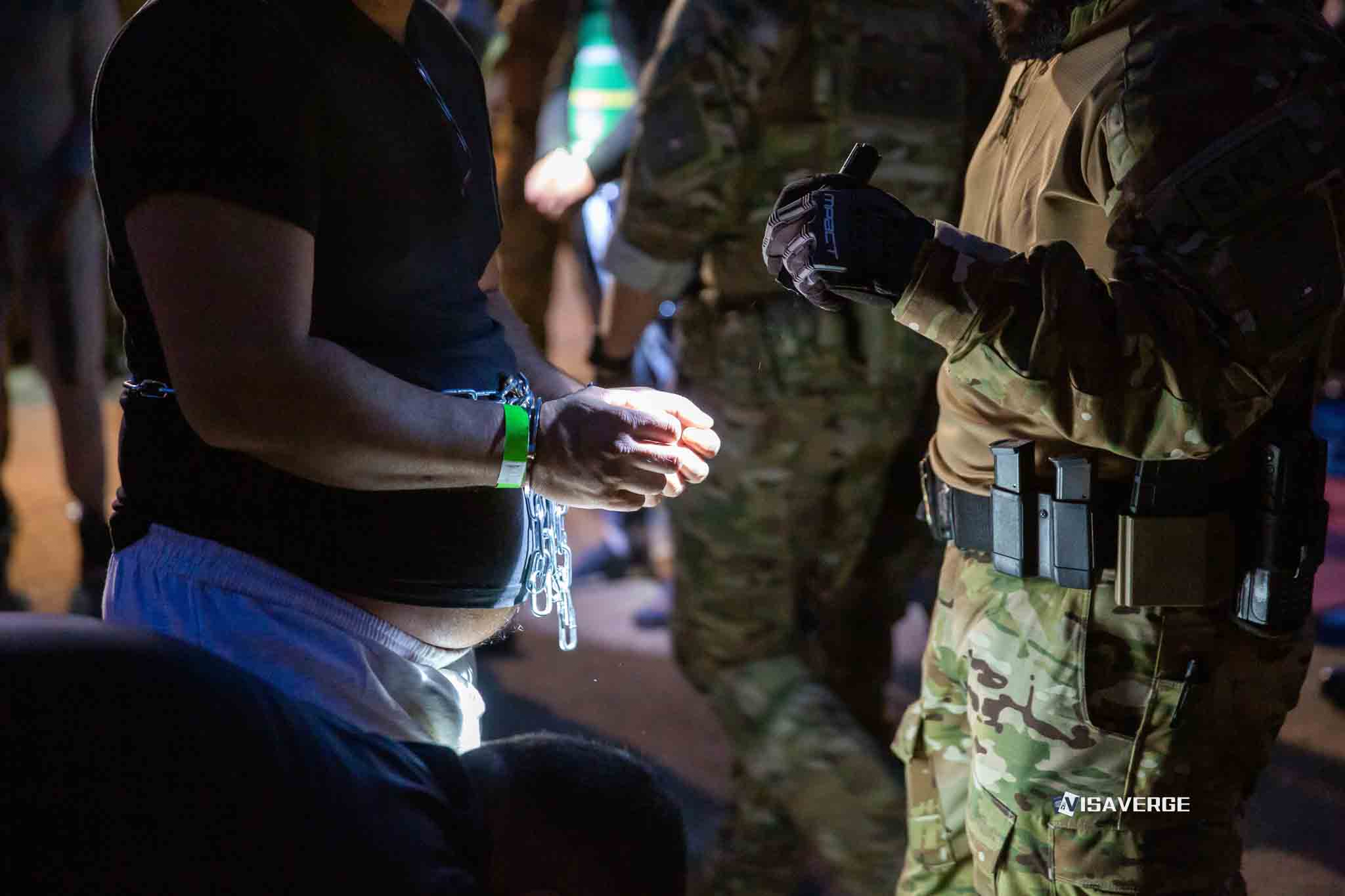
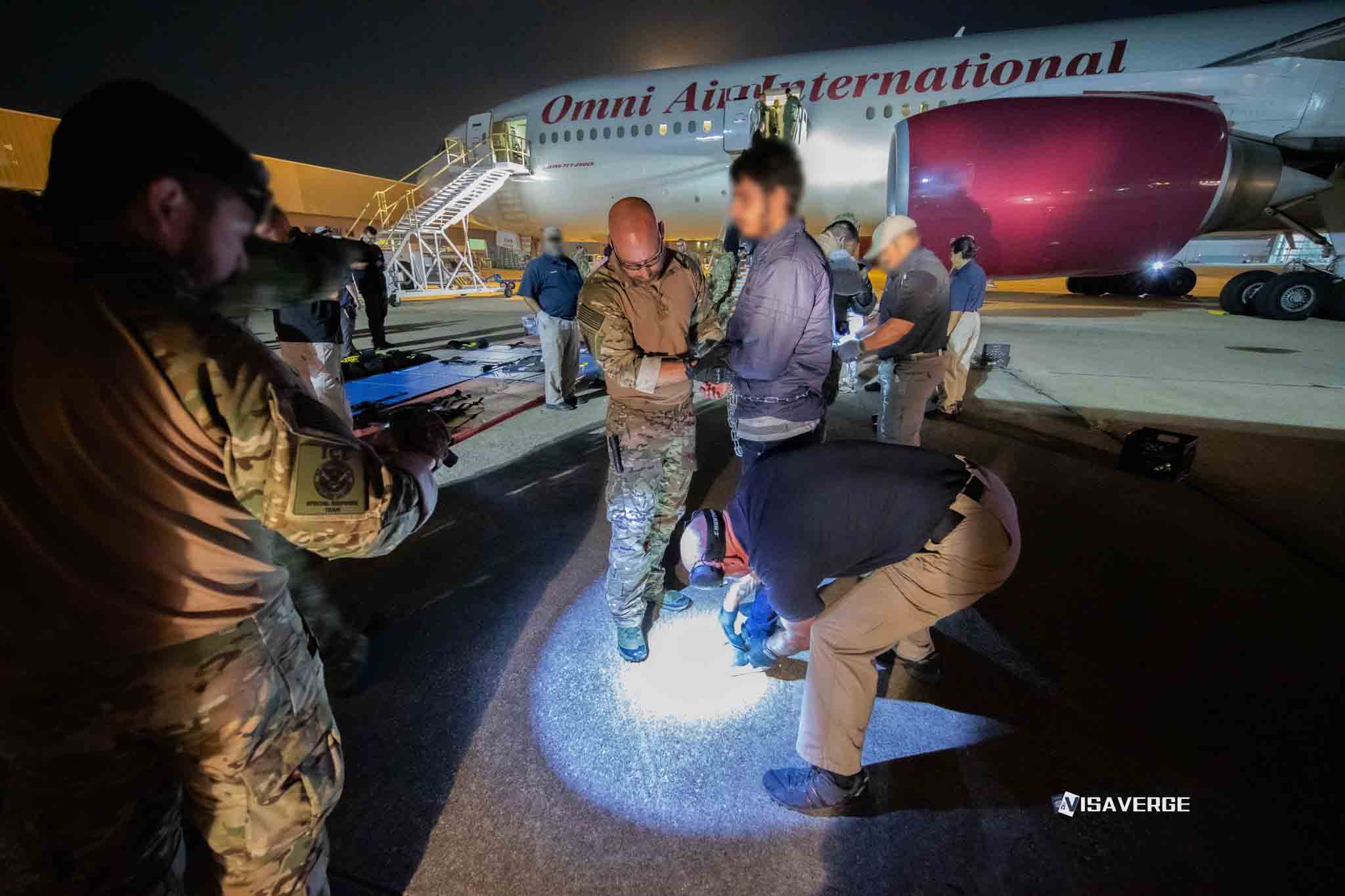
(TEHRAN) The first deportation flight from the United States to Iran under the Trump administration has landed in Tehran with 120 Iranian nationals on board, marking a dramatic turn in U.S. removal policy toward a country many fled in search of safety. The flight arrived with no public ceremony and no official acknowledgment on the tarmac. An immigration lawyer representing two of the passengers said they were escorted in handcuffs and delivered to Iranian authorities with little clarity about what would happen next.
Families and advocates said the quiet operation signals a larger push to speed removals even when people fear persecution on return.
Details from attorneys and advocates
Ali Herischi, an immigration attorney who represents two deportees from this flight, said the removal took place under tight control and limited transparency.
Free toolUSCIS Receipt Number Decoder- “This action is very dangerous. It normalizes the human rights situation in Iran and puts people at risk on their return,” he said.
- He added that his clients were transported “with handcuffs” and without the public oversight that sometimes accompanies high‑profile operations.
- “I’m worried about my clients, who have arrived in Tehran. After a few days, the authorities will begin interrogating them,” he said.
Herischi also reported that some passengers were not returned to countries they had listed as a preferred removal destination, raising questions about choice and consent during deportations.
Scope and diplomatic context
Rights monitors describe this flight as the first in a broader U.S.–Iran arrangement to deport up to 400 Iranian nationals over the coming months.
| India | China | ROW | |
|---|---|---|---|
| EB-1 | Feb 01, 2023 ▲109d | Jul 01, 2023 | Current |
| EB-2 | Nov 01, 2013 | Oct 01, 2021 ▲30d | Jan 01, 2025 |
| EB-3 | Jan 01, 2014 | Jan 08, 2022 ▲7d | May 15, 2024 ▼109d |
| F-1 | Jan 22, 2020 | Jan 22, 2020 | Jan 22, 2020 |
| F-2A | Sep 22, 2026 ▲31d | Sep 22, 2026 ▲31d | Sep 22, 2026 ▲31d |
- Human Rights First, citing its ICE Flight Monitor, reported the plan followed months of exchanges between the two governments.
- Iran’s Foreign Minister Abbas Araghchi acknowledged that direct communication took place during Iran’s visit to the U.N. General Assembly, suggesting some diplomatic coordination.
- At the same time, one Iranian official claimed the United States acted on its own.
- A New York Times account called the operation “the culmination of months of discussions between the two countries,” underscoring the opacity around the arrangements.
How this departs from past practice
The shift is striking given recent patterns:
- In the 2024 fiscal year, U.S. Immigration and Customs Enforcement deported only 20 Iranians.
- That low number reflected longstanding caution about returns to Iran after the 1979 Islamic Revolution.
- For decades, U.S. practice often allowed Iranians fleeing religious, sexual, or political persecution to seek protection or settle in the U.S.
Analysis by VisaVerge.com notes that scaling up removals now represents a break with that approach and raises questions about how the U.S. will evaluate risk for people with pending or denied protection claims.
Administration policy and reactions
The Trump administration has made mass removals central to its immigration strategy.
- White House spokeswoman Abigail Jackson said: “The Trump Administration is committed to fulfilling President Trump’s promise to carry out the largest mass deportation operation of illegal aliens in history, using all the tools at our disposal.”
- This operation is part of a broader push that advocates say includes:
- Expanded use of expedited removal
- Detention offshore at Guantanamo Bay
- Transfers to third countries
Supporters argue that tougher enforcement restores the rule of law. Critics counter that speed has overtaken careful review.
Cases that highlight protection concerns
Herischi described his two clients as typical of cases that test U.S. protection standards:
- One had sought political asylum, a process requiring the government to weigh past harm and future risk.
- The other had converted from Islam, a change that can lead to danger in countries with strict religious rules.
Rights groups say the Islamic Republic continues to target:
- Political dissidents
- Activists
- Religious minorities
- LGBTQ people
These communities represent a notable share of Iranians who approach the U.S. border or apply for relief inside the country. Lawyers warn that rushed removals can send people back into danger before a full review of their claims.
Concerns about secrecy and oversight
The operation’s secrecy has unsettled advocates:
- The absence of cameras or formal statements at the Tehran arrival meant families and lawyers scrambled for confirmation through informal channels.
- Herischi said the lack of visibility “makes it harder to hold anyone accountable.”
- He fears that people removed in this and future flights may face quiet pressure or questioning once initial public attention fades.
- Human rights organizations have urged the administration to institute stronger post‑return follow‑up, though monitoring inside Iran is difficult and often blocked.
Important takeaway: Lack of transparency can hinder accountability and increase the danger faced by returnees.
Uncertain timeline and contested origins
Officials have not publicly released a detailed timeline for remaining flights. Still, references to deporting up to 400 people suggest a sustained operation that could unfold in stages.
- That scale would dwarf recent annual totals and reshape removals to Iran.
- The plan’s origins remain contested:
- One Iranian official says the U.S. acted unilaterally.
- Other reporting describes a negotiated framework.
- The uncertainty fuels debate over whether the two governments agreed on:
- Rules for identifying who is returned
- What documents are accepted
- How people are handed over on arrival
Tension between enforcement and protection
Supporters of the administration argue that stronger execution of final orders is overdue, pointing to long backlogs in immigration courts and the need to preserve the system’s credibility.
Critics emphasize that the government’s duty does not end with a removal order, particularly when a person fears harm at home.
- “The government just wants to quickly solve the migration problem without thinking about what comes next,” Herischi said.
- This highlights the central tension: enforcement speed vs. careful assessment of protection claims.
Practical impacts on communities and families
The consequences extend beyond airports:
- Families in the U.S. face hard choices about speaking openly or staying quiet to avoid attention.
- Lawyers report an uptick in calls from Iranians worried old asylum denials might now lead to swift removal.
- Community groups recommend individuals:
- Keep copies of legal decisions
- Stay in touch with counsel
- Prepare a plan in case of sudden detention
For official information about removals and statistics, the agency directs the public to U.S. Immigration and Customs Enforcement: https://www.ice.gov
What awaits returnees in Iran
Advocates say returns test how Iran will treat people sent back after seeking protection abroad:
- Some may face interrogation about political activity, religious conversion, or social media posts used in their immigration cases.
- Others could be released with warnings.
- Without clear public reporting, patterns may be hard to confirm.
Given the planned scale, lawyers and families will be watching for signs of pressure on future arrivals.
Conclusion and outlook
For now, the first deportation flight has set a tone of discreet departures, quiet arrivals, and sharp disagreements about the plan’s origin and aim.
- As more flights are prepared, the gap between enforcement goals and protection concerns is likely to widen.
- The administration says it is enforcing the law; lawyers and rights groups insist the law must leave room for fear, faith, and dissent.
The people on that plane carried those questions with them—stepping onto the jet in handcuffs and stepping off into uncertainty on the other side.
This Article in a Nutshell
A deportation flight from the U.S. to Tehran carried 120 Iranian nationals amid tight control and little transparency, attorneys say. Passengers reportedly arrived in handcuffs and were handed to Iranian authorities, prompting fears of interrogation and harm. Rights monitors say the U.S. plans to deport up to 400 Iranians in coming months, a dramatic shift from 20 removals in fiscal 2024. Advocates urge stronger oversight and careful review of protection claims as enforcement accelerates under the Trump administration.