Courting Change: Rubio’s 2016 Defense of Birthright Citizenship Reexamined

Trump’s January 2025 order would deny automatic citizenship to some U.S.-born children based on parents’ status. OCA v. Rubio challenges the order; injunctions currently block it. The Supreme Court will hear arguments in fall 2025, and its ruling—expected late 2025 or early 2026—could reshape birth certificates, passports, and children's legal status.

August 2026 Visa Bulletin
36 advanced 0 retrogressed F-2A Mexico ▲568d
Latest UpdateJune 30, 2026
Supreme Court Ruling
On June 30, 2026, the U.S. Supreme Court ruled 6–3 that birthright citizenship remains protected, striking down Executive Order 14160. Read our full coverage: Birthright Citizenship Remains Protected as Supreme Court Rejects Executive Order →
VisaVerge.com
?
Key takeaways
January 2025: Trump signed an order narrowing birthright citizenship for children of unlawfully present or temporary mothers.
Lawsuit OCA v. Rubio challenges the order; lower courts blocked it; Supreme Court to hear arguments fall 2025.
Bill H.R.569 (Birthright Citizenship Act of 2025) sits in committee as of August 21, 2025.
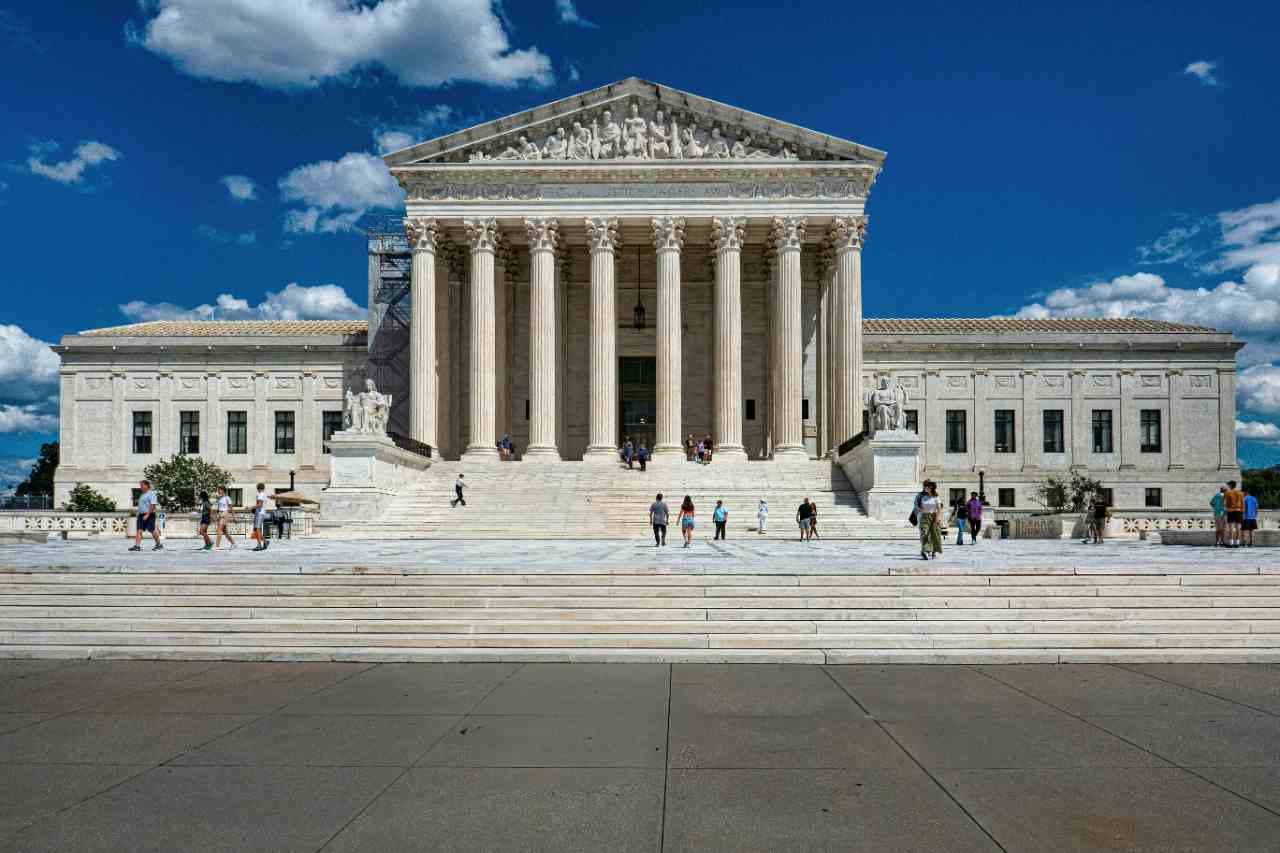
(UNITED STATES) Marco Rubio’s past defense of birthright citizenship is colliding with his present job enforcing President Trump’s 2025 directive to narrow who becomes a citizen at birth. On January 2025, President Trump signed an order titled “Protecting the Meaning and Value of American Citizenship,” directing agencies to deny automatic citizenship to children born in the U.S. if their mothers were “unlawfully present” or only temporarily in the country and their fathers were neither citizens nor lawful permanent residents. Civil rights groups swiftly sued in federal court in a case captioned OCA v. Rubio, naming both the president and Rubio, now Secretary of State, as defendants. Lower courts have blocked the order, and the Supreme Court is expected to hear arguments this fall, with a ruling likely in late 2025 or early 2026.

Policy flashpoint and legal stakes

Courting Change: Rubio’s 2016 Defense of Birthright Citizenship Reexamined
Trump’s Executive Order challenges more than a century of law tied to the 14th Amendment’s Citizenship Clause, which provides that “all persons born or naturalized in the United States, and subject to the jurisdiction thereof,” are citizens. The leading case, Wong Kim Ark (1898), affirmed that nearly all children born on U.S. soil are citizens at birth, except the children of foreign diplomats or hostile occupying forces. Legal scholars note the order’s focus on parents’ status—undocumented or temporarily present—directly contradicts that precedent. Peter J. Spiro of Temple University and others point out that Rubio’s own 2016 court filing aligns with the traditional rule and could be cited against the administration’s position. Rubio’s 2016 brief, filed when he was a senator and presidential candidate, stated that “persons born in the United States to foreign parents (who were not diplomats or hostile, occupying enemies) were citizens of the United States by virtue of their birth.” That clear statement, rooted in longstanding case law, sits uneasily with his current role. A State Department spokesperson says Rubio is “100 percent aligned with President Trump’s agenda,” brushing aside his past legal stance. The secretary has also faced blowback for supporting moves to end certain Temporary Protected Status designations, adding to criticism from immigrant advocates and some Republican colleagues. If the Supreme Court upholds Trump’s Executive Order, the effects would be immediate and far-reaching:
  • Babies born in U.S. hospitals could leave without a path to a U.S. birth certificate or passport if their mothers lack status and their fathers are neither citizens nor green card holders.
  • Families could face years of uncertain legal identity.
  • Some newborns might be at risk of statelessness if no other country recognizes them as citizens.
If the Court blocks the order, the current rule remains: nearly all children born in the United States are citizens at birth under the 14th Amendment, with the narrow diplomatic and wartime exceptions. According to analysis by VisaVerge.com, the order faces steep constitutional hurdles because it attempts to rewrite a bright-line rule that courts have upheld for generations. Still, the outcome is not guaranteed. The administration argues it is protecting the value of citizenship and deterring illegal immigration. Opponents say the order violates the Constitution and would harm thousands of U.S.-born children and their families.
Key legal question: Does the executive branch have authority to narrow birthright citizenship established by the 14th Amendment and interpreted by longstanding precedent such as Wong Kim Ark?

Political crosscurrents and legislative attempts

Congress is also testing the boundaries. The Birthright Citizenship Act of 2025, H.R.569, introduced in January by Rep. Brian Babin (R-TX), would redefine “subject to the jurisdiction” so that only babies with at least one:
  • U.S. citizen,
  • Lawful permanent resident, or
  • Certain non-citizen military parent
would gain citizenship at birth. The bill would not apply retroactively. As of August 21, 2025, it sits in committee without a floor vote. Even if it advances, any statute would likely face the same constitutional questions now before the Court. The lawsuit OCA v. Rubio, brought by Advancing Justice – AAJC, WLC, and OCA, is the main test case. With lower-court injunctions in place, the government has sought review, and oral arguments are expected in the fall. The Supreme Court’s decision could either:
  1. Reaffirm the traditional reading of the Citizenship Clause, or
  2. Mark the first major change to birthright citizenship in more than a century.
For affected families, timing is critical. Hospital discharge, state vital records, and federal passport issuance all hinge on whether a child qualifies as a U.S. citizen at birth. Courts’ temporary blocks keep current practices in place for now.

What people should keep in mind

  • The order is blocked; existing rules remain. Babies born in the U.S. still receive recognition consistent with current law pending the Supreme Court’s decision.
  • If the Court upholds the order, agencies would move quickly to apply the new standard. That could mean denials of passports and questions at state vital records offices.
  • If the Court strikes the order, the 14th Amendment rule continues unchanged, consistent with Wong Kim Ark and later cases.
? Reminder
Track the Supreme Court docket and H.R.569 status; knowing deadlines for passport applications and state vital-records appeals can be decisive if policy changes are implemented quickly.
Rubio’s journey—from author of a forceful 2016 defense to steward of a policy trying to narrow that rule—has become a central theme in the broader legal and political battle. Supporters of restriction say the current rule invites misuse and strains public systems. Opponents warn that changing a clear constitutional promise would:
  • Sow confusion,
  • Separate families, and
  • Undermine a bedrock of American civic life.
While the administration frames its move as protecting the integrity of citizenship, civil rights groups say Trump’s Executive Order is unconstitutional and would harm U.S.-born children who have done nothing wrong.

Real-world consequences

Consider this hypothetical: a child born in a U.S. city to a mother on an expired visa and a father without status. Under the order’s terms, that child would not be a citizen. If neither parent can pass on another nationality, the child may be stuck in legal limbo—no passport, no recognized country, and barriers to basic services later in life. Even when another nationality is possible, parents could face a maze of consular rules and travel they cannot afford. Advocates argue these real-world impacts are why the 14th Amendment’s simple rule has endured.

Resources and next steps

Government resources remain a first stop for families seeking updates. For general information on citizenship and current policy, see the U.S. government’s official guidance at: https://www.uscis.gov/citizenship. Congress will continue to post updates on H.R.569, and the Supreme Court docket will list argument dates and filings as the case moves forward. The decisive moment will come with the Court’s opinion.
For now: the injunctions stand, the briefing continues, and the country waits for the justices to speak. The coming months will test how the nation reads a promise—written after the Civil War and reaffirmed in 1898—that birth on U.S. soil, not the paperwork of a parent, makes a child a citizen.
VisaVerge.com
Learn Today
14th Amendment → Constitutional clause guaranteeing citizenship to persons born or naturalized in the United States, central to the dispute.
Wong Kim Ark → 1898 Supreme Court precedent affirming near-universal birthright citizenship for persons born on U.S. soil.
OCA v. Rubio → Federal lawsuit filed by civil-rights groups challenging Trump’s January 2025 executive order narrowing birthright citizenship.
Temporary Protected Status → Humanitarian immigration designation for nationals of certain countries, whose removal protection Rubio has opposed.
H.R.569 → Birthright Citizenship Act of 2025 proposing citizenship only if one parent is citizen, resident, or certain non-citizen service member.

This Article in a Nutshell

A January 2025 executive order seeks to narrow birthright citizenship, prompting OCA v. Rubio. Lower courts blocked the order; the Supreme Court will decide whether the 14th Amendment’s established rule survives a fall 2025 argument, with consequences for passports, birth certificates and potential statelessness.

— VisaVerge.com
People also ask

Answers from VisaVerge guides
What’s Next for Birthright Citizenship Amid 2025 Legal Changes

The 2025 Birthright Citizenship Act and Executive Order seek to restrict automatic citizenship to children with U.S. citizen or lawful resident parents. This could affect hundreds of thousands, increase statelessness risks, and faces major legal challenges, including delayed Supreme Court enforcement and intense national debate.

Read: What’s Next for Birthright Citizenship Amid 2025 Legal Changes
What policy changes in January 2025 affect birthright citizenship for some undocumented immigrants?

January 2025 policies aimed at limiting birthright citizenship for children born to certain undocumented immigrants were introduced, though they are currently blocked by the courts.

Read: Undocumented Immigrants Weigh Family Bonds and Future in an Uncertain America
What legal challenges are ongoing regarding birthright citizenship changes?

A federal court issued an injunction temporarily blocking the executive order aiming to end birthright citizenship on January 23, 2025.

Read: Leaving U.S. Immigration Challenges: What to Consider First
What changes were made to birthright citizenship in 2025 according to VisaVerge.com?

As of February 19, 2025, children born in the United States to parents who are not citizens or permanent residents may not get automatic citizenship.

Read: People Are Dying in Line: The Struggle for Legal U.S. Immigration Paths
What is the status of the birthright citizenship rule introduced by President Trump's administration in 2025?

The birthright citizenship rule restricts children born in the United States to parents who are unlawfully present or have only temporary status, but it is being challenged in court and some courts have put it on hold.

Read: Assessing Policy Risks Amid Shifting Immigration Enforcement in 2025
What do you think? 99 reactions
Useful? 94%
Elena Marquez

Elena Marquez writes on family-based and humanitarian immigration for VisaVerge.com, covering marriage and family green cards, K-1 visas, asylum, TPS, and the path to U.S. citizenship. She approaches each topic with the care these deeply personal journeys deserve, explaining eligibility, timelines, and the Visa Bulletin in plain language. Elena's work helps families reunite and newcomers find a durable footing in their new home.

Subscribe
Notify of
guest

0 Comments