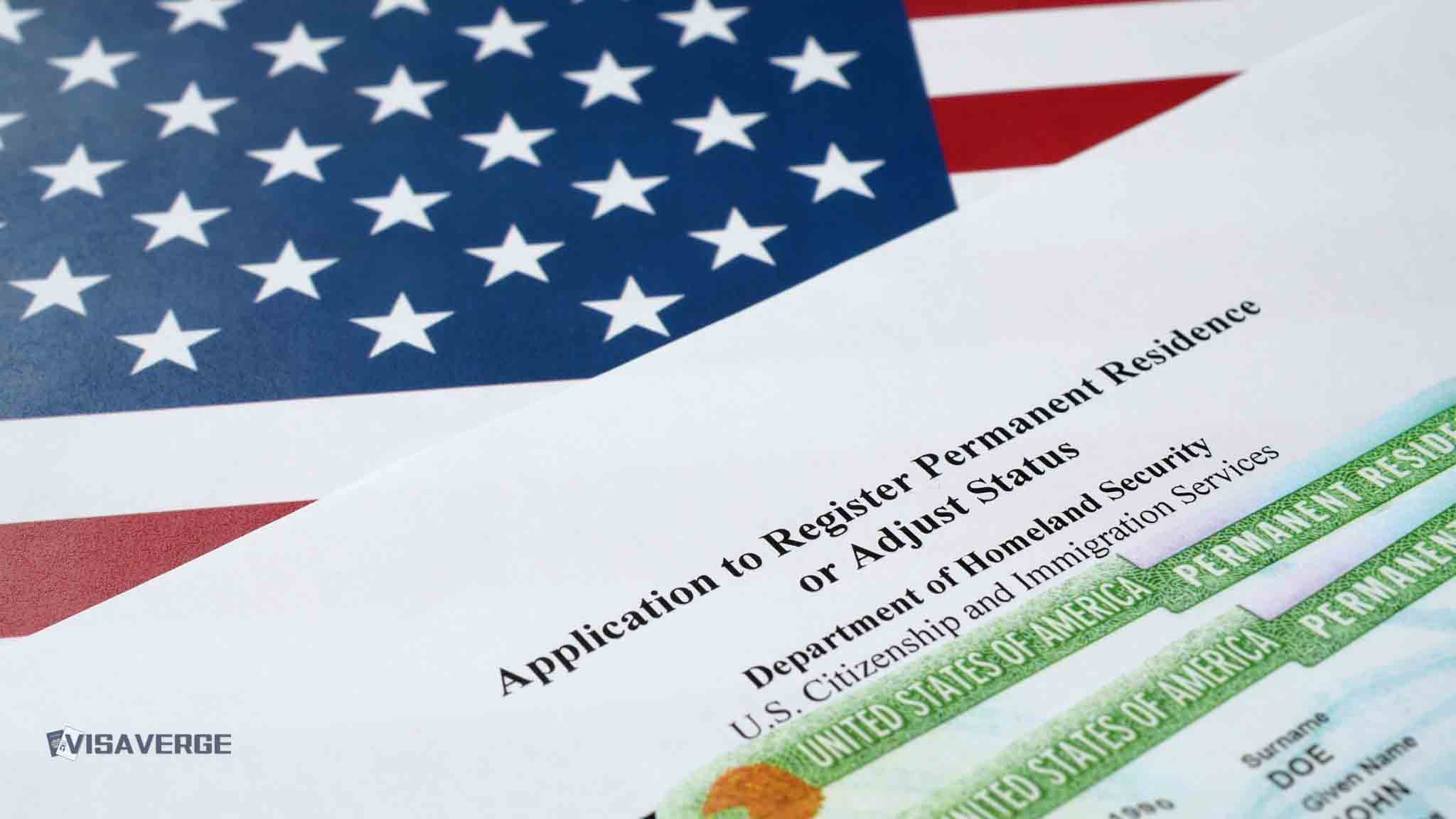
- A DACA renewal with a C33 work permit costs $605 on paper or $555 online, and no H.R. 1 fee applies, so the October 16, 2026 increases do not change it.
- C33 cards have never had an automatic extension; if the card expires before approval, work must stop, so USCIS urges filing 120 to 150 days early.
- As of October 10, 2026, USCIS approves renewals nationwide but holds all initial DACA requests while the Texas court order stands.
A C33 EAD is the work permit card issued to a recipient of Deferred Action for Childhood Arrivals (DACA). You request it on Form I-765 under category (c)(33), always together with Form I-821D, and it runs for the same two-year period as your grant of deferred action. As of October 10, 2026, USCIS is approving renewals nationwide, including in Texas, and still accepting but not deciding first-time requests.
The cost has not changed with this month’s fee notice. A DACA renewal costs $605 on paper or $555 online: $85 for Form I-821D plus $520 on paper or $470 online for Form I-765, per Form G-1055, edition 10/07/26. Category (c)(33) carries no Public Law 119-21 fee, so the inflation-adjusted H.R. 1 fees that take effect October 16, 2026 do not apply. There is no fee waiver for DACA.
What makes C33 different from most EAD categories is timing. DACA work permits were never on the list of categories that received an automatic extension while a renewal was pending, and DHS removed that extension for every other category on October 30, 2025. If your C33 card expires before USCIS approves the renewal, you must stop working until it does. USCIS says it decides most DACA renewals within 120 days and asks recipients to file 120 to 150 days before their current grant expires.
The bigger question hangs over Texas. On January 17, 2025, the U.S. Court of Appeals for the Fifth Circuit ruled on the 2022 DACA Final Rule and sent the case back to Judge Andrew Hanen in the Southern District of Texas. Advocates read the decision as keeping deportation protection in place nationwide while limiting the injunction to the work-authorization part of DACA, and only in Texas. As of October 10, 2026, USCIS has announced no change to renewals for Texas residents.
This guide explains who qualifies for C33, what it costs, what to file, when to renew, and what the litigation means for your card. For the full map of codes see the USCIS EAD category codes guide.
Companion guides cover the C08 category for asylum applicants, the A05 category for asylees and the C26 category for H-4 spouses.
Who Qualifies for the C33 EAD Category?
The C33 card exists only alongside DACA. To request DACA, USCIS says you must show that you:
- Were under age 31 on June 15, 2012, meaning you were born on or after June 16, 1981.
- Came to the United States before your 16th birthday.
- Have continuously resided in the United States since June 15, 2007, up to the time you file.
- Were physically present in the United States on June 15, 2012 and when you file.
- Had no lawful immigration status on June 15, 2012 and have none when you file.
- Are in school, have graduated from high school or earned a GED, or are an honorably discharged veteran of the U.S. Coast Guard or armed forces.
- Have not been convicted of a felony, a significant misdemeanor, or three or more other misdemeanors, and do not otherwise pose a threat to national security or public safety.
For the work permit, you also must show an economic necessity to work on Form I-765WS, the Form I-765 Worksheet. USCIS looks at your current annual income, annual expenses and the total value of your assets. Supporting evidence is optional, and you do not need to include other household members’ finances.
Renewal Versus Initial Request: Why the Label Matters
USCIS treats a request as a renewal if you hold a current DACA grant or if your last grant expired less than one year ago. It treats a request as initial if it is your first, if your last grant expired more than one year ago, or if your most recent grant was terminated.
That label decides whether your C33 card gets processed at all. USCIS approves renewals. It accepts initial requests, sends a receipt and processes the payment, but places the case on hold and does not decide it while the Texas court order is in effect. USCIS is not refunding fees for initial requests on hold. A recipient who lets DACA lapse for more than a year lands in that queue.
| Your request | Does USCIS accept it? | Does USCIS decide it? |
|---|---|---|
| Renewal: current DACA grant | Yes | Yes, including Texas residents |
| Renewal: grant expired less than 1 year ago | Yes | Yes |
| Initial: first-time request | Yes, fee is charged | No, held while the court order is in effect |
| Initial: lapsed more than 1 year or terminated | Yes, fee is charged | No, held |
| Replacement card for a valid, lost EAD | Yes, Form I-765 only | Yes |
| Advance parole for a current recipient | Yes | Yes |
How Long Is the C33 EAD Valid?
Two years. DACA is granted for a two-year period, subject to renewal, and the C33 card runs with it. The 18-month cap that USCIS imposed in Policy Alert PA-2025-27 on December 5, 2025 covers categories such as (a)(5), (c)(8) and (c)(9). It does not list (c)(33).
USCIS generally does not backdate or postdate a renewal card to line up with the end of your old one. The new two-year period starts when the renewal is approved, which is one more reason not to file too early. USCIS says filing earlier than 150 days before your expiration will not get you a faster decision.
There Is No Automatic Extension for DACA Work Permits
When DHS removed the automatic EAD extension in the interim final rule at 90 FR 48799 on October 30, 2025, it listed the categories that had been eligible for up to 540 extra days. Category (c)(33) was not among them. DHS made the rule permanent, without changes, in a final rule published October 14, 2026 (91 FR 65306). DACA renewals never carried that bridge, so neither rule changed the C33 rules, but it removed the safety net for many of the people DACA recipients work beside.
The result is simple and unforgiving. If your C33 card expires while the renewal is pending, you lose work authorization on the expiration date and regain it when USCIS approves the renewal. Processing has slowed: USCIS reported in late April 2026 that most renewals were taking about 122 days, as our coverage of enhanced vetting of DACA renewals explained. A filing at day 120 leaves almost no margin.
What a C33 EAD Costs in 2026
The figures below come from Form G-1055, edition 10/07/26. You pay both fees with every DACA request, initial or renewal. A replacement card for a lost, stolen or damaged EAD requires only Form I-765 and its fee.
| What you are filing | Form I-821D | Form I-765 | Total |
|---|---|---|---|
| Renewal or initial request, paper filing | $85 | $520 | $605 |
| Renewal or initial request, online filing | $85 | $470 | $555 |
| Replacement for a lost, stolen or damaged card, paper | Do not file | $520 | $520 |
| Replacement for a lost, stolen or damaged card, online | Do not file | $470 | $470 |
| Replacement for a USCIS error or a card never delivered | Do not file | $0 | $0 |
The Form I-912 instructions say plainly that you may not file Form I-912 when requesting DACA and that there are no fee waivers for DACA. USCIS offers fee exemptions only in limited circumstances under separate guidance on its website.
What Are the Steps to Renew a C33 EAD?
- Mark your window. Find the expiration date on your current Form I-797 DACA approval notice and count back 150 and 120 days. File inside that window.
- Complete Form I-821D as a renewal request.
- Complete Form I-765 and enter (c)(33) in Part 2, Item 27. USCIS is accepting the 08/21/25 edition of Form I-765 and is not accepting the 09/15/26 edition while a September 14, 2026 court order remains in place.
- Complete Form I-765WS to show economic necessity.
- Attach a copy of your last EAD, front and back, and two identical 2 by 2 inch color passport-style photos, unmounted and unretouched. Under the I-765 instructions, a (c)(33) filer does not need extra identity documents beyond what Form I-821D requires.
- Pay $85 plus $520 on paper, or $85 plus $470 online.
- File online or by mail. USCIS changed the I-765 filing locations on October 7, 2026 and will accept forms postmarked on or before November 9, 2026 at a prior address. Check the current address before mailing.
- Attend biometrics. USCIS lists missed or rescheduled biometrics appointments as a cause of renewal delay.
What Happens After You File?
- USCIS sends receipt notices for both forms and usually a biometrics appointment.
- USCIS says it adjudicates most renewal requests within 120 days. If your renewal has been pending more than 105 days, you may submit an online inquiry.
- Name or date-of-birth discrepancies, travel questions, criminal history and incomplete filings can trigger a request for evidence and add time.
- On approval you receive a new I-797 DACA approval notice and a C33 card valid for two years.
Who Does Not Qualify for a C33 EAD?
- First-time DACA requestors, for now. USCIS accepts the filing and the fee but will not decide it while the court order stands.
- Former recipients whose DACA lapsed more than a year ago or whose grant was terminated. Their filing is treated as an initial request.
- Anyone with a disqualifying conviction under 8 CFR 236.22(b)(6) or who poses a national security or public safety concern.
- Anyone who cannot show economic necessity on Form I-765WS. DACA itself can be granted without the work permit.
- People filing for another category. A DACA recipient who files a green card application with Form I-485 uses (c)(9) for that EAD. See our C09 EAD guide.
Examples to Help You Decide
- Example 1: Daniela’s DACA and C33 card expire June 30, 2027. Her filing window runs from January 31, 2027 (150 days before) to March 2, 2027 (120 days before). She files online on February 10 and pays $555.
- Example 2: Marco files his renewal 60 days before his card expires. USCIS decides it in 110 days. For about 50 days in between he has no work authorization and must stop working.
- Example 3: Rosa’s DACA expired 14 months ago. Her request is treated as initial, so USCIS takes her $605 paper filing, issues a receipt and puts it on hold.
- Example 4: Luis lost his wallet with a valid C33 card inside. He files only Form I-765 with box 1.b checked, evidence of his current DACA and the fee. If he included Form I-821D, USCIS would deny it and keep the $85.
The Texas Case: Where DACA Stands in October 2026
The Fifth Circuit’s January 17, 2025 decision in Texas v. United States left current recipients able to renew while the case returned to Judge Hanen. In a September 29, 2025 filing, the federal government proposed resuming the processing of initial DACA requests outside Texas and phasing out work authorization for recipients who live in Texas. No court order putting any of that into effect had been reported as of early October 2026, and USCIS’s own DACA page still describes the older arrangement.
Three things follow for the C33 card. Recipients everywhere, including Texas, can still renew. Initial requests remain on hold nationwide. And Texas residents face the open risk that the court order, when it comes, ends their work authorization, possibly on short notice. The National Immigration Forum’s explainer, updated October 2, 2026, reported no implementation order from Judge Hanen.
Our newsroom has covered the case since the appeal, from the Fifth Circuit’s 2025 ruling to Texas recipients weighing a move as revocation looms. Texas has also moved separately against DACA holders; see our report on how Texas blocked occupational licenses for DACA recipients.
How to Protect Your Work Authorization
- File at day 150, not day 120. The front of the window is your only cushion against a 120-plus-day queue.
- Never let DACA lapse more than a year. A late renewal becomes an initial request and goes on hold.
- Show up for biometrics. Rescheduling is one of the delays USCIS names.
- Tell your employer the expiration date early. With no automatic extension, Form I-9 reverification falls on the date printed on your card.
- If you live in Texas, plan for a short notice period. Keep copies of every approval notice and speak with an attorney about other options, such as a family-based or employment-based green card.
- Avoid unauthorized travel. Leaving the United States without advance parole can end DACA.
Where to Get More Information
Start with the USCIS DACA page and its DACA Litigation Information and Frequently Asked Questions page, which carry the current filing rules and the court status. The Form I-765 page carries the current edition, the October 7, 2026 filing-location change and the fee schedule link.
Takeaway
C33 still works for current recipients: renew on time and you keep a two-year work permit for $555 online. What it does not have is any cushion. There has never been an automatic extension for DACA cards, renewals now take around four months, and Texas residents are waiting on a court order that could end their work authorization. File 150 days out, keep your grant from lapsing, and watch the Texas docket.
Frequently Asked Questions
What is the C33 EAD category?
C33 is the Employment Authorization Document category for Deferred Action for Childhood Arrivals recipients. You file Form I-765 under (c)(33) together with Form I-821D and Form I-765WS, and the card runs for the same two-year period as your DACA grant.
How much does a DACA renewal cost in 2026?
$605 on paper or $555 online: $85 for Form I-821D plus $520 on paper or $470 online for Form I-765, per Form G-1055, edition 10/07/26. There is no fee waiver for DACA, and no Public Law 119-21 fee applies to category (c)(33).
Do DACA work permits get an automatic extension?
No. Category (c)(33) was never on the list of categories eligible for the up-to-540-day automatic extension, and DHS removed that extension for all other categories on October 30, 2025. If your C33 card expires before USCIS approves your renewal, you must stop working.
When should I file my DACA renewal?
USCIS recommends filing 120 to 150 days before your current DACA grant expires. Filing earlier than 150 days does not speed the decision. USCIS says it decides most renewals within 120 days and accepts online inquiries once a renewal has been pending more than 105 days.
Is USCIS processing new DACA applications in 2026?
No. As of October 10, 2026, USCIS accepts initial DACA requests and charges the fee but does not decide them while the Southern District of Texas order remains in effect. It is not refunding fees for initial requests on hold.
What happens to DACA work permits in Texas?
For now, nothing has changed: Texas residents can still renew DACA and their C33 card. The Fifth Circuit’s January 17, 2025 ruling sent the case back to Judge Hanen, and the federal government proposed phasing out work authorization for Texas residents. No implementation order had been reported by early October 2026.
Is a late DACA renewal treated as a new application?
Yes, if your last grant expired more than one year ago or was terminated. USCIS treats that filing as an initial request, which it accepts but places on hold. A request filed within one year of expiration is still a renewal.
How do I replace a lost DACA work permit?
File only Form I-765 with box 1.b checked, evidence of your current DACA such as your latest approval notice, and the $520 paper or $470 online fee. Do not include Form I-821D; USCIS will deny it and will not refund the $85 fee.