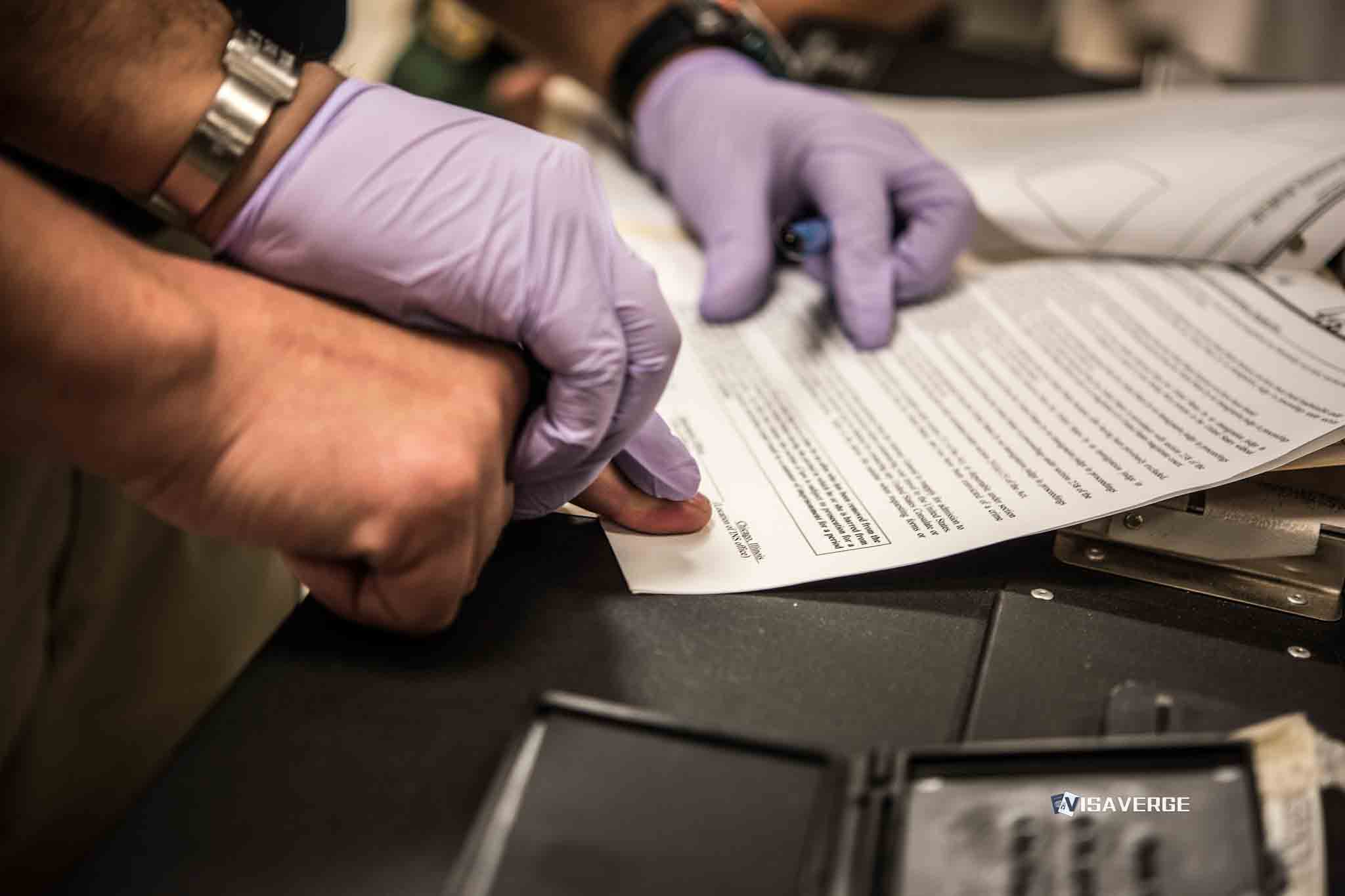
- AP analyzed records showing 4,510,850 migrants listed U.S. destinations after release from the Mexican border.
- The data show migrants heading to New York City, Los Angeles, Chicago, Denver, Atlanta, and inland cities.
- About 30,000 Venezuelans in the records said they were going directly to Utah, especially Salt Lake City.
Federal records analyzed by the Associated Press show that 4,510,850 migrants released after entering from the Mexican border reported destinations across the United States between October 2018 and July 2025.
The records point beyond traditional immigrant hubs. Migrants listed destinations in New York City, Los Angeles, Chicago, Denver, Atlanta, Dallas, Houston, Salt Lake City, Cincinnati, Madison, Albuquerque, and Savannah.
Free toolUSCIS Receipt Number Decoder
The destinations came from information migrants supplied to Customs and Border Protection. “Migrants must provide Customs and Border Protection with their U.S. destination,” the analysis said.
The agency collected more than a location. “AP obtained their destination ZIP codes, nationalities, ages, genders, and the dates and locations they entered the country.”
The records also show a changing demographic mix. Women and children made up a sharply larger share of those released at the border.
The total combines records from different forms of entry. U.S. Border Patrol files listed 5,619,982 people arrested for illegal entry from Oct. 1, 2018 to July 7, 2025. After the analysis removed people without ZIP codes and likely duplicates, 3,652,313 remained.
A separate group added 858,537 migrants released through official ports of entry from 2021 through 2024, mostly through CBP One. Together, those records produced the 4,510,850 figure.
Venezuelans increasingly chose inland cities over Florida
Venezuelans showed one of the clearest shifts away from a traditional destination. Many avoided Miami and moved toward Utah, Wisconsin, New Mexico, Georgia, and other inland states.
About 30,000 of the 1 million Venezuelans in the records said they were heading directly to Utah. Salt Lake City and Cincinnati appeared among the places drawing migrants seeking jobs and a better quality of life.
“One million Venezuelans sought better jobs and quality of life in places like Salt Lake City, Utah, and Cincinnati, Ohio, rather than traditional immigrant footholds.”
The pattern extended beyond major metropolitan areas. Smaller communities became destinations even as large cities continued receiving migrants.
Other nationalities followed distinct routes
The destination data varied sharply by nationality.
| Group or pattern | Destinations identified in the records |
|---|---|
| Chinese migrants | New York City, particularly Queens and Brooklyn, and neighborhoods across the Los Angeles area |
| Venezuelan migrants | Utah, Wisconsin, New Mexico, Georgia, Salt Lake City, Cincinnati, and other inland or smaller communities |
| Cuban migrants | Nine of the top 10 destination ZIP codes were in Florida; others included Louisville, Kentucky, Grand Island, Nebraska, and Odessa, Texas |
| Other reported destinations | Denver, Atlanta, Dallas, Houston, Madison, Albuquerque, Savannah, Elkhart, Knoxville, and Dodge City |
The Chinese pattern centered on established coastal immigrant communities. The Cuban pattern remained strongly tied to Florida, even as some migrants moved to inland cities.
The broader list included places that have not traditionally ranked among the country’s best-known immigrant destinations. Salt Lake City, Cincinnati, Louisville, Grand Island, Odessa, Elkhart, Knoxville, and Dodge City all appeared in the records.
The records also placed migrants in larger cities across several regions, including Denver, Atlanta, Dallas, Houston, Madison, Albuquerque, and Savannah. Destination ZIP codes reflected where migrants said they planned to go after release, rather than a later government count of permanent residence.
The analysis did not treat every border record as a separate person. It removed duplicate records and entries without ZIP codes before combining the border-apprehension files with the port-of-entry releases.
“Data obtained exclusively by The Associated Press paints a picture of who these migrants are and where they went.”