
Workers planning a return to India generally need 40 credits from covered U.S. work to qualify for retirement payments on their own record. The Social Security Administration counts credits earned through work subject to Social Security taxes, and a worker typically reaches the threshold after 10 years. Leaving the United States does not erase credits already earned.
A credit is a measure of covered earnings, not a year of employment. In 2026, one credit requires $1,890 in covered earnings, and a worker can earn no more than four credits in a year. Reaching the threshold is only one part of retirement planning: the amount paid depends on lifetime earnings, and retirement eligibility generally begins at age 62.
The agency’s credit rules say a person cannot purchase, borrow or transfer credits. Workers build their own record through covered employment. A spouse’s or relative’s work history cannot be added to it.
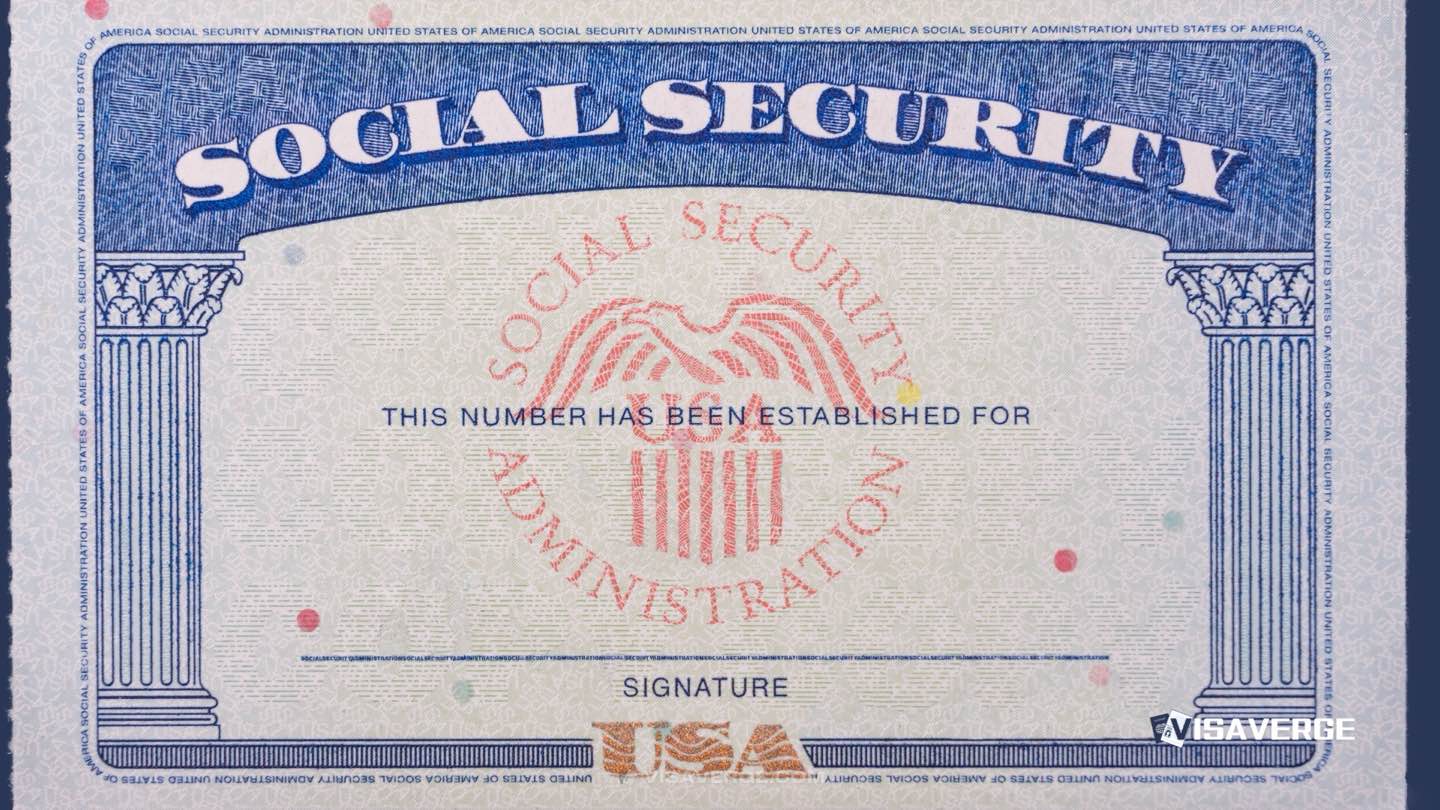
Credits remain on a worker’s record after a job ends. A person who returns to covered work can add more later, even if the years are separated by a long break. No consecutive-work requirement applies.
The threshold also differs by program. Retirement generally requires 40 credits, but disability and survivors eligibility can use lower amounts depending on age and work history. A worker may have enough for one benefit and not another.
| Work or benefit situation | Answer | Why or condition |
|---|---|---|
| At least 40 credits on a covered work record | Generally qualifies for retirement eligibility | The worker must also reach the applicable claiming age, which begins at 62. |
| Fewer than 40 credits | Generally does not qualify for retirement on their own record | A worker can earn more later through covered employment. |
| Credits earned in separate periods | They still count | Credits remain on the record and do not need to be consecutive. |
| Work not covered by Social Security | It may not produce credits | Some public-sector and other jobs do not pay into the system. |
Your own work record decides whether you meet the retirement threshold
The credit total is an eligibility test. It does not determine the monthly payment by itself. The agency calculates retirement payments using a worker’s earnings over working years, so earning more than the minimum does not automatically raise the amount.
That distinction can matter to someone who plans to stay in the United States just long enough to qualify. Once a worker has the required record, additional credits do not increase the payment merely because the total is higher. Earnings history, rather than the number of credits above the threshold, drives the amount.
The rule applies to covered work. Most wage earners pay Social Security tax through payroll withholding, but some jobs do not participate. A worker should not assume that every year employed in the United States added credits.
A worker can earn four credits in 2026 without working all year
The system has allowed workers to earn up to four credits annually since 1978. In 2026, each credit requires $1,890 in covered wages or self-employment income. A worker who reaches $7,560 in covered earnings can receive all four credits for the year, even if those earnings came in less than a full year of work.
The earnings threshold generally rises over time with changes in the Social Security Average Wage Index. A worker planning across multiple years should use the threshold for the year in which the earnings are received, rather than assume today’s amount will stay fixed.
About 93% of workers earn wages or income in covered employment, according to the Congressional Research Service. The remaining workers include people in jobs excluded from Social Security coverage. A year in a non-covered job does not necessarily advance a worker toward retirement eligibility.
Payroll contributions also differ by work arrangement. Most covered employees pay 6.2 percent of gross wages, and their employers contribute another 6.2 percent, for a combined Social Security tax rate of 12.4 percent. Self-employed workers pay the full 12.4 percent on net income through their tax filing.
Other programs can use different credit tests
Retirement is not the only program that considers a worker’s record. Disability eligibility includes both a recent-work test and a duration-of-work test, with requirements that vary by age when the disability begins.
A worker younger than 24 generally needs six credits in the three-year period ending when the disability starts. For someone between ages 24 and 31, the test generally counts work for half the time between age 21 and the onset of disability. A person who becomes disabled at age 27, for example, generally needs 12 credits from the preceding six years.
At age 31 or older, the general test calls for at least 20 credits in the 10-year period immediately before the disability began. These are separate eligibility rules, not a shorter route to retirement qualification.
Survivor eligibility also depends on the worker’s age at death. Younger workers may need fewer credits, and no one needs more than 40 credits for survivors benefits. The family’s eligibility therefore cannot be determined by applying the retirement threshold alone.
India and the United States do not combine work records under a pact
The United States has 30 totalization agreements in force as of 2026. They coordinate social insurance between participating countries, including allowing work credits from the two systems to be combined for eligibility in some cases and addressing dual social-contribution taxation.
The agreements cover 23 countries in Europe, four in the Americas and three in Asia-Pacific. The countries named in the Americas group are Canada, Chile, Brazil and Uruguay. Japan, South Korea and Australia are the three Asia-Pacific countries identified in the research.
India is not among them. Mexico, China, the UAE, Singapore and Thailand are also listed as countries without an agreement, along with most of Southeast Asia. Without an agreement between the two countries, a worker cannot rely on Indian work credits to fill a shortfall in the U.S. record.
Indian industry groups have pressed for a pact. Nasscom has cited Indian professionals on H-1 and L-1 visas who pay almost USD $1 billion in U.S. Social Security taxes annually, and has urged officials to speed up an agreement. Another estimate put Indian professionals’ annual contributions above $1 billion.
A 2013 account put the number of Indians working in the United States at 300,000 and said workers could lose their contributions if they did not complete 10 years of employment. Advocates have argued that an agreement could provide an exemption or refund to Indians who work in the United States for less than 10 years.
India has also shared Social Security data with the United States. In the same policy debate, India’s earlier refusal to sign a Double Contribution Treaty with the United Kingdom for intra-company transfers was cited as a contrast. The concern raised was that temporary workers could receive no benefits in either country while their contributions remained unavailable to them.
Moving abroad does not remove the separate U.S. tax rules
A worker’s eligibility and the taxation of payments are separate questions. U.S. withholding rules can apply to Title II benefits paid to nonresident aliens inside or outside the United States. U.S. citizens and aliens who remain U.S. residents are exceptions, as are some nonresident aliens who live in countries covered by tax treaties.
India appears on the treaty list with a narrower condition: a beneficiary must be an Indian citizen, and the exemption applies to the extent the payment is based on federal, state or local government employment. The treaty rules described in the research distinguish residence from citizenship for other countries on the list. Totalization agreements’ equal-treatment provisions do not themselves remove withholding, which is governed by IRS law rather than Social Security rules.
The absence of a totalization agreement can also leave self-employed workers exposed to contributions in both countries. Tax-planning material describes a possible U.S. self-employment tax of 15.3% alongside a full local social contribution. It also notes that a certificate of coverage can establish which country’s system applies under an agreement, potentially avoiding the second charge. The 2025 Social Security wage base cited for that discussion was $176,100.
Those coordination rules are distinct from the credit test. Paying U.S. tax may add to a worker’s U.S. record, but it does not by itself establish whether Indian contributions can be combined with that record.
A few other rules can change a worker’s estimate
The Windfall Elimination Provision was repealed under the Social Security Fairness Act, signed in January 2025. Workers with foreign pensions who had planned around a reduction under that provision should review their benefit estimates under the changed rule.
The 2026 taxable maximum is $184,500. Covered earnings up to that amount are subject to Social Security payroll tax and count in benefit calculations; earnings above it do not enter those calculations.
Some U.S. workers do not pay Social Security taxes through their jobs and are not eligible for retirement benefits on that record. The Congressional Research Service counted nearly 22.9 million state, county and local government employees in 2023, including 6.3 million, or 27 percent, in non-covered positions. Many were local police officers, firefighters and teachers.
Other excluded groups include federal employees hired before 1984 and covered by the Civil Service Retirement System, railroad employees with a separate pension system, and foreign nationals working in the United States for their home governments. The agency’s credits measure only covered work.
Check the earnings record before choosing a departure date
A worker can use these steps to assess a move:
- Review the U.S. earnings record and confirm which jobs counted as covered work.
- Count credits already earned, including credits from nonconsecutive years.
- If short of the retirement threshold, estimate whether future covered U.S. work can close the gap; Indian credits cannot be combined under a U.S.-India agreement.
- Check separately for disability or survivors eligibility if those benefits are relevant, because their work tests differ.
- Review expected payments and possible withholding with the relevant U.S. tax and benefits authorities.
Credits already earned stay on the record after a worker leaves. But reaching the retirement threshold still depends on covered U.S. earnings, not simply on years spent working in either country.
Frequently asked questions
How many Social Security credits do I need to qualify for retirement benefits?
Workers generally need 40 credits from covered U.S. work to qualify for retirement benefits on their own record. Retirement eligibility generally begins at age 62, but reaching 40 credits does not determine the payment amount. The Social Security Administration calculates benefits using a worker’s earnings history. Disability and survivors benefits have different credit requirements, which can depend on the worker’s age and circumstances.
How much do I need to earn for Social Security credits in 2026?
In 2026, $1,890 in covered earnings earns one Social Security credit. A worker can earn no more than four credits in a year, so $7,560 in covered earnings can earn the annual maximum. The earnings do not have to come from a full year of work. The threshold can change over time, so use the amount for the year the earnings are received.
Will I lose my U.S. Social Security credits if I return to India?
No. Credits already earned remain on your Social Security record after you leave a job or move abroad. You can add credits later through covered U.S. work, and the work periods do not have to be consecutive. However, India and the United States do not have a totalization agreement, so Indian work credits cannot be combined with your U.S. record to meet a shortfall in the 40-credit retirement requirement.
How can I check whether my U.S. work earned Social Security credits?
Review your Social Security earnings record and confirm which jobs were covered by Social Security taxes. Not every job in the United States earns credits; some public-sector positions and other categories of work are not covered. Compare your covered earnings with the applicable annual credit threshold, and check your benefit estimate separately. Before making departure plans, also review possible tax withholding on benefits with the relevant U.S. benefits and tax authorities.