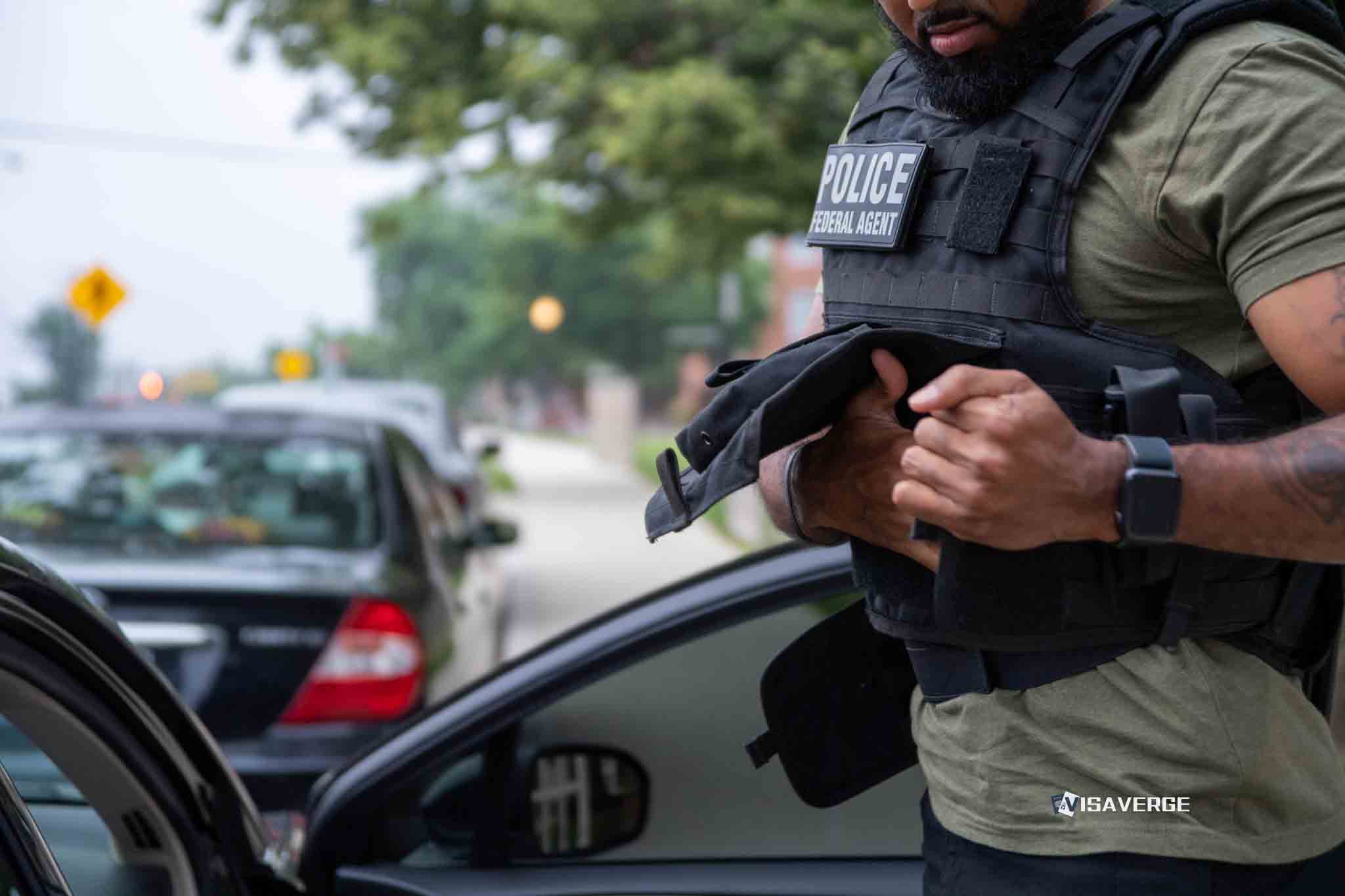
- The DOJ and DHS have expanded denaturalization efforts to a scale unseen in modern U.S. history.
- Authorities are targeting 2,400 cases annually, representing a 200-fold increase compared to historical averages.
- The campaign focuses on material misrepresentation and fraud during the naturalization process to revoke citizenship.
(UNITED STATES) – The U.S. Department of Justice and the Department of Homeland Security expanded denaturalization efforts on May 8, 2026, opening a campaign that administration officials said will revoke citizenship at a pace and scale unseen in modern history.
Acting Attorney General Todd Blanche cast the push as part of the administration’s border and national security agenda, linking citizenship fraud cases to wider enforcement priorities in remarks this week and at the Border Security Expo.
Free toolSubstantial Presence Test Calculator
“If you’re going to come and become a citizen in this country, but you’re going to do it by fraud, you’re going to do it in a way that’s illegal, you should be worried. There are a lot of individuals who are citizens who shouldn’t be,” Blanche said on May 6, 2026.
On May 7, 2026, Blanche pointed to the speed of the effort. “We are on track to surpass the number of denaturalization filings the Biden administration submitted in four years. I think, in about a week. This is another way that we’re able to deal with border security.”
The first wave reaches 384 foreign-born Americans identified for citizenship revocation. Internal guidance calls for USCIS field offices to send 100 to 200 cases per month to the Justice Department for review, a flow that could reach 2,400 cases annually.
That would mark a sharp break from past practice. From 1990 to 2017, the United States averaged 11 denaturalization cases per year; the current target amounts to a more than 200-fold increase.
Federal prosecutors are spreading the work far beyond the small group of specialists who long handled such cases. Denaturalization matters now go to lawyers across all 93 U.S. Attorney’s Offices.
Assistant Attorney General Brett A. Shumate, announcing a new round of cases in a [Justice Department press release](https://www.justice.gov) on May 8, 2026, said the department was moving faster than before. “This Department of Justice continues to file denaturalization actions at record speeds to restore integrity in our naturalization process. The disturbing criminal histories confirm these individuals should have never received the privilege of U.S. citizenship.”
Matthew Tragesser, DOJ deputy director for communications, used even stronger language in comments on April 23, 2026. “Under the leadership of President Trump and Acting Attorney General Todd Blanche, the department is pursuing the highest volume of denaturalization referrals in history. We are moving at warp speed to ensure fraudsters are held accountable.”
The administration has set out several priority categories for review. They include people accused of hiding serious criminal histories during naturalization, including sexual abuse and violent crimes, as well as people with alleged ties to terrorism, espionage, or war crimes.
Officials also put financial fraud near the front of the list. That category covers large schemes involving Medicare or COVID-era relief programs, along with identity and immigration fraud such as false identities and sham marriages used to obtain status.
The shift places De-Naturalization near the center of federal immigration enforcement rather than at its edge. The department has elevated it to a top-five enforcement priority, replacing a model that historically reserved citizenship revocation for a narrow band of extreme cases.
That older model treated naturalized citizenship as unusually durable once granted. The current policy treats material misrepresentation in the naturalization process, even if it surfaced years later, as grounds for reopening the grant itself in federal court.
Executive Order 14399, issued on March 31, 2026, sits beside that effort. The order directs DHS to create citizenship lists for voter roll verification, tying citizenship data more closely to enforcement systems already under construction.
The coordinated role of DHS matters because the agency supplies many of the referrals that feed the Justice Department’s civil denaturalization docket. USCIS, whose [newsroom](https://www.uscis.gov/newsroom) has carried related announcements, is pushing cases from field offices into a pipeline that Blanche and his deputies say they want to move faster.
DHS has also framed the campaign as part of a broader fraud crackdown. The department’s [official statements page](https://www.dhs.gov/news) tracks the administration’s immigration and security messaging as citizenship cases move from agency review to federal litigation.
A denaturalization case does not strip citizenship automatically. The government must persuade a federal judge to revoke it, and the consequences reach beyond the passport itself.
If a judge cancels citizenship, the person loses the right to vote and the ability to sponsor family members. They also lose the protection from deportation that citizenship provides.
In many cases, the person reverts to Lawful Permanent Resident (LPR) status after denaturalization. That does not end the matter; removal proceedings often follow if the same fraud that supported the denaturalization case also makes the person deportable.
The legal test is narrower than the administration’s rhetoric suggests. In Maslenjak v. United States, decided in 2017, the Supreme Court held that the government must prove a false statement was “material” to the grant of citizenship, meaning the applicant would have been denied if the truth had been known.
That standard forces prosecutors to tie any lie or omission to the decision itself, not simply to show that a form contained a falsehood. A concealed fact must have mattered to eligibility for naturalization.
Blanche nonetheless described the campaign in sweeping terms, presenting it as an enforcement tool with room to grow. His remarks tied fraud in the citizenship system to the administration’s wider border program, even though denaturalization typically targets people who already became Americans, often years earlier.
Shumate’s statement focused on criminal histories and the idea that some recipients should never have gained citizenship in the first place. Tragesser’s comments stressed volume, making clear that the department intends to judge success not just by outcomes in court but by the number of referrals and filings it can produce.
The structure now in place supports that approach. With referrals measured in the hundreds each month and cases distributed nationwide, the campaign no longer depends on a small unit inside the Office of Immigration Litigation.
That expansion also changes the geography of these cases. Prosecutors in districts across the country can now file denaturalization actions locally rather than waiting for a specialized team to carry the load.
The administration has presented those numbers as a restoration effort aimed at fraud and national security threats. Yet the categories it identified extend from war crimes and terrorism allegations to sham marriages and false identities, a range that gives federal agencies broad room to decide which files to reopen.
People caught in that net face a chain of losses that can move quickly once a judge revokes citizenship. Voting rights can disappear, family petitions can collapse, and the case can shift from citizenship fraud to deportation.
The campaign that Blanche promoted this week therefore reaches beyond a set of isolated court filings. It places naturalized Americans under a review system built to send 100 to 200 cases per month from USCIS to the Justice Department, with prosecutors in all 93 U.S. Attorney’s Offices available to press those cases in court.
Any case still must meet the rule the Supreme Court set in 2017: the government has to show that a false statement was “material” to citizenship, even as the administration pushes De-Naturalization at record speed.