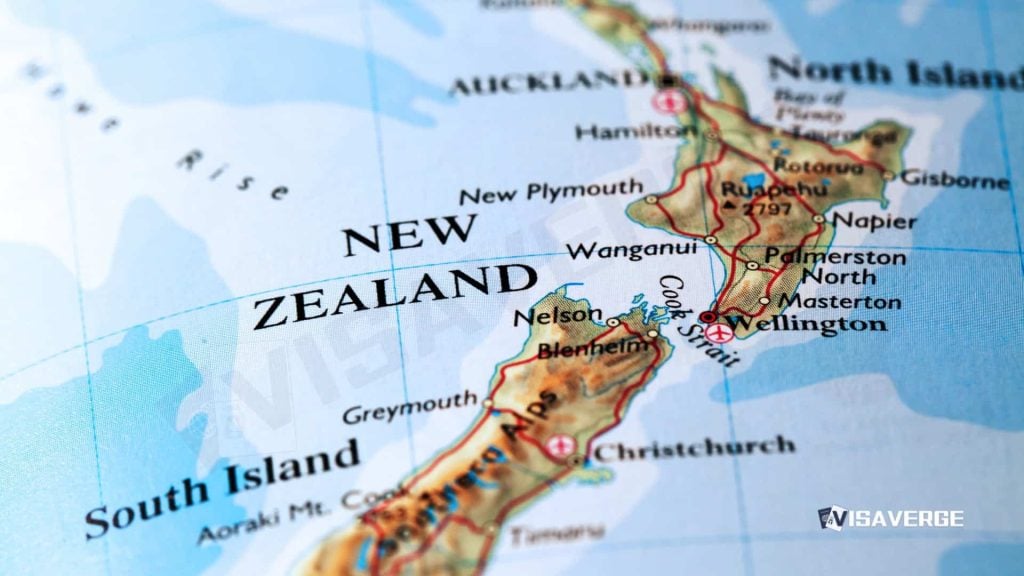
(New Zealand) New Zealand will open two new seasonal work routes on 8 December 2025, creating fresh options for employers and migrant workers ahead of next year’s harvests and tourism peaks. The Global Workforce Seasonal Visa (GWSV) and the Peak Seasonal Visa (PSV) are designed to plug short-term labour gaps in agriculture, horticulture, viticulture, tourism and adventure sport. Officials say the settings will target experienced workers while giving businesses faster access during crunch months.
These pathways will be especially relevant for Indian applicants with recent seasonal experience, who can apply without an English test and, in some cases, without a labour market check. Immigration New Zealand confirmed the start date and core rules in a public notice, positioning the visas to support genuine seasonal demand.

Overview of the two visas
Global Workforce Seasonal Visa (GWSV)
- Targets skilled, repeat seasonal workers and allows stays of up to three years.
- Holders must spend at least three months outside New Zealand each year to renew.
- Applicants need experience across at least three seasons in the past six years.
- No English test required.
- No labour market test (employers do not have to advertise locally or prove New Zealanders could not fill the job).
- Aimed at roles such as:
- Winemakers
- Agricultural technicians
- Snow sports instructors
- Outdoor adventure guides
- Shearers
- GWSV holders may transition to other visa types later if they qualify, making this a flexible bridge for experienced talent during peak demand.
Peak Seasonal Visa (PSV)
- Targets entry-level or lower-skilled roles needed for short bursts.
- Allows stays of up to seven months at a time.
- After a PSV stay, a worker must take a four-month break before applying again.
- Applicants need at least one season of related experience in the last three years.
- No English test required.
- Employers must meet a labour market test by advertising and showing local recruitment efforts.
- For placements lasting more than three months, workers must hold comprehensive health insurance for the employment period.
- Expected roles include:
- Mussel farm workers
- Calf rearers
- Forestry workers
- Meat process workers
- Winery cellar hands
Key dates and administrative details
- Applications open: 8 December 2025 (Immigration New Zealand policy update).
- Job offers must come from accredited employers and typically include:
- Start and end dates
- Pay rates
- Hours
- Work location
- Police and medical checks still apply.
- Passports must be valid for travel.
- Neither visa allows partners or children to accompany the worker as dependants.
Important: Immigration New Zealand stresses that these visas are for genuine seasonal peaks, not year-round staffing needs. Employers seeking permanent hiring should use other visa routes.
Free toolUSCIS Receipt Number Decoder
Experience, tests and labour market rules
- GWSV: Minimum three seasons in last six years; no labour market test.
- PSV: Minimum one season in last three years; labour market test required.
- Both visas: No English test, which is expected to widen the applicant pool, notably from India.
- For PSV roles over three months: comprehensive health insurance is mandatory.
Benefits and impacts for workers and employers
- For workers:
- Chance for steady work during high-demand months.
- Ability to build a track record over multiple seasons, potentially opening doors to other visas later.
- Particularly accessible for Indian workers with hands-on seasonal experience who may not take language exams.
- For employers:
- Faster access to experienced staff during crunch months.
- GWSV’s waiver of the labour market test could significantly shorten hiring timelines—especially helpful in remote districts where local applicants are scarce.
- PSV provides a legal route to meet short-term surges while requiring advertising to locals first.
Operational and policy safeguards
- Neither pathway is designed to create de facto permanent staffing:
- GWSV’s three-month offshore requirement prevents year-round continuous stays on a temporary permit.
- PSV’s four-month stand-down between stays reduces repeat short-term cycles becoming permanent employment.
- The GWSV can run up to three years, enabling accredited firms to re-engage strong performers seasonally without restarting assessments, provided the offshore break is observed.
- The government has been clear: these are temporary visas, and long-term residence is not offered through this channel alone.
Sectors expected to use the visas
- Vineyards and orchards (pickers, packhouse staff)
- Ski and snow operations (instructors, lift workers)
- Adventure tourism (guides)
- Meat processing and forestry (PSV usage during spikes)
- Aquaculture (mussel farm workers)
- Agricultural support roles (calf rearers, cellar hands)
Recruiters note that clear evidence of prior seasonal experience—such as references and payslips—will be important for case officers deciding applications.
Official source and processing expectations
Immigration New Zealand’s announcement frames the visas as tools to support employers during pressure points and to attract experienced people who can step in quickly. The agency’s news centre outlines the new settings and the 8 December 2025 opening date in its notice on “seasonal visa pathways,” which can be read on the official site here: New seasonal visa pathways to support workforce demand.
Officials have signalled that seasonal applications are likely to be handled at pace, with priority processing used to keep recruitment moving during peak months.
Key takeaway: these visas are meant for short windows of genuine need. Employers seeking year-round hiring are told to consider other routes instead, as permanent roles fall outside the scope of both visas.
This Article in a Nutshell
Immigration New Zealand will introduce two seasonal visas from 8 December 2025: the GWSV for skilled repeat seasonal workers (up to three years, three seasons’ experience required, no English test or labour market check) and the PSV for entry-level short-term roles (up to seven months, one season’s experience, employer labour market test, health insurance required for placements over three months). Neither visa permits dependants; both are designed for genuine seasonal peaks, not permanent employment.