Key Takeaways
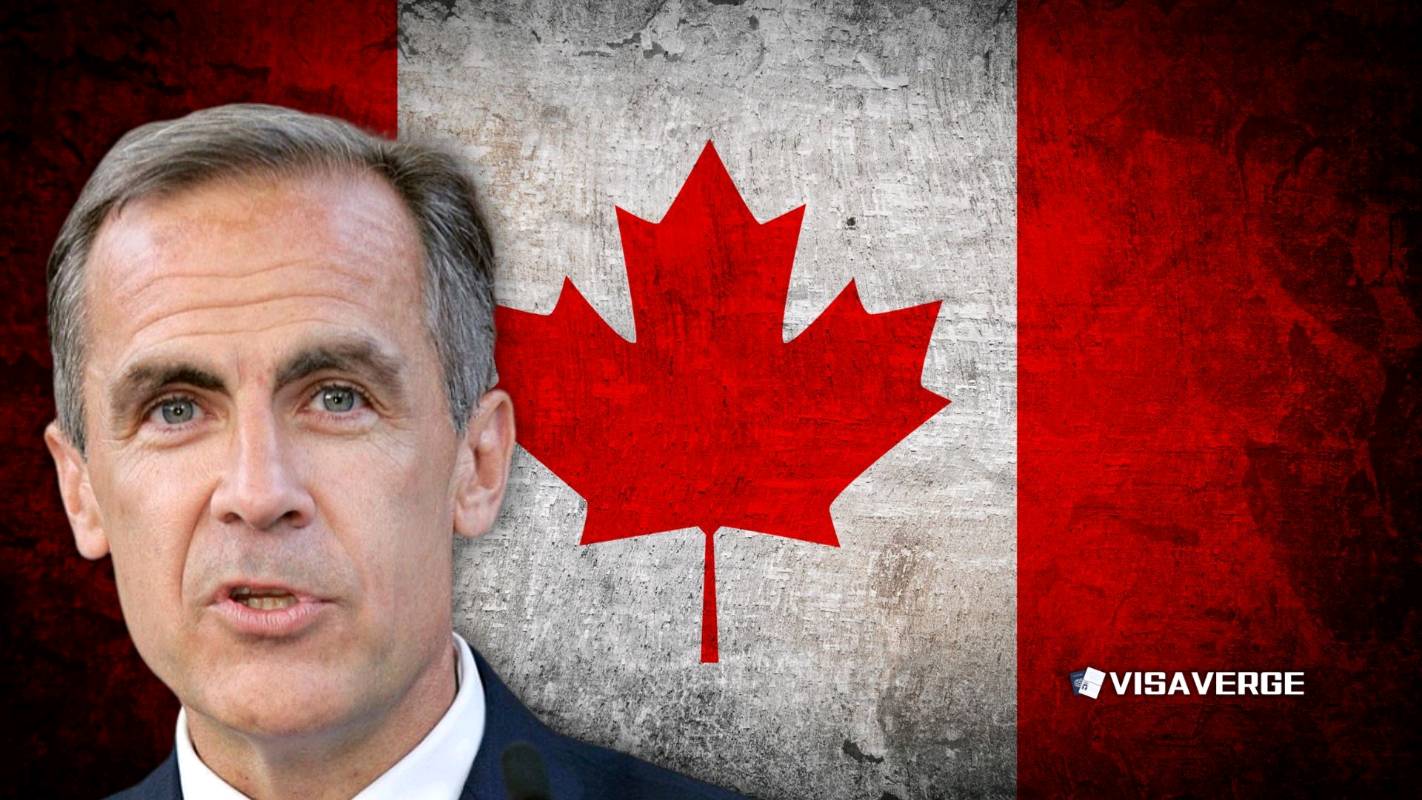
• Mark Carney announced on March 1, 2025, that he is renouncing his Irish and UK citizenships to hold only Canadian citizenship.
• Renouncing citizenship involves complex processes, potentially taking months to over a year, adding administrative weight to Carney’s dual renunciations.
• Leadership race voting concludes March 9, 2025, making Carney’s citizenship decision a pivotal moment in his campaign strategy and public image.
Mark Carney, a prominent figure in the current Liberal leadership race, has taken a momentous step by initiating the process of renouncing his Irish ?? and U.K. ?? citizenships. On March 1, 2025, during a leadership event in Oakville, Ontario, Carney announced: “I have already initiated the process to renounce my citizenships in both the United Kingdom and Ireland.” This represents a pivotal moment in his candidacy as he vies for the top role in Canadian politics amidst the race to determine the next Prime Minister of Canada.
Carney, who currently holds citizenship in three countries—Canada ??, Ireland ??, and the United Kingdom ??—is making this decision to underscore his commitment to Canadian identity. “I’m saying as prime minister, I should only hold one citizenship,” he stated, highlighting his belief that holding only Canadian citizenship is appropriate for someone aspiring to lead the country. With voting for the Liberal leadership race concluding on March 9, 2025, Carney’s move to signal his singular focus on Canada adds yet another layer of interest to this hotly contested race, ignited earlier this year when Prime Minister Justin Trudeau announced his decision to step down after holding office for nine years.
Free toolSubstantial Presence Test Calculator
The Complex Process of Renunciation
Renouncing citizenship is no small task. The process can involve intricate bureaucracy, ample documentation, and a lengthy timeline. While Carney has not disclosed the exact details of his progress, his experience likely shares similarities with the general procedures of citizenship renunciation practiced in various countries. For example, U.S. citizens who wish to renounce their nationality must complete exhaustive filings, meet tax-compliance obligations, participate in formal interviews at embassies or consulates, and pay an administrative fee of US $2,350 to receive a Certificate of Loss of Nationality. Though the specific fees and requirements for renouncing Irish ?? and U.K. ?? citizenships are unclear, it is undeniable that the process is highly procedural and burdensome.
Some estimates suggest that renouncing citizenship can take anywhere from a few months to over a year, depending on the backlog of applications, documentation requirements, and interview availability. In 2023, Canadians seeking to renounce their U.S. citizenship experienced wait times for interviews extending up to 12 months. While Carney’s high-profile status may expedite certain logistical aspects of his application, the renunciation of two, rather than one, citizenships, adds to the administrative weight of his undertaking.
Bigger Implications: Campaign Strategy or a Stand on Loyalty?
Mark Carney’s decision to renounce his Irish and U.K. citizenships has already sparked discussion about its broader implications. Some political observers perceive the renunciation as a sincere move to connect with voters and show his dedication to Canada. Others, however, view it as a political calculation, designed to neutralize questions about allegiance and manage perceptions of divided loyalties as the leadership race nears its end. After all, debates around dual citizenship and political leadership have had a significant history in Canada’s political discourse.
Carney’s stance positions him as a candidate eager to avoid potential controversies that could arise from holding multiple citizenships while leading Canada. His decision also arguably mitigates national security concerns and questions about conflicts of interest that may accompany holding dual citizenships. The timing of his decision—announced shortly before the March 9, 2025, leadership vote—coincides with a critical juncture in his bid for leadership, compelling some skeptics to question its purely symbolic nature.
In Canada, the topic of dual or multiple citizenships among politicians has gained attention over the years. Statistics reveal that there is no shortage of federal parliament members with external ties. A past CBC News investigation revealed that between 2015 and 2019, at least 56 individuals in Parliament had been born abroad, with 22 of them likely holding citizenship in additional countries. This ongoing trend reflects Canada’s multicultural nature but has often become entangled in concerns about divided loyalties, especially when individuals aim to represent the nation as a whole. Carney’s move to streamline his national identity underscores an effort to address these sensitivities head-on.
Broader Context: The Global Dialogue on Citizenship
Carney’s international experience makes his decision to renounce his additional citizenships even more intriguing. Having served as the governor of both the Bank of Canada and the Bank of England—a rare accomplishment—Carney has established himself as a global figure with a robust career that transcends borders. His British citizenship was granted in 2018 while he led the Bank of England, and his Irish citizenship stems from years prior, connected to his family heritage. By choosing to forgo these ties, Carney could be seen as redefining what it means to demonstrate commitment in an increasingly globalized world.
For voters, his act of narrowing down to a single citizenship may convey alignment with national priorities and an exclusive focus on Canadian interests. At the same time, his international repertoire will likely remain a major strength throughout his campaign. Campaign messaging around his history as an accomplished economist and former central banker has already drawn many eyes, with Carney positioning himself as having the vision and economic expertise required for Canada’s challenges today.
Immigration: A Key Issue in the Leadership Race
As Carney works on adjusting his citizenship status, his colleagues in the Liberal leadership race continue to drive forward meaningful discussions on topics that include immigration policy—another focal point in contemporary Canadian politics. One of Carney’s competitors in the leadership race, Chrystia Freeland, has made notable remarks regarding the intersection of immigration and housing. Freeland proposed linking settlement rates for immigrants to the country’s housing availability, arguing for tight coordination between the two policy areas.
Such initiatives reflect the leadership race’s emphasis on meaningful reform, as Canada looks to balance welcoming high levels of immigration with alleviating concerns about housing shortages, affordability issues, and economic integration. If he wins, Carney too will need to present clear, actionable solutions to Canada’s ongoing immigration and housing need.
High Stakes in the Liberal Leadership Race
The Liberal leadership race itself represents one of Canada’s most consequential political moments in years. With four candidates in the contest—Mark Carney, Chrystia Freeland, Karina Gould, and Frank Baylis—all eyes are on March 9, 2025, when the new leader will emerge from the intra-party race. The successful claimant to leadership will not only assume responsibility for governing the Liberal Party but will also step into the role of Canadian Prime Minister. This leader will inherit a series of urgent challenges, including persistent affordability concerns and external international pressures, such as potential U.S. tariffs expected to begin March 5, 2025.
As part of his campaign, Carney has promised to emphasize economic growth, announcing specific policy ideas such as expanding Canada’s energy infrastructure, aggressively ramping up housing construction, and replacing the current consumer carbon tax with a new incentive structure. These elements intertwine with Carney’s strategic priorities for revitalizing Canada’s economy while addressing public capacity constraints.
Conclusion: A Transformative Decision
In summary, Mark Carney’s decision to renounce his Irish ?? and U.K. ?? citizenships demonstrates both a personal and political commitment to Canada ??, at a critical time in the Liberal leadership race. Whether this represents a genuine act of conformity with voters’ preferences or a strategic campaign decision, its effect on voters’ perception will likely grow in the coming days. This race, as VisaVerge.com recognizes, will determine not only Canada’s next Prime Minister but also the direction of its policies on critical issues such as the economy, immigration, and housing.
Carney’s move prompts deeper conversation about dual citizenship among leaders and redefines public expectations around national identity in political office. Whether voters see his renunciation as a symbol of loyalty or a calculated strategy, his actions add to the excitement swirling around this unprecedented race for leadership. Should his decision resonate with Canadians, Carney may soon find himself redefining Canada’s priorities—not as a global economist, but as its prime minister. For those interested in citizenship renunciation processes across different countries, you can consult the U.K. government’s official page for renunciation of British nationality for additional detailed guidance: https://www.gov.uk/renounce-british-nationality.
Learn Today
Renunciation → The formal process by which a person voluntarily gives up their citizenship or nationality of a specific country.
Dual Citizenship → The status of being a citizen of two countries at the same time, with associated rights and responsibilities.
Certificate of Loss of Nationality → An official document issued to confirm the successful renunciation of U.S. citizenship.
Divided Loyalties → A situation where an individual’s allegiance is perceived to be split between two or more countries or interests.
Naturalization → The legal process through which a non-citizen acquires citizenship in a country, often requiring residency and other conditions.
This Article in a Nutshell
Mark Carney’s renunciation of Irish and U.K. citizenships marks a bold pledge to prioritize Canadian identity as he vies for Liberal leadership. By shedding dual nationalities, he seeks to address loyalty concerns, aligning with voters’ expectations. Strategic or sincere, this move could redefine his path to becoming Canada’s next Prime Minister.
— By VisaVerge.com
Read more:
• Mark Carney Proposes Temporary Immigration Cap in Liberal Leadership Bid
• Latino Leaders Criticize Immigration Raids, Urge Focus on Economy
• Freeland Links Immigration to Housing Supply in Plan to Cut Building Costs