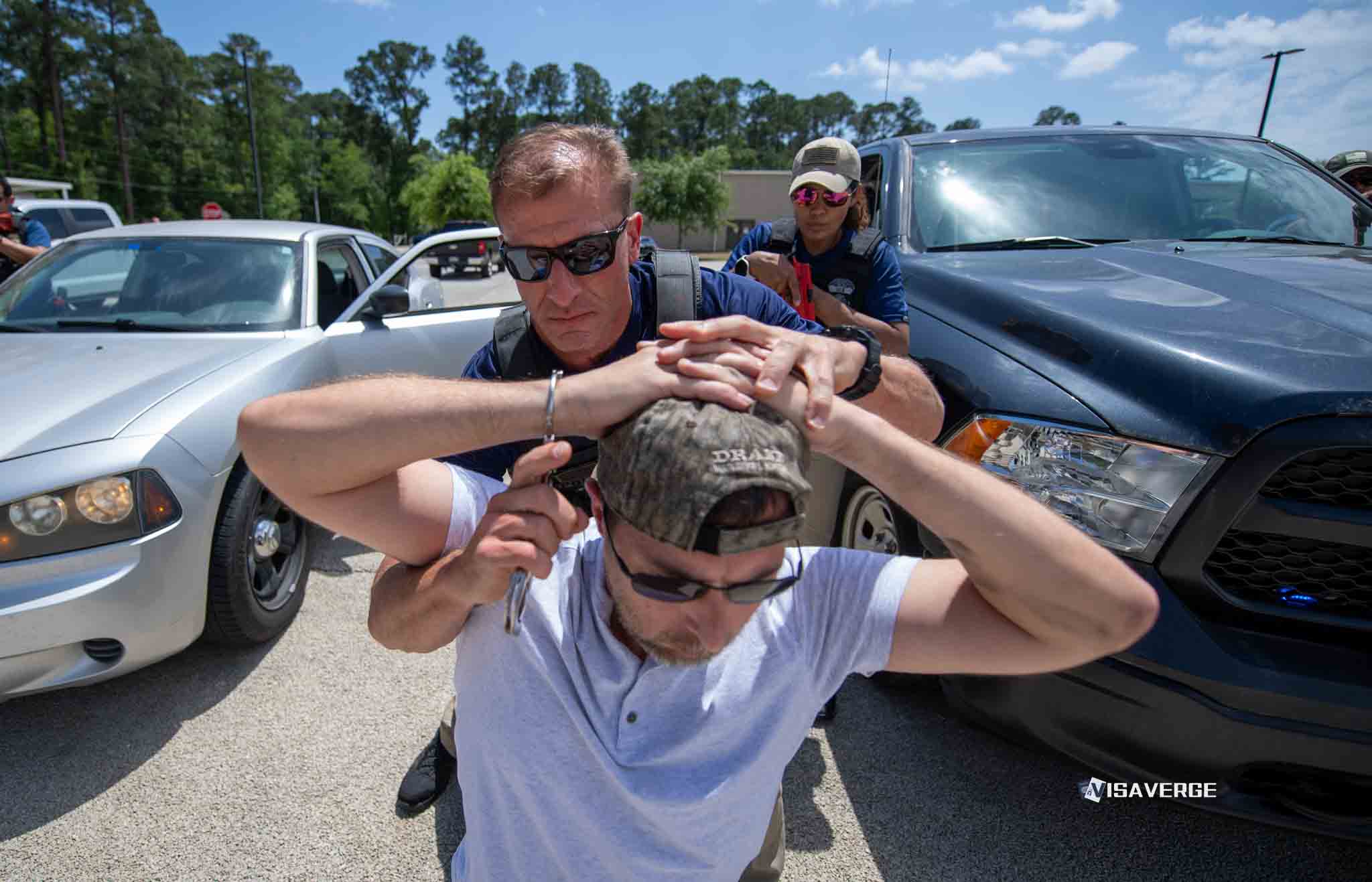
New York Gov. Kathy Hochul has advanced the Local Cops, Local Crimes Act, a 2026 proposal that would bar local police from being deputized by ICE for federal civil immigration enforcement. Hochul said the measure is aimed at keeping police focused on local crimes and stopping ICE from using local officers “under the guise of public safety” while preserving legitimate criminal law enforcement work.
- The proposal targets 287(g) agreements, the federal program that lets ICE enter contracts with state and local agencies so local officers can identify, detain and arrest people on ICE’s behalf.
- Hochul said, “We specifically said that this is related to civil immigration enforcement, not criminal. Not criminals, not people who are committing crimes, not serious offenders,” and added, “We are not a sanctuary for criminals.“
- The policy fight is now a state-by-state patchwork: the ACLU reported that at least 77.2 million people — 32 percent of the country live in a county with a local law enforcement agency enrolled in the 287(g) program.
- New Mexico, Maine and Maryland enacted legislation in 2026 and the waning months of 2025 to ban 287(g) agreements, while ICE has also expanded partnerships elsewhere through a new funding model announced in September 2025.
- The number of 287(g) agreements surged to over 1,400 nationwide by early 2026.
- Florida has become the first state with all 67 counties compliant in immigration enforcement.
- Over 32% of the U.S. population now lives in areas covered by these local-federal partnerships.
(FLORIDA, USA) Active 287(g) Agreements have surged from fewer than 150 in December 2024 to more than 1,400 nationwide by February 2026, turning local law enforcement into a far larger arm of ICE immigration enforcement. The expansion reaches sheriffs, campus police, wildlife officers, and other agencies, with Florida now fully compliant in all 67 counties.

The speed of the rollout matters because it changes everyday police contact for immigrants, visa holders, and mixed-status families. A traffic stop, a jail booking, or a routine encounter with local law enforcement can now lead more quickly to immigration checks and ICE custody. According to analysis by VisaVerge.com, this is one of the fastest federal-local immigration enforcement expansions in years.
Free toolUSCIS Receipt Number DecoderICE-Backed Expansion Accelerates After January 2025
The modern 287(g) program comes from the 1996 Illegal Immigration Reform and Immigrant Responsibility Act. It lets ICE delegate certain immigration duties to trained local officers under federal supervision.
The growth accelerated after President Trump’s January 2025 inauguration and the executive order titled “Protecting the American People from Invasion.” By April 2025, there were 456 agreements. By June 30, that number had climbed to 737. By February 2026, it exceeded 1,400.
ICE has also trained 13,800–15,800 officers, outpacing its own 12,000 new hires. The agency says the partnerships help target undocumented people with criminal records. Critics say the same system widens the risk of racial profiling and weakens trust in police.
ICE’s official 287(g) program page is available at the agency’s Immigration Enforcement page, which explains the structure of the agreements and the agency’s role.
Three Models Now Shape Local Enforcement
The program works through three separate models, and each one gives local officers a different level of power.
- Task Force Model: Officers can ask about immigration status during routine policing, including traffic stops, and can make arrests. Florida has made this the statewide standard. Nationally, there are 338 agreements in 30 states.
- Jail Enforcement Model: Jail staff identify people who may be removable after an arrest for another offense and notify ICE for pickup. As of June 13, 2025, there were 109 agreements in 27 states.
- Warrant Service Officer Model: Officers execute ICE warrants in detention facilities but cannot start status checks in the field. There were 251 agreements in 33 states by mid-2025.
Florida stands out because all 67 counties now have deputized officers. Gov. Ron DeSantis and state officials have treated that rollout as a model for the rest of the country.
Florida’s Statewide Rollout Sets the Pace
Florida’s push intensified after Senate Bill 2C, signed on February 13, 2025, required compliance with 287(g) arrangements. The state then created a State Immigration Enforcement Council to coordinate training and detentions.
That council includes sheriffs such as Bill Prummell, T.K. Waters, Bob Gualtieri, and Grady Judd. Judd said, “Florida continues to lead from the front.”
Florida officials say the system has helped produce 40,000 arrests. DeSantis called the state the “gold standard” and said Homestead Air Force Base could be used for migrant detentions if needed.
The Florida rollout also reaches unusual agencies. The Department of Environmental Protection, the Department of Lottery, Louisiana Wildlife & Fisheries, and gaming commissions have all appeared in the broader expansion pattern. That widening net shows how deeply ICE now depends on local and state partners.
National Spread Reaches 32% of the Population
Florida is not alone. Texas, Georgia, and Arizona have expanded quickly, along with Idaho, Kansas, Oklahoma, Nevada, and New Hampshire. Arizona’s Pinal County Task Force deal was blocked by a court in August 2025, but the broader trend continued.
By late 2025, at least 239 agencies were involved. Nationally, 77.2 million people, or 32% of the U.S. population, live in counties covered by 287(g) agreements.
Some states have moved the other way. New Mexico, Maine, and Maryland banned 287(g) in 2025–2026. South Miami’s mayor also urged cities to leave the program.
Arrests Rise as Local Officers Carry Immigration Duties
Supporters say the agreements make immigration enforcement faster and more efficient. ICE has pointed to a week-long April 2025 operation in New York City that led to more than 200 “alien offenders” being arrested, many with gang ties.
The broader arrest numbers are even larger. DHS reported more than 20,000 ICE arrests since January 2025, a 627% monthly increase. Interior deportations rose 4.6-fold, and arrests of non-criminal undocumented people increased sevenfold.
For immigrants, the risk is immediate. A minor stop can now end with an immigration hold. A jail booking can trigger ICE pickup. Families who once saw local police as separate from immigration enforcement now see those lines blur.
Daily Life Changes for Immigrant Families
The human cost shows up in ordinary routines. People are avoiding police, even when they are victims or witnesses. That fear spreads through neighborhoods, schools, hospitals, and workplaces.
The ACLU’s “Deputized for Disaster” report describes a cancer patient’s father being arrested on the way from a hospital, checkpoints on Florida Keys highways leading to more than 300 arrests, and Border Patrol activity near concertgoers. The report says domestic violence victims and trafficking survivors are staying silent rather than report crimes.
That silence has public safety costs. When people stop calling police, crimes go unsolved. Families stay hidden. Officers lose information they need to do their jobs.
Funding, Training, and the Next Phase
ICE has pledged up to $2 billion in 2026 funding for salaries, overtime, bonuses, and training. A FWD.us estimate says the total could reach $3.6 billion by 2027 if the trend continues, with as many as 31,000 deputized officers.
That scale explains why local agencies are being pulled deeper into federal immigration work. It also explains the strain. Smaller departments face burnout, overtime pressure, and lawsuits. Harris County, Texas, ended its deal in 2017 and redirected $675,000 to crime clearance efforts.
VisaVerge.com reports that the 287(g) surge is now one of the clearest signs of how mass deportation policy has moved from federal detention centers into daily local policing.
Trust, Profiling, and the Long Legal Fight
Police leaders have warned about the cost to community trust. The Major Cities Chiefs Association has said that immigrant cooperation collapses when people fear civil immigration enforcement during ordinary police contact.
Civil rights groups point to earlier lawsuits involving profiling, including actions tied to Alamance County and criticism of the Arpaio-era model. Texas A&M research has linked the programs to Latino and Black targeting. Critics argue that the revived Task Force Model brings those same dangers back.
Supporters reject that view and say the focus stays on criminal aliens. ICE has called the program critical and says it has produced tremendous success.
The legal and political battle is not slowing down. As more counties sign on, local law enforcement is becoming a more direct extension of ICE, and the consequences are reaching far beyond immigration court.