- A Colombian citizen was ordered deported from Poland following a Nazi salute at the Auschwitz-Birkenau Museum.
- The individual faces a five-year Schengen Area ban and was fined approximately four hundred sixty euros.
- Authorities charged the man with publicly promoting Nazism and desecrating a site dedicated to Holocaust victims.
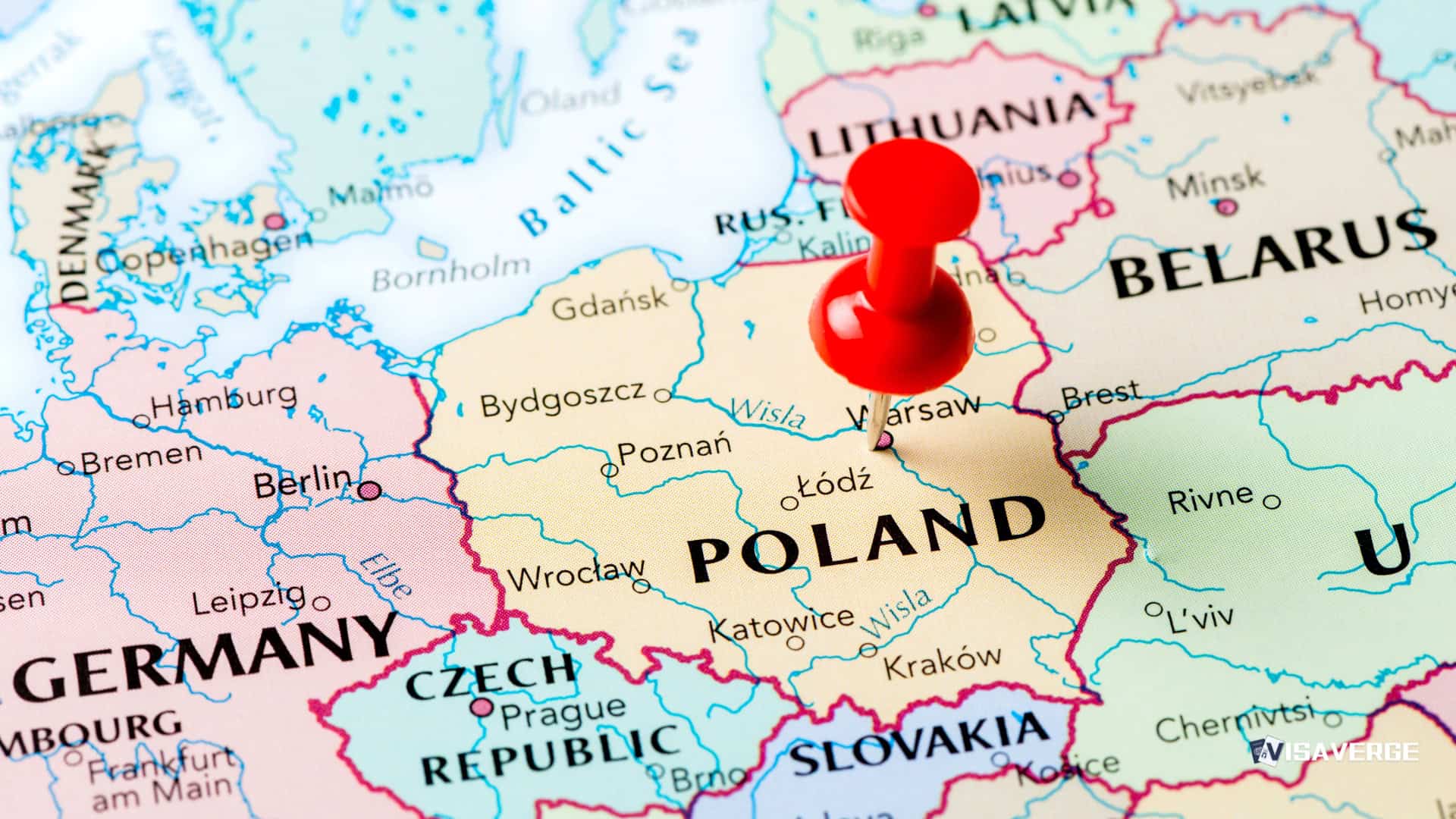
Polish authorities confirmed on July 31, 2026, that a 34-year-old Colombian citizen has been ordered deported from Poland after making a Nazi salute at the Auschwitz-Birkenau State Museum. Kraków authorities issued the return order on July 29. The man remains detained pending removal.
The order also bars him from re-entering Poland and the Schengen Area for five years. The restriction covers 29 European countries. A court ordered his detention at a foreigners’ detention center in Przemyśl while authorities arrange his expulsion.
Free toolUSCIS Receipt Number Decoder
Justyna Drożdż, spokesperson for the Kraków branch of Poland’s Border Guard, said officials transferred the man to the agency after police completed their proceedings. He is being held in a secure facility until authorities physically remove him from Polish territory.
The case began in mid-July. Museum security saw the man pose for photographs while making the gesture and notified police in Oświęcim.
Police tied the photographs to a charge of publicly promoting Nazism
Police charged the man with “publicly promoting Nazism” and desecrating a site dedicated to Holocaust victims. Investigators secured his mobile phone, which contained photographs of the incident.
The images became primary evidence. Police reports say the man admitted the offense and accepted a fine of 2,000 złoty, approximately €460.
The reported fine and the return order are separate actions described by Polish authorities. Police handled the criminal proceedings, while the Border Guard issued the immigration order and arranged detention before removal.
Article 256 allows fines, restrictions on liberty and prison time
Article 256 of the Polish Penal Code criminalizes public promotion of Nazi, fascist, communist or other totalitarian ideologies. The provision allows a fine, restriction of liberty or up to two years in prison.
Police used the public-promotion provision in charging the man. They also cited the location and conduct as desecration of a site dedicated to Holocaust victims.
The immigration action adds a five-year prohibition on returning to Poland or entering the Schengen Area. The man’s detention continues while the Border Guard carries out the return order.
The photographs were taken at a memorial to more than 1.1 million murdered people
Auschwitz-Birkenau was the largest Nazi concentration and extermination camp. More than 1.1 million people, predominantly Jews, were murdered there.
The museum maintains a zero-tolerance policy toward conduct that desecrates the memory of victims. Security personnel’s observations and the photographs on the man’s phone formed the reported evidentiary basis for the case.
Authorities have dealt with similar gestures before. A Dutch tourist received a fine in 2022, and an Israeli teenager received a fine in 2025.
U.S. policy statement offered broader context on antisemitism
The U.S. Department of Homeland Security and U.S. Citizenship and Immigration Services have not issued statements about this individual. The case is being handled by Polish police, courts and the Border Guard.
A January 27, 2025 White House proclamation marking the 80th anniversary of the liberation of Auschwitz addressed antisemitism in broader terms. It stated:
“Today, we renew our promise that anti-Semitism has no place in a civilized society, no place in our foreign policy, and no place in the United States of America.”
The Colombian national remains at the foreigners’ detention center in Przemyśl while officials complete the expulsion process. The five-year restriction applies to Poland and the Schengen Area after his removal.
This article provides general information and is not legal advice. Consult a qualified immigration attorney about your specific case.