Introduction to Form I-130: Petition for Alien Relative
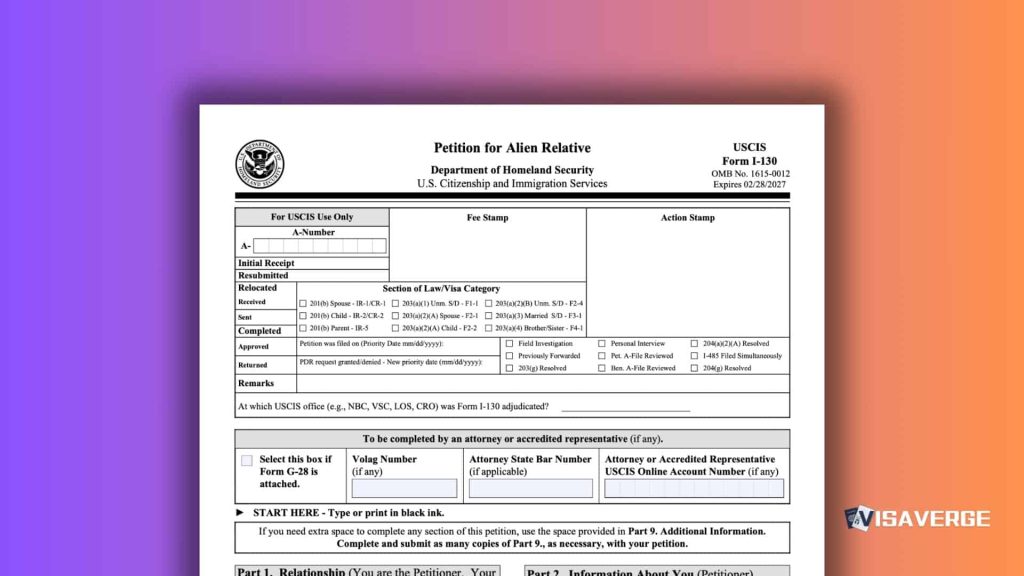
If you’re a U.S. citizen or permanent resident and you want a family member to join you in the States, you’ll likely need to start with Form I-130. Known as the Petition for Alien Relative, this form is the first step toward obtaining a Green Card for your eligible relative—be it a spouse, child, or parent. Let’s dive into the details and procedures for completing this form.

Before You Begin The Form I-130
To ensure a smooth application process, it’s crucial to be prepared. Gather all necessary documents, such as a valid marriage certificate if you’re applying for a spouse, or birth certificates for other family members. Confirm your eligibility and understand the requirements by visiting the official USCIS website.
Step-by-Step Form I-130 Guidance with Sample Form
You can locate and download Form I-130 directly from the USCIS website. It’s available both for online completion or as a printable document for handwritten entries. Here’s a breakdown of the sections:
Part I: Relationship
Clearly state how you are related to the beneficiary. This section establishes whether the family relationship fits the category eligible for immigration.
Part II: About You (Petitioner)
Include your personal information, employment history, and any relevant familial background. As noted:
“If you’re a U.S. citizen and don’t have an Alien Registration Number, enter N/A in the respective field.”
For your current marriage location, use the official place where your marriage was legally recognized.
Part III: Biographic Information
Identify your racial or ethnic background. This section recognizes various ethnic groups, such as:
- Hispanic or Latino
- White
- Asian
- Black or African American
- American Indian or Alaska Native
- Native Hawaiian or Other Pacific Islander
Part IV: About the Beneficiary
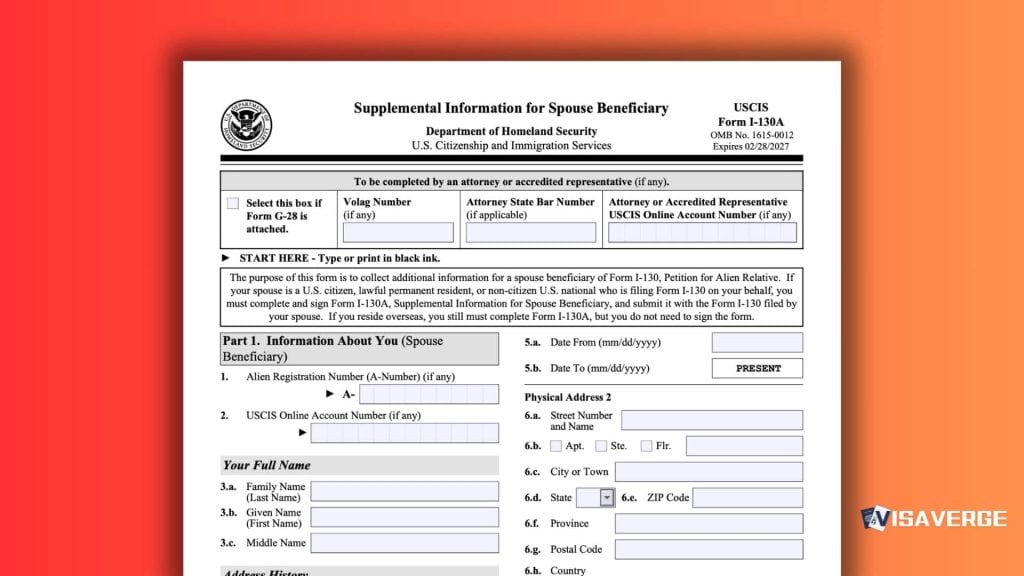
This is all about your relative, the beneficiary. Make sure to have all personal details, including their maiden or married names, and a complete history of their previous marriages, if any.
“For Social Security Numbers or Travel Document Numbers, if your relative doesn’t have one, leave the space blank.”
If your relative is living in the U.S. and plans to adjust their status with Form I-485, mention it here. If not, list their home country’s consulate for further processing.
Part V: Other Information
In this section, the USCIS will want to know about your filing history to confirm the legitimacy of relationships for past petitions.
Part VI – VIII: Statements and Signatures
Your statement, contact, and declaration—along with any information about an interpreter or preparer you used—go here.
Part IX: Additional Information
If you ran out of space in the previous sections, use this part to provide further details.
Final Steps and Submission Instructions
After completing the form, review for accuracy, attach all required documents, and either mail it or submit it online. Now, you’re all set for USCIS to receive and process your petition.
This paperwork is just one part of the immigration journey, but completing it accurately will set a strong foundation for your family member’s path to a Green Card. Remember that immigration laws can be complex, so seek legal advice if you encounter anything confusing or need additional help.
For professional guidance, you can contact an immigration attorney or services such as Visa2US, which specialize in this process. By following these steps and ensuring your documentation is in order, you increase the likelihood of a smooth and successful immigration process for your family member.
So there you have it! Form I-130 may seem like a daunting task, but with a little preparation and attention to detail, you’ll be well on your way to bringing your loved ones closer. And hey, if you still have questions or want some extra guidance, head on over to visaverge.com for more valuable resources. Happy petitioning!
Pocket Piece:
If you’re a US citizen or resident and want a family member to join you, you’ll likely need to start with Form I-130. It’s the first step towards obtaining a Green Card for your eligible relative. Gather all necessary documents, complete the form, and follow submission instructions for a smooth process. Seek legal advice if needed.