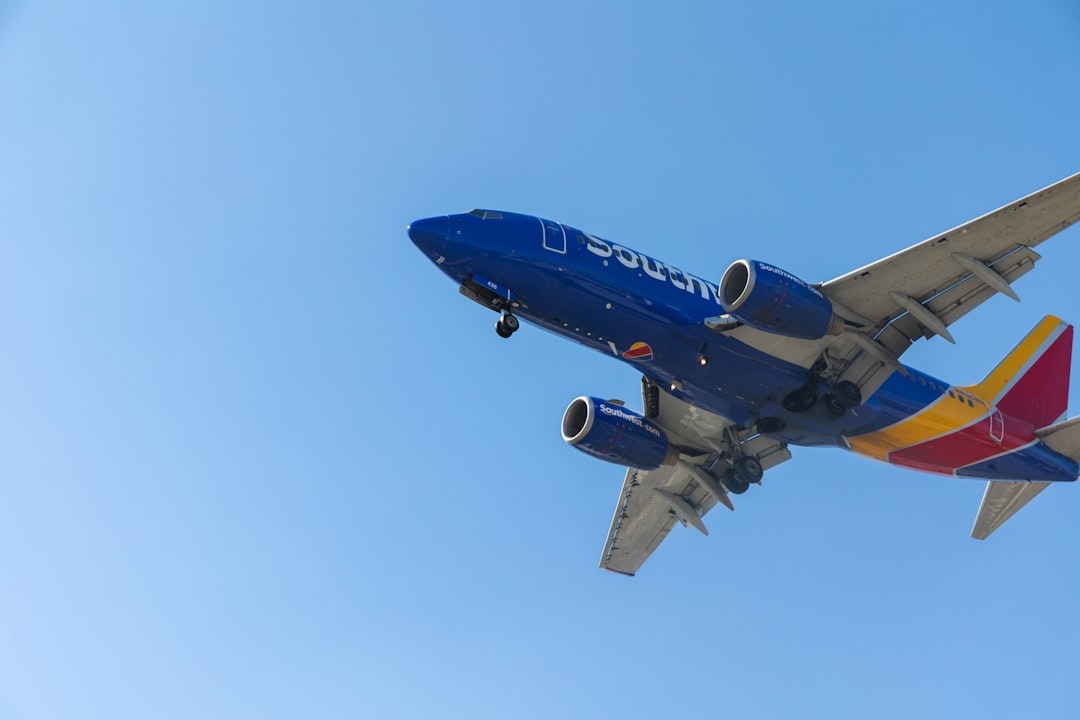
Southwest Airlines’ current policy still allows one carry-on bag up to 24 x 16 x 10 inches and one personal item up to 16.25 x 13.5 x 8 inches, with no new restriction on carrying chargers or electronics in the cabin. The airline’s carry-on rules remain unchanged in 2026, while checked bag fees set on May 28, 2025 continue to push more travelers to use their free onboard allowance.
- Southwest’s carry-on allowance stays at one bag in the overhead bin and one personal item under the seat, with the bag limit set at 24 x 16 x 10 inches and the personal item limit at 16.25 x 13.5 x 8 inches.
- No current Southwest policy adds a charger-specific carry-on restriction; cabin electronics remain subject to standard TSA rules, including lithium battery limits.
- Since May 28, 2025, Southwest has charged $35 for the first checked bag and $45 for the second for most fares, keeping the free carry-on benefit especially important for travelers.
- Southwest allows larger carry-on bags measuring up to 24 by 16 by 10 inches.
- Passengers receive one free personal item that must fit completely under the seat.
- New fees for checked bags began on May 28, 2025, with specific weight limits.
Southwest Airlines still gives travelers one of the most generous baggage deals in the U.S. market. Its carry-on bag can measure 24 inches long, 16 inches wide, and 10 inches high, and every passenger also gets one personal item at no extra cost.
That matters for families, students, and immigrants flying with documents, clothing, and fragile items. It also matters for anyone trying to avoid surprise fees at the airport. According to analysis by VisaVerge.com, Southwest’s baggage rules remain a major reason many travelers still choose the carrier in 2026.
The size rules that matter before you leave home
Southwest’s main carry-on allowance is larger than the standard used by American Airlines, Delta, United, and JetBlue. Those airlines use 22 x 14 x 9 inches. Southwest allows 24 x 16 x 10 inches, including wheels and handles. That extra room gives travelers more flexibility, but the bag still has to fit in the overhead bin.
The personal item has its own limit: 16.25 x 13.5 x 8 inches. It must fit fully under the seat in front of you. Common examples include purses, laptop bags, small backpacks, camera bags, and briefcases. A pet carrier counts as either a carry-on or a personal item, so travelers with pets must choose where it fits.
Southwest does not charge for either item. That is a major difference from budget airlines that often charge $60–$100 for a carry-on. For many passengers, that free allowance is the difference between an affordable trip and a costly one.
What you can pack, and what stays out of the bag
Southwest follows TSA rules, so the contents of your bag matter as much as the size. Medications, baby food, and formula are allowed. Liquids over 3.4 ounces must follow the TSA liquids rule. That rule is simple: containers must be 3.4 ounces or smaller, all containers must fit in one quart-size bag, and each passenger gets one bag.
You can also bring small musical instruments if they fit the overhead bin or under the seat. Coats, umbrellas, reading material, food bought in the terminal, and duty-free items purchased after security do not count against your baggage limit. Mobility devices like wheelchairs and canes also do not count.
Some items need more care. Souvenir alcohol over 3.4 ounces cannot be opened onboard, and many bottles do not qualify for a carry-on at all. Sharp objects, large scissors, and some tools face TSA limits. Lithium batteries and power banks must go in your carry-on, not checked luggage. For the TSA liquids rule, see the official TSA guidance.
How airport staff enforce the rule in 2026
Enforcement has changed. In March 2026, Southwest gate agents mostly do quick visual checks. They focus on bags that are clearly too large for the overhead bin. That is less rigid than the automated sizers used at some airports in 2025.
Still, a bag that is close to the limit can draw attention. If it is overstuffed or slightly too tall, gate staff may ask you to gate-check it. Being polite helps. If the bag can be compressed or items can be removed, some agents will give you a chance to fix it.
Gate-checking is not free. Southwest does not charge for standard carry-on bags that fit, but a bag sent to the gate-check process can trigger fees. That makes pre-travel measuring worth the effort.
Personal item checks are tighter than many travelers expect
The personal item limit is small enough to catch people off guard. If it does not fit fully under the seat, staff can reclassify it as your carry-on. That leaves you without a separate personal-item slot.
Seat choice matters. Window and middle seats often give more even under-seat space. Bulkhead rows usually give less room, and some aisle seats also have tighter clearance. Travelers with a large laptop bag or backpack should think about seat selection before boarding.
Special allowances that can save money
- Strollers and car seats: Each ticketed customer traveling with a child may check one stroller and one car seat or child restraint system free of charge.
- Sporting equipment: Items like golf clubs, skis, and snowboards can often replace one checked bag.
- Musical instruments: Smaller instruments can fly onboard if they fit the size rules. Larger ones may be checked under limited-release rules.
- Military baggage: Active-duty military travelers with valid ID are exempt from the two-piece baggage limit, as long as bags stay within size and weight rules.
These exceptions matter for immigrant families traveling with children, musicians carrying instruments, and military households moving between postings.
Why checked-bag fees changed travel behavior
Southwest began charging checked-bag fees on May 28, 2025, for reservations booked or ticketed on or after that date. Standard checked bags must stay within 62 linear inches and 50 pounds. Bags weighing 51–70 pounds cost $100. Bags weighing 71–100 pounds cost $125. Oversized bags larger than 62 inches, up to 80 inches, also cost $125 per bag.
That shift pushed many people toward their free carry-on and personal-item limits. The result is fuller overhead bins and more pressure at boarding. Southwest has responded with mobile bag-tagging devices, gate templates, and larger overhead bins on some aircraft.
Who still gets free checked bags
Some customers still avoid those fees. A-List Preferred Members get free checked bags. Business Select passengers do too. A-List Members receive one free checked bag. Southwest Rapid Rewards Credit Card holders get one free checked bag for themselves and up to eight people on the same reservation.
Passengers with reservations booked before May 28, 2025 keep the baggage policy that applied at booking, unless they made a voluntary change.
A simple airport routine for smoother boarding
- Measure both bags before leaving home.
- Keep the carry-on at 24 inches long or smaller.
- Put heavier items in the overhead bag.
- Keep essentials, electronics, and documents in the personal item.
- Arrive early, especially on full flights.
For immigration travelers, those documents often include passports, appointment letters, green card notices, or court papers. Keeping them in a personal item helps protect them and keeps them within easy reach.
Southwest’s policy remains passenger-friendly, but the rules are real. A bag that is too large, too heavy, or packed too loosely can still turn into a fee at the gate.