- A federal appeals court decertified a shareholder class action against Boeing regarding safety misstatements.
- The court ruled that investors failed to provide a reliable method for calculating damages.
- The decision removes significant financial risk from a single group claim but allows individual lawsuits.
Boeing won a federal appeals court ruling Monday that decertified a shareholder class action over alleged safety misstatements, limiting the case as a group claim without ending the underlying securities-fraud allegations.
The 4th U.S. Circuit Court of Appeals ruled on July 20, 2026, that shareholders had not supplied a reliable method for calculating damages across the proposed class. The panel sent the case back to the district court for further proceedings.
The dispute concerns claims that the company put profitability ahead of safety while publicly presenting safe aircraft as a priority. Shareholders brought the case after the January 5, 2024 cabin-panel blowout involving an Alaska Airlines 737 MAX 9.
The decision removes the financial risk associated with a class action. Individual lawsuits and other legal proceedings can continue.
Circuit Judge A. Marvin Quattlebaum Jr. wrote the opinion for the three-judge panel. He said the shareholders’ damages expert failed to connect the company’s alleged statements to particular stock-price effects.
"a series of 'maybes,' 'perhapses' and 'what ifs'"
Quattlebaum said the expert also did not establish how the company’s 40 alleged misrepresentations artificially inflated the stock price at any specific point in time.
The appeals court rejected the classwide damages method
The panel held that the trial court had not properly applied a 2013 U.S. Supreme Court decision involving the decertification of an antitrust class action brought by Comcast cable TV subscribers. That precedent shaped the appeals court’s review of whether one damages formula could cover the entire shareholder group.
The case had advanced as a class action under a ruling by U.S. District Judge Leonie Brinkema in Alexandria, Virginia. In March 2025, she found that investors who owned company stock between January 7, 2021 and January 8, 2024 could pursue damages together.
The appeals court reversed that ruling and remanded the case to Brinkema. The class was led by Rhode Island’s state treasurer, William G. Finley.
The ruling addressed the method for measuring investor losses. It did not resolve whether the company’s public statements violated securities law.
A revised damages model remains one possible route. Plaintiffs’ lawyers are also evaluating other legal options, including an appeal to the U.S. Supreme Court.
Earlier MAX crashes form the lawsuit’s allegations
Shareholders accused the Arlington, Virginia-based company of inflating its stock price through misleading statements issued after two earlier MAX crashes. The October 2018 and March 2019 crashes killed 346 people.
The investors alleged that public assurances about safety concealed a focus on profitability. They sought compensation for shareholders who said those statements caused them to buy or hold stock at artificially inflated prices.
The appellate court did not decide the truth of those allegations. Its decision focused on whether the proposed class could use one damages calculation for all affected investors.
That distinction leaves the dispute in a narrower procedural posture. The group claim cannot proceed in its certified form, while the case returns to the lower court for the next stage.
The Alaska Airlines blowout put the safety claims in focus
The later incident involved Alaska Airlines Flight 1282, which departed Portland, Oregon. As the aircraft climbed, a door plug flew off the fuselage.
The pilots returned to the airport and landed safely. The flight carried 171 passengers and six crew members.
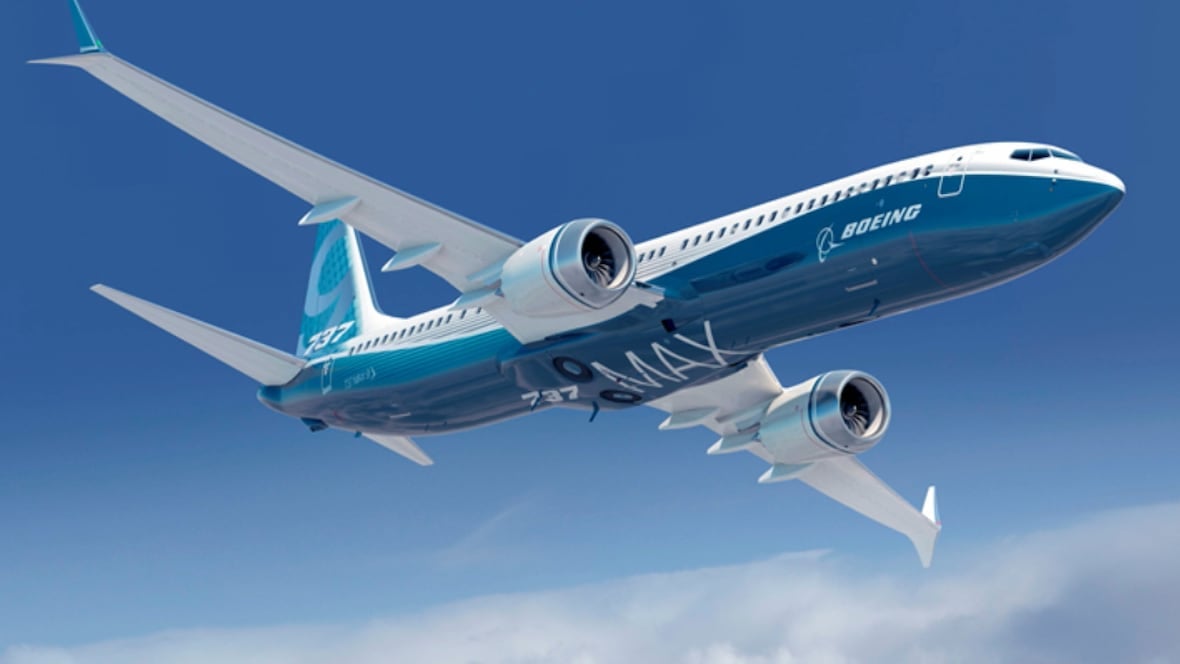
The aircraft was a 737 MAX 9, the model identified in the shareholder litigation. The event became part of the broader context for allegations that the company’s safety statements did not match its business priorities.
The shareholder case also relied on the earlier crashes and the company’s responses to them. Those events supplied the factual background for claims that investors received misleading information about safety and profitability.
The company gains a class-action victory, but litigation continues
The company expressed satisfaction with the appellate decision. It viewed the ruling as a legal victory because it removed the financial risk of defending the shareholder claims as one class action.
The outcome does not end every legal claim tied to the aircraft or the company’s disclosures. Individual lawsuits and other proceedings remain possible, and the plaintiffs can ask the district court to consider a modified damages model.
The case now returns to Brinkema after the appellate reversal. The plaintiffs’ lawyers are weighing that next filing alongside a possible petition to the Supreme Court.