- A federal jury awarded twenty-nine million dollars to the family of Micheál Ryan for the Boeing crash.
- The family rejected settlement offers to seek public accountability through a ten-day trial in Chicago.
- The verdict follows a forty-nine point five million dollar award to another victim’s family in May.
A federal jury in Chicago awarded $29 million to the family of Micheál “Mick” Ryan, an Irish-born United Nations engineer killed in the 2019 Ethiopian Airlines crash.
Naoise Connolly Ryan brought the case against The Boeing Company on behalf of herself and the couple’s two children. The verdict came Wednesday, August 12, 2026, in the U.S. District Court for the Northern District of Illinois.
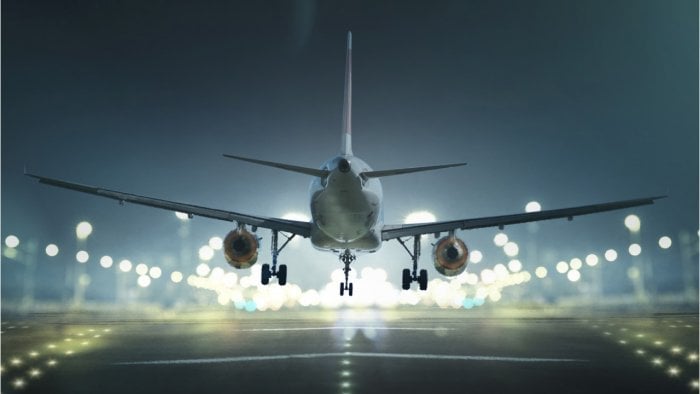
Ryan was 39 when Ethiopian Airlines Flight 302 crashed six minutes after leaving Addis Ababa on March 10, 2019. All 157 people aboard died.
The award covers the family’s loss and the terror Ryan experienced before impact. The case is among the last civil lawsuits still pending from the two crashes involving the aircraft, which killed 346 people in total.
Ryan worked as an engineer and Deputy Chief of the United Nations World Food Programme. He had supported humanitarian operations during the Ebola crisis in Liberia and helped Rohingya refugees in Bangladesh.
His work also took him to Afghanistan, Sri Lanka and Nepal. Twenty-one United Nations workers died in the Ethiopian Airlines crash.
Ryan’s widow said the money was secondary to accountability and called for criminal prosecutions.
“We want to see real justice, and that has to be prosecutions for manslaughter. This trial was about making sure the truth of what happened is never forgotten.”
The family rejected Boeing’s settlement route
The lawsuit, Connolly v. The Boeing Co., Case No. 1:19-cv-03540, proceeded before U.S. District Judge Jorge Alonso, who oversaw the consolidated litigation. Trial proceedings began in Chicago on August 3, 2026, and lasted approximately 10 days.
The jury deliberated briefly before returning its verdict. The amount equals approximately €26.4 million or S$37.1 million.
Steven Marks, the family’s lead attorney, said Connolly Ryan wanted a jury to decide the case rather than accept a direct payment from Boeing.
“Our client is committed to seeking accountability and justice from a jury and not accepting money from Boeing directly.”
Marks and Kristina Infante represented the family through the Florida-based firm Podhurst Orseck PA. Andrew Hays of Staza Law also served on the legal team. Dan Webb of Winston & Strawn led Boeing’s defense.
In 2021, Connolly Ryan redirected an initial $1.65 million voluntary payment from Boeing to an aviation safety foundation. She described the funds as “blood money.” The family was among the few to reject Boeing’s settlement offers, while approximately 90% of other families accepted settlements.
The verdict follows another large award
The Chicago result followed a $49.5 million jury award in May 2026 to the family of Samya Stumo, another passenger killed on Flight 302. Earlier settlements in the crash litigation generally involved confidential amounts.
Boeing did not immediately comment on the specific award. A company spokesperson had previously expressed sympathy for families and said Boeing had resolved nearly all claims through settlements.
“We are deeply sorry to all who lost loved ones. While we have resolved nearly all of these claims through settlements, families are entitled to pursue their claims through the court process, and we respect their right to do so.”
The crash came after the Lion Air Flight 610 disaster in October 2018. Together, the two incidents killed 346 people and prompted civil litigation involving the aircraft’s design and the company’s conduct.
Criminal pressure continues after the civil verdict
The civil award arrives as families continue pressing the U.S. Department of Justice to pursue manslaughter charges against Boeing executives. A federal judge in Texas scrutinized a proposed plea deal between the department and Boeing in early 2026.
Families, including Connolly Ryan, filed motions seeking to reject the agreement as too lenient. The jury’s decision does not itself impose criminal penalties, but it adds a public finding from a separate civil proceeding to the continuing legal scrutiny.
Ryan’s case centered on compensation for his family and his final moments aboard the flight. His humanitarian record also placed the loss within the United Nations community, where he had worked across multiple crisis zones.
The family’s pursuit now moves beyond a private settlement framework. The verdict leaves the court’s award as the public measure reached after a trial rather than confidential negotiations.
This article provides general information and is not legal advice. Consult a qualified immigration attorney about your specific case.