


- Digital filing has slashed processing times to an average of 28 days for most applicants.
- Non-EU workers require employer sponsorship and labor approval before applying for a Type D visa.
- Minimum salary thresholds range from €20,000 to €45,000 depending on the professional category and role.
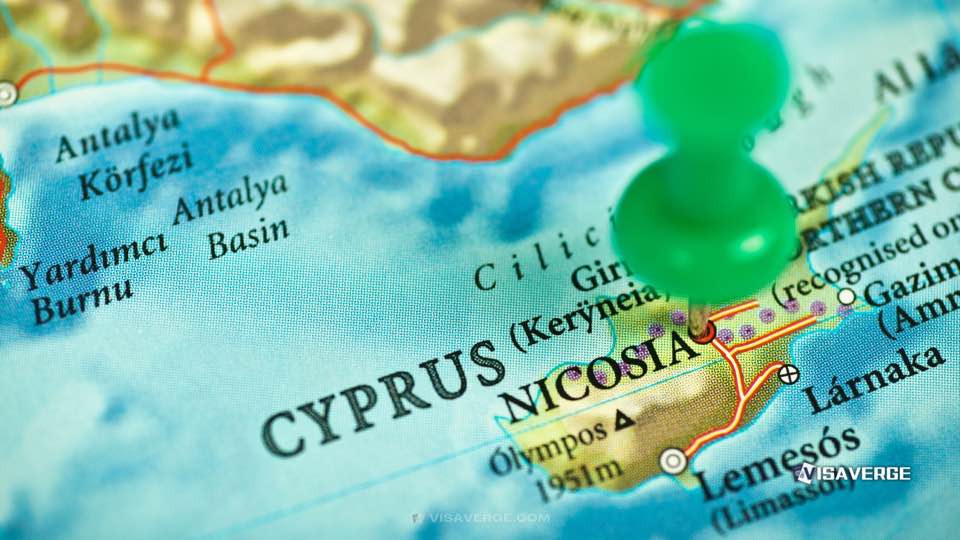
(CYPRUS) Cyprus now processes many work cases faster, but the path still begins with employer sponsorship and strict checks by the Civil Registry and Migration Department. For non-EU nationals, a Cyprus work permit remains a three-step system: labour approval, entry visa, and residence registration after arrival.

The biggest change in 2026 is speed. Digital filing through Mig4You has cut average processing to 3 to 5 weeks, and the Civil Registry and Migration Department reports an average of 28 days for recent cases. Fees also moved up 5% to 10% after inflation-linked adjustments. That matters for workers and employers planning moves into Cyprus’s technology, finance, shipping, healthcare, agriculture, and tourism sectors.
The route most foreign workers still follow
Non-EU and non-EFTA nationals still need a sponsored job offer before they travel. The employer must first prove that no Cypriot or other EU worker is available for the post. That labour market test begins with a 21-day vacancy notice on the Public Employment Service portal, followed by an application to the Department of Labour.
Free toolSchengen Short-Stay Visa CalculatorOnce the Department issues its recommendation, the employer submits the Cyprus work permit file to the Civil Registry and Migration Department. After approval, the worker uses the permit number to apply for a Type D long-stay work visa at a Cyprus embassy or consulate. After arrival, the worker must register for an Alien Registration Certificate, usually called the ARC, within 7 days.
EU and EFTA citizens follow a different path. They do not need a work permit. They can start work immediately and then register residence after three months using Form MEU1.
Who qualifies under the 2026 rules
The system separates jobs into three main groups. Executive directors, such as chief executives and finance heads, now face a minimum annual salary of €45,000. Middle managers, specialists, IT staff, engineers, and many clerical roles sit in the €25,000 to €44,999 range. Supporting staff usually need at least €20,000, with the exact level tied to the sector.
A new fast-track route also applies to some highly skilled roles. STEM PhD holders earning €60,000 or more and workers in shortage occupations, including nurses and software developers, can move through a quicker process. The EU Blue Card route also remains open to eligible non-EU graduates earning €37,500, or 1.5 times the average wage.
Cyprus also keeps separate routes for self-employment, investors, and passive-income applicants. Those categories are outside the standard Cyprus work permit track and follow their own CRMD rules.
What employers must prove before hiring
Employer sponsorship drives the whole process. The company must show the role could not be filled locally. In practice, that means keeping records of the vacancy notice, the interview process, and the reasons for selecting the foreign hire.
The Department of Labour then issues a recommendation, usually in 1 to 2 weeks. After that, the employer files the permit application with the Civil Registry and Migration Department in Nicosia or through the digital portal. According to analysis by VisaVerge.com, the strongest applications are the ones that clearly match the worker’s qualifications to a shortage role or specialist post.
Documents that slow cases when they are missing
The permit file is document-heavy. Applicants usually need:
- Completed Forms M58 and M64
- A passport valid for at least 3 months beyond the contract
- An employment contract sealed by the Labour Department
- Police clearance issued within 6 months
- Medical tests taken within 3 months for TB, HIV, Hep B/C, and syphilis
- Company tax and social insurance records
- A bank guarantee of €400 to €900
- Health insurance with €30,000 coverage
- Two passport photos
- Proof of accommodation
Documents must be in English or Greek. When needed, they must be apostilled. Since 2024, about 80% of applications have moved through Mig4You, and biometrics are waived before arrival.
Visa stage and entry to Cyprus
Once the permit is approved, the employee books a visa appointment with the nearest Cyprus mission. Wait times are usually 1 to 2 weeks. The visa file includes the permit approval letter, passport, photos, insurance, financial proof, and the work contract.
The Type D visa usually takes 5 to 15 working days. Standard fees are €60 for a single-entry visa and €120 for a multiple-entry visa. The visa validity usually matches the permit. Multiple-entry visas are common for workers who may need short business travel.
For official guidance and access to the Civil Registry and Migration Department, see the Cyprus Ministry of Interior migration information page.
Registration after arrival
Arrival in Cyprus does not finish the process. The worker must register with the local police or the Civil Registry and Migration Department within 7 days. Authorities collect biometrics, issue a temporary Yellow Slip, and then prepare the ARC.
The full ARC usually arrives 1 to 2 weeks later. Fees run from €70 to €140, depending on the permit duration. The worker also needs proof of address, social insurance registration through the employer, and health insurance confirmation.
Family members can join through derivative applications. Spouses and children under 25 may qualify, with income rules starting at €20,000 plus €5,000 per dependent.
Timeframes, renewals, and longer stays
Initial permits usually run for 1 to 2 years, though executive and skilled permits can last up to 4 years. Agriculture permits can last up to 6 years. Renewals should be filed 1 month before expiry with updated payslips and tax returns. The renewal fee is €70 per year.
Longer-term options open after several years of continuous lawful work. Permanent residence and EU long-term residence each follow separate rules, with income and savings thresholds tied to the route chosen. Blue Card holders, clergy, athletes, and journalists fall under special validity rules.
Fees employers and workers should budget for
The first year usually costs between €600 and €1,200. The main items are:
- Work permit: €140, paid by the employer
- Type D visa: €60 to €120
- Residence permit: €70
- Renewal: €70 per year
- Bank guarantee: €400 to €900, usually refundable
Employers also need to budget for insurance and administrative handling. In many cases, that adds about €2,000 to the overall sponsorship bill.
Why demand has risen again
Cyprus has seen more applications since Brexit pushed UK nationals into the non-EU category. Applications from British workers rose 20%. Labour shortages have also widened in IT and healthcare, where quotas were doubled under Circular 2026/1. In the first quarter of 2026, more than 15,000 permits were issued.
The practical result is clear. Skilled applicants with strong contracts and complete paperwork move faster. Others wait longer when security checks are involved, especially for higher-risk nationalities.
Other routes that sit outside the standard work permit
Cyprus also offers self-employment categories, a passive-income route under Category F, and a digital nomad visa for remote workers earning €3,500 per month. These routes do not replace the Cyprus work permit for normal salaried jobs, but they give some foreigners a legal way to live and work in the country under different rules.
For employers, workers, and families, the main lesson is simple: start early, keep every document aligned with the job offer, and expect the Civil Registry and Migration Department to check each stage carefully before approval.




Hi