- The U.S. Embassy in Bangkok now requires public social media profiles for most temporary visa categories.
- Applicants must disclose all usernames from five years on their DS-160 forms for consular review.
- Failure to comply can lead to processing delays or denials for workers, students, and fiancé applicants.
(BANGKOK, THAILAND) — The United States tightened visa screening at the U.S. Embassy in Bangkok by requiring many temporary visa applicants to make their social media accounts public before interview and disclose online identifiers used over the past five years.
The updated rule covers a broad set of nonimmigrant categories and expands online vetting beyond student and exchange visas. Applicants who do not comply face processing delays, requests for more documents, or visa denial.
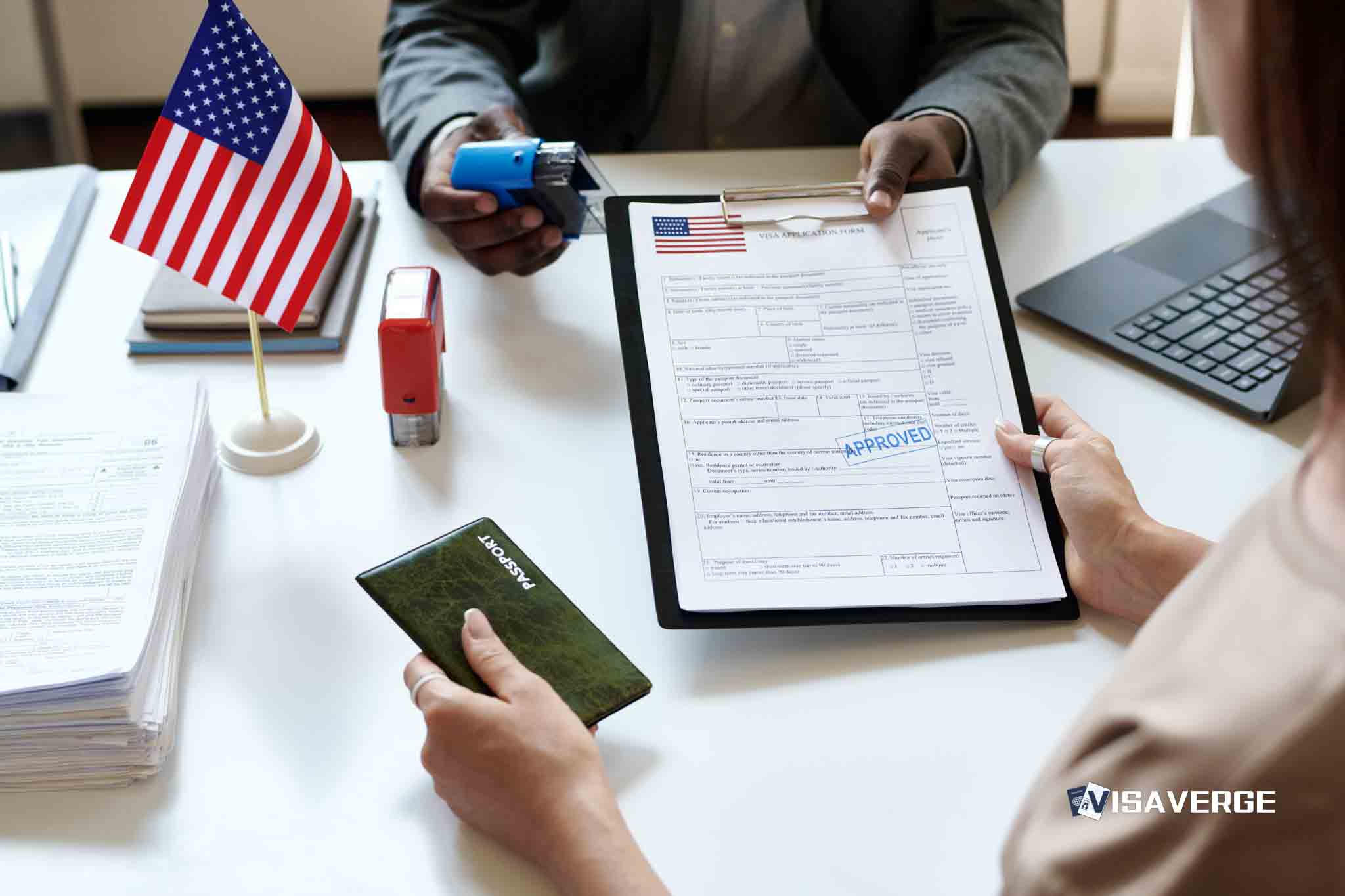
Embassy guidance issued on April 20, 2026 instructs affected applicants to set all social media profiles to “public” so consular officers can review content without requesting access or following private accounts. Applicants also must list all usernames, handles, and identifiers from the past five years on `DS-160` or other required forms.
The social media requirement now applies to applicants in A-3, C-3 and G-5 categories, which cover personal employees of diplomats and foreign officials. It also covers H-1B, H-3 and H-4 visas, along with F, M and J student and exchange visas.
K-1, K-2 and K-3 applicants fall under the rule as well, as do Q cultural exchange visas, R-1 and R-2 religious worker visas, and S, T and U visas. The embassy guidance states that officers may review all accounts tied to applicants in those categories.
Bangkok’s announcement follows a wider policy shift that began in May 2025 for F, M and J visas after student visa interviews paused from May 27 to June 18, 2025. The United States expanded the requirement to a broader list of temporary visas on March 30, 2026.
That sequence matters for applicants who previously treated social media review as a student visa issue. In Bangkok, the embassy has now folded the rule into screening for workers, dependents, religious visa holders, fiancé applicants and several special categories.
Consular officers are directed to examine publicly available online material that goes beyond mainstream social platforms. The review can include posts, blogs, comment sections, forums, personal websites and digital publications.
Officers are looking for signs of fraud or misrepresentation, terrorism-related content, antisemitic or hate speech, hostile attitudes toward the United States, its government, institutions, or citizens, and past visa violations. Screening can reach back five years, and the guidance says older posts may also draw scrutiny.
Past visa violations listed in the guidance include overstays, SEVIS terminations and involvement in political protests. That places older online activity inside the same vetting frame as application forms, travel history and interview answers.
Applicants are expected to prepare before appearing at the embassy. They must make profiles public before the interview, ensure officers can review content directly, and provide a full list of usernames and handles used in the last five years.
People without social media accounts should indicate “none” where the form calls for that information. Refusing to make accounts public can block officers from completing the review and can lead to delays or denials.
The practical effect reaches beyond one checkbox on `DS-160`. Applicants now have to account for years of online activity across personal and professional spaces, including Facebook, Instagram, TikTok, X, YouTube, LinkedIn, blogs, websites and forums.
That wider review means consular officers may compare what appears online with what appears in the application file. A profile photo, biography, employment reference or public comment can be read against the stated purpose of travel, visa class and previous immigration history.
The Bangkok rules also raise the chance of longer processing times because officers must add online review to existing checks. A visa interview no longer ends with the in-person exchange alone when public digital records form part of admissibility screening.
Applicants often treat privacy settings as a personal matter, but this policy turns them into a screening condition for covered visa types. Under the new approach, private accounts can prevent officers from completing the review the embassy now expects.
The categories affected show how far the requirement now extends. H-1B workers and H-4 dependents sit alongside students, exchange visitors, domestic staff of foreign officials, fiancé visa applicants, religious workers and visa holders in trafficking and crime-victim classifications.
That breadth makes the rule relevant to families as well as individual travelers. A principal applicant and dependents in the covered classes can face the same public-account requirement if they are applying under those visa categories.
People preparing for interviews in Bangkok are being pushed to review not just recent posts but older material that remains searchable. Content created years ago may still be accessible through active profiles, blog archives, reposts or public comments left on other sites.
The embassy guidance points applicants toward practical housekeeping before interview. It advises them to clean up or archive problematic content, update biographies and profile photos to match current plans, and be ready to explain controversial posts if officers raise them.
That preparation does not replace disclosure. The rule still requires applicants to list all social media usernames, handles and identifiers used during the last five years, even if an account is rarely used or tied to an older platform.
The policy frames online material as part of identity verification and admissibility checks under U.S. immigration law. In effect, a visa file now reaches into an applicant’s public digital trail, not only official forms and interview answers.
Bangkok has become one of the clearest examples of that shift. The U.S. Embassy in Bangkok announced the updated rules one day before this report, making the expanded social media requirement an immediate issue for applicants already preparing appointments.
People scheduled for visa interviews now face a narrower margin for mistakes. An omitted handle, a private account that officers cannot access, or online content that appears inconsistent with the application can trigger more scrutiny.
The change also adds another task for applicants who already collect financial records, identity documents and category-specific evidence. Online presence now sits alongside those materials as part of the file officers examine before deciding whether a visa can be issued.
Embassy guidance directs applicants seeking official information to the U.S. Embassy Bangkok visa page on travel.state.gov, the U.S. Embassy & Consulate in Thailand Important Visa Information page, and `DS-160` instructions and the visa bulletin. Those pages carry the most current embassy guidance for people applying in Bangkok.
With the rule now expanded beyond students, the United States has made public-facing social media review a routine condition for a long list of temporary visas in Thailand. Applicants who arrive at the embassy without opening those accounts to review risk leaving with their cases delayed, sent for more checks, or denied.